Mystery · Romance · Thriller
Vertigo
American
1958 · Directed by Alfred Hitchcock · 128 min


Mystery · Romance · Thriller
American
1958 · Directed by Alfred Hitchcock · 128 min


Meaning, unpacked
Central idea
The film explores obsession as a form of control: Scottie wants to rebuild reality to fit a fantasy, and the film asks what that costs both him and the person he projects onto. It can be read as Hitchcock examining his own habits as a director.
What it means
Vertigo follows Scottie, a retired detective afraid of heights. He is hired to follow a woman, falls for her, and fails to save her at the top of a bell tower. Then he meets someone who looks like her, and sets about remaking her. That is all the plot you need.
The real subject is obsession as a form of control. Scottie doesn't just love Madeleine; he wants to rebuild reality to fit a fantasy, and the film keeps asking what that costs him, and the person he projects onto. Many see it as Hitchcock examining his own habits as a director. The camera often shares Scottie's point of view, then makes you uneasy about having shared it. Madeleine first appears seen only through his eyes, in profile against a red wall: an image before she is a person. So the film leaves you with a hard question. When we love an image, who are we really looking at?
Why it mattered
When it came out, Vertigo refused the usual thriller pattern. Hitchcock shared information with the audience early, so suspense became emotional, and the film's mood mattered more than its plot mechanics. Reviews were mixed. Some critics enjoyed the visual flair and James Stewart's performance, while others found it slow and implausible. Audiences expecting an exciting thriller were often puzzled by its dreamy, melancholy tone. It earned a modest profit rather than the hit status of Hitchcock's other 1950s films, and it won no Oscars from its two nominations.
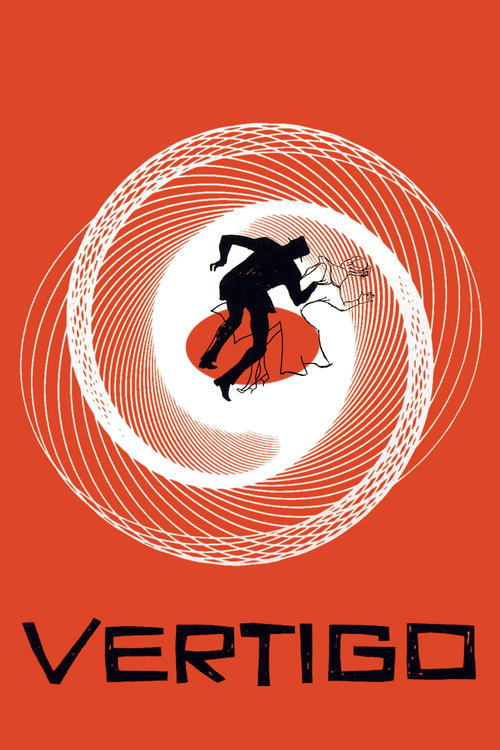
What was new was how fully technique became meaning. The dolly zoom turns an inner state into an image: the camera moves along a track while the lens zooms the opposite way, so fear becomes something you see. Bernard Herrmann's circling score speaks when the characters say little, and Saul Bass's spiralling titles set the mood. Colour carries meaning too, with greens, greys and reds that are hard to miss on a second viewing.
Before anyone tells you what to think: what did you make of it?
Log in to rate it and leave commentsIt takes one click with Google or an email link. You come straight back here.
Rate it, keep your notes, and find the next film.
Free, no ads. Your journal, your lists, a Cine Guide that remembers you.
Create your free spaceFilmmakers took notice, even if the public was slower. Brian De Palma and Martin Scorsese borrowed its voyeurism and obsessive love, and the dolly zoom became a shared language for disorientation. Mel Brooks lampooned the bell-tower climax in High Anxiety. Bass's spiral became one of cinema's best-known graphic images, and Madeleine's grey suit and pinned-up twist of hair still turn up in fashion homages. Fans visit Fort Point under the Golden Gate Bridge, and the mission at San Juan Bautista.
After years out of circulation, the film returned to cinemas in the 1980s and was reassessed. It is now seen as Hitchcock's deepest work and one of the most analysed American films. It is a staple of feminist film study, notably Laura Mulvey's essay on the male gaze. If you want to go further, watch it again and follow the colours, then try De Palma and Scorsese to see how far its shadow reaches.
What happens
Scottie drags Judy back up the mission tower and forces her to confess that she posed as Madeleine in a murder plot. This time he reaches the top. A shadowy figure startles her, and she falls to her death.
The last image
Scottie stands alone on the ledge of the bell tower, staring down at the body below.
What it says
Scottie's cure comes too late, and he gets his old life back only by losing everything. The film ends where it began, on a high place, to show how obsession traps him in repetition.
Or follow an idea from this film

Continue the director
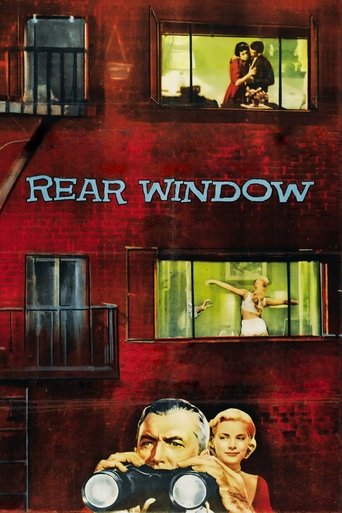
Rear Window (1954)
Hitchcock's earlier thriller with Stewart, also about looking and voyeurism, shows how Vertigo develops those ideas. It is more playful and gives a clearer sense of his suspense craft.
See what influenced it
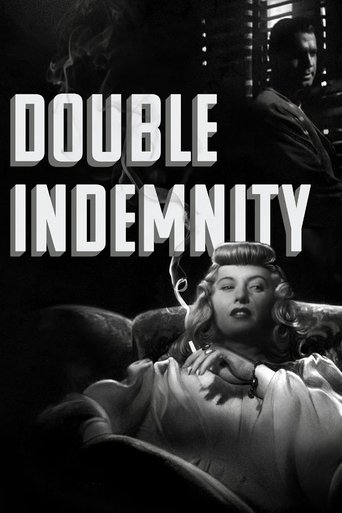
Double Indemnity (1944)
A classic noir about a man destroyed by a seductive woman and his own weakness, useful for seeing the tradition Vertigo reworks.
Compare another approach
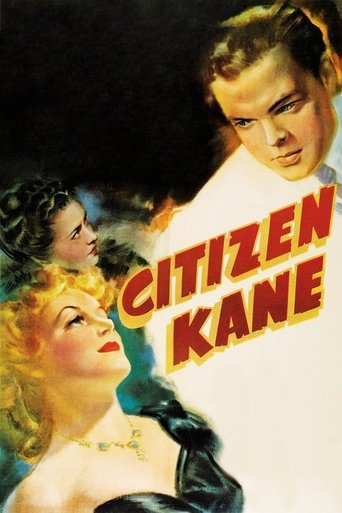
Citizen Kane (1941)
Another film about a man's desire to possess an image of the past, and another work that rose to the top of critics' attention.
Jump forward
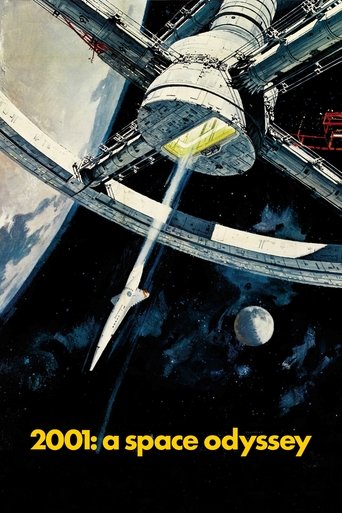
2001: A Space Odyssey (1968)
A very different film that likewise treats images, music and structure as the main carriers of meaning, rather than conventional storytelling.
Explore the era or movement
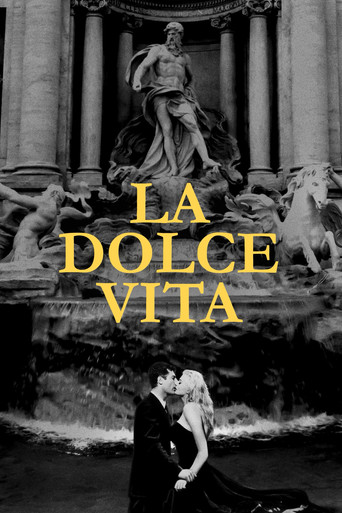
La Dolce Vita (1960)
A European art film from the same moment, showing how cinema was moving toward ambiguous, psychological storytelling.