

Thriller · Mystery · Drama
Rear Window
Avg rating 9.2 / My rating TBC
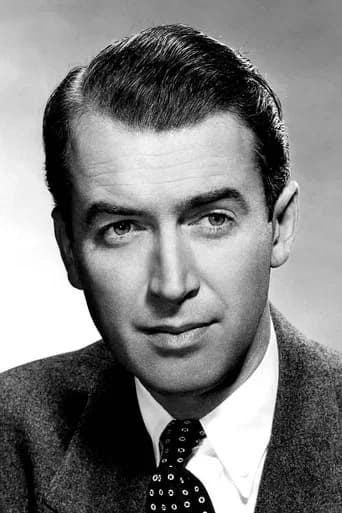
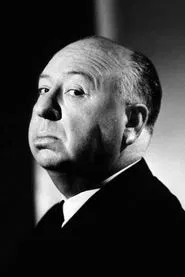
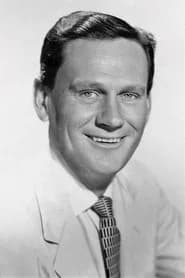
1954 · Directed by Alfred Hitchcock · With James Stewart, Grace Kelly, Wendell Corey
- Suspense
- Classical Hollywood
- Auteur Cinema
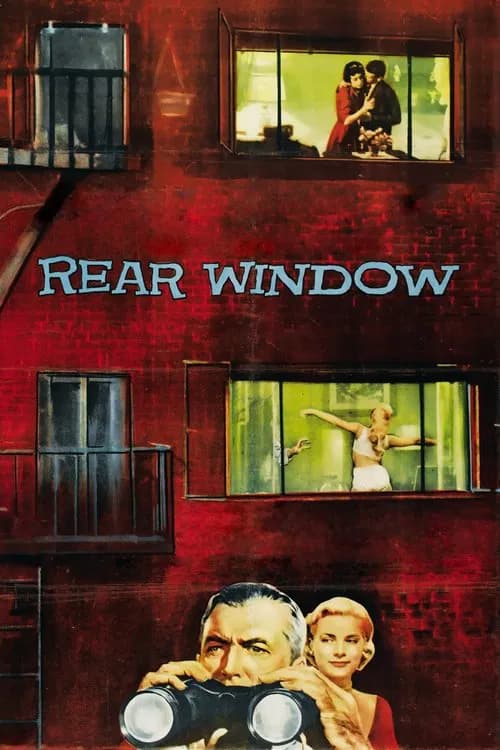
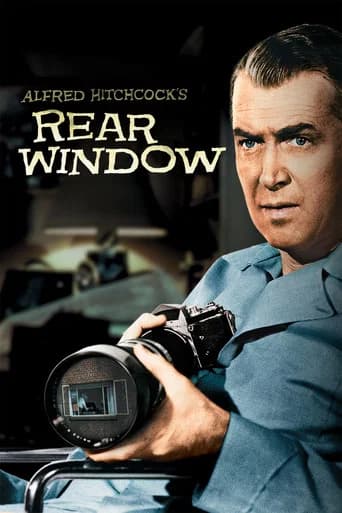
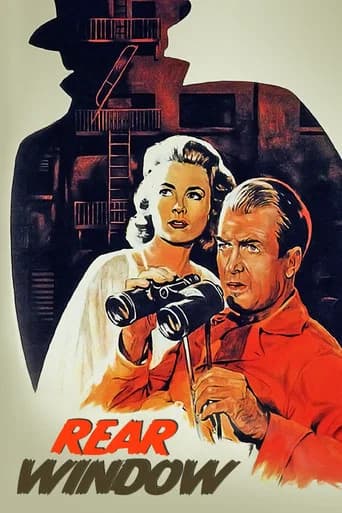
A news photographer with a broken leg is stuck in his Greenwich Village apartment during a heat wave. With nothing to do but watch his neighbours across the courtyard, he begins to suspect that something is wrong in one of the windows.
Film info
- Runtime
- 1h 53m · 113 min
- IMDb
- 8.5 / 10 (568,382 votes)
- Rotten Tomatoes
- 99% (critics)
- Metacritic
- 100 / 100
- TMDB
- 8.3 / 10 (audience, 7,394 votes)
- Trailer
- ▶ Watch the trailer



Before watching
Spoiler-free · about 2 minutes
Why watch this?
Hitchcock's purest demonstration of how suspense works
Among the best-known works of the director most associated with suspense, it builds almost an entire thriller from one viewpoint, one courtyard and one man who cannot move. It is often used to teach film grammar.
A film about the act of watching itself
The hero is a spectator, so the film turns the audience's own curiosity and voyeurism into its subject. It is a thriller that is also a quiet essay on cinema.
Stewart and Kelly at their most compelling
James Stewart does much of his acting through his face while seated, and Grace Kelly's entrance is one of Hollywood's great star introductions. Thelma Ritter adds dry, grounded humour.
Why it matters in cinema history
A defining film of Hitchcock's 1950s Hollywood peak and a landmark of the suspense thriller, it showed how point of view and editing alone could generate tension.
Watch with intention
Your lens
Treat the film as a study of looking: ask who is watching, what they can and cannot see, and what they decide it means.
Three things to notice
- The pattern of shots: a view out of the window, then James Stewart's face, then another view. Notice how his expression changes what the same image seems to mean.
- The courtyard's soundscape: music, radios, voices and street noise drift in from the other apartments, and each window acts like a small self-contained story.
- How the apartment is staged. Hitchcock keeps Stewart in the same few spots, so small shifts in position, light and distance feel important.
One question to carry with you
When you watch strangers through a window, how much of what you think you see is really what you have imagined?
- Technology
- Shot in Technicolor on a huge courtyard set built inside a Paramount studio, with dozens of apartments, many of them furnished and lit for use.
- Industry
- Hollywood was fighting television with widescreen, 3D and spectacle. Hitchcock answered with a small, confined story in the standard, almost square frame.
- Dominant styles
- Film noir was fading, and mid-1950s studio thrillers leaned toward glossy colour, major stars and polished production design rather than shadowy streets.
- Director's moment
- Hitchcock was at a peak of commercial and creative control at Paramount, reuniting with James Stewart and beginning a run of films with Grace Kelly.
Where it came from
Film
Sherlock Jr. (1924)On Cinespective
Another early film about watching, where the relationship between a viewer and the screen becomes the subject and device of the story.
Tradition
Soviet montage and the Kuleshov effect
Hitchcock built the film on the idea that a cut between a look and a face creates meaning, an approach developed in 1920s montage theory.
Film
Rope (1948)
Hitchcock's earlier experiment with a confined single setting and James Stewart, which explored how much tension a restricted space could sustain.
This film
Rear Window (1954)
New at the timeIt told a feature-length thriller almost entirely from one fixed position, using the cut between a look and a reaction as its main storytelling device.
- Postwar affluence
- Mid-1950s America was in an economic boom. Many people lived in apartments and new suburbs, and a culture built on domestic life, consumer goods and marriage as the expected path was taking shape.
- Cold War watchfulness
- The early 1950s were marked by McCarthyism, informers and suspicion of neighbours. Surveillance and the fear of what others might be hiding were part of the public mood that the film's premise touches on.
- Censorship limits
- The Production Code still governed Hollywood in 1954. Filmmakers had to handle adult relationships, voyeurism and violence with suggestion and restraint rather than explicit treatment.
- Hitchcock's position
- Hitchcock was a well-established, commercially powerful director who had settled in the US. He made this film for Paramount during a run of successful thrillers, working with major stars and a very large set.
- Pace
- Deliberate and conversational at first, with the suspense building gradually. Much of the first half is character, banter and observation rather than action.
- Style
- Almost entirely confined to one apartment and the view from its window, with a strict point-of-view structure.
- Performance
- Classical Hollywood star acting: witty, polished dialogue, with James Stewart's reactions carrying much of the drama.
- Colour
- Rich Technicolor, with the courtyard's colours and lighting carefully controlled.
- Aspect ratio
- Standard 1.37:1, nearly square, unlike many widescreen films of the period.
10+
Suggested age
Older children
Rated PG in the US and GB, FSK 12 in Germany and tous publics in France; the suspense and slow, talky pace suit roughly 10 and up.
Official ratings
- USPG
- UKPG
- Germany12
- FranceTP
Good for
Older children and teens who enjoy puzzles and suspense may like the clever single-location setup, witty banter, glamorous 1950s costumes and the game of spotting clues alongside the characters.
May unsettle
- Suspense: Sustained, slow-building tension with some frightening moments. It relies on atmosphere rather than gore, but sensitive children may find it intense.
- Mature themes: Includes talk of marriage troubles, suspicion, voyeurism and the possibility of a violent crime, handled without graphic detail.
- Dated attitudes: Some 1950s gender roles and casual remarks about women and relationships may feel old-fashioned.
- Pace: Much of the film is conversation in one apartment, which younger viewers may find slow.
Explain first
- It is a 1954 film in colour, set almost entirely in one apartment, so the story unfolds slowly through what the main character sees.
- Watching neighbours through their windows is a major part of the story; you may want to mention that real-life spying on people is not okay.
Talk about it after
Is the main character right to keep watching his neighbours, and what would you have done in his position?
Cinespective's own guidance, a draft: check it against the official ratings and your own judgement. Second opinions: Common Sense Media, IMDb (see its Parents Guide). Ratings from TMDB.