Thriller · Mystery · Drama
Rear Window
American
1954 · Directed by Alfred Hitchcock · 113 min


Thriller · Mystery · Drama
American
1954 · Directed by Alfred Hitchcock · 113 min
Meaning, unpacked
Central idea
The film explores voyeurism and the human urge to watch: it can be read as a portrait of both the cinema audience and a man who prefers observing life to joining it, asking what we owe to those we watch.
What it means
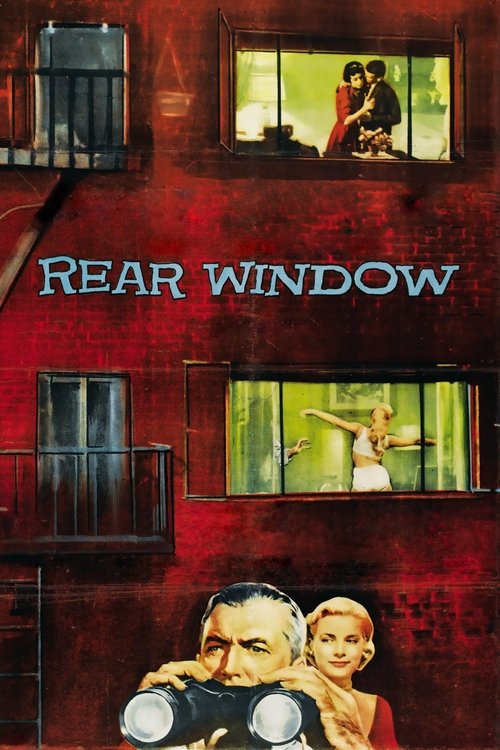
Rear Window is about the urge to watch. Jeff, a photographer stuck in his apartment, would rather observe life than join it, and the film suggests we do the same. We sit in the dark, looking through a frame, and the film makes us complicit in his curiosity. Then it asks what we owe the people we watch.
The other themes sit in the windows. Jeff hesitates over marrying Lisa, and the courtyard offers him couples, each a different version of what intimacy might become. Many windows hold people alone, so the city feels full of lives that touch only at a distance. A man defined by adventurous work is stuck in his chair, while Lisa and Stella prove braver and more practical than he is. And because Jeff builds his story from fragments, the film keeps asking how far his reading can be trusted.
Why it mattered
In 1954 audiences and most critics responded warmly, and the film made money for Paramount. Reviewers praised its suspense, its cast and Hitchcock's technical control. Some saw it simply as polished entertainment rather than a major work. It earned four Oscar nominations, for director, adapted screenplay, colour cinematography and sound, and won none.
What was striking was how much it did with so little. It is built on look-and-reaction cutting: we see what Jeff sees, then his face, so we interpret as he does. Paramount built the whole courtyard on a soundstage, giving Hitchcock control over light, weather and every window, each one a small film of its own. Most of the music comes from inside that world, from a songwriter's piano and from radios. It showed how point of view and editing alone could generate tension.
Before anyone tells you what to think: what did you make of it?
Log in to rate it and leave commentsIt takes one click with Google or an email link. You come straight back here.
Rate it, keep your notes, and find the next film.
Free, no ads. Your journal, your lists, a Cine Guide that remembers you.
Create your free spaceAfter its release the film dropped out of sight for years, because Hitchcock held the rights, until its re-release in the early 1980s. That helped make it a critical favourite. Its confined viewpoint and theme of surveillance echo through later thrillers such as The Conversation and the work of Brian De Palma. Disturbia reworked the premise for teenagers, and The Simpsons have parodied it. A 1998 television remake starred Christopher Reeve, who had been paralysed in 1995.
Its reputation has kept growing. The title and image of a man watching his neighbours became shorthand for voyeurism and the ethics of looking. Today it is taught as a model of point-of-view storytelling, and used in debates about the gaze and gender, including Laura Mulvey's feminist film theory. Once seen as superior Hitchcock entertainment, it is now one of his most discussed films.
What happens
Thorwald pushes Jeff out of the window, but police catch him and arrest Thorwald. Jeff's suspicion was right. Weeks later he has two broken legs, and Lisa, who seemed to share his adventurous life, quietly reaches for a fashion magazine.
The last image
Jeff sleeps in his wheelchair, both legs in casts, while Lisa, in casual clothes, puts down her adventure book and picks up a fashion magazine.
What it says
The murder is solved, but the real question was always Jeff and Lisa. She has adapted to his world only so far, and he is no freer than before. The ending turns quietly from crime to compromise in a relationship.
Or follow an idea from this film

Continue the director
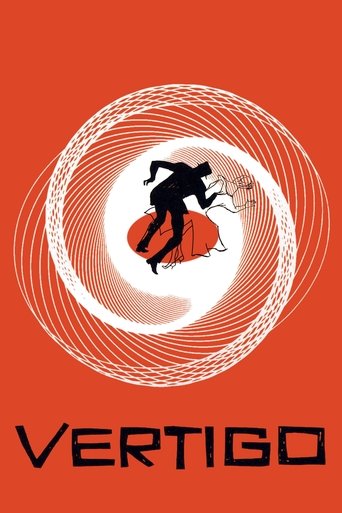
Vertigo (1958)
Hitchcock reunites with James Stewart for a darker study of obsession and looking. It deepens Rear Window's themes and is often ranked among his greatest films.
Compare another approach
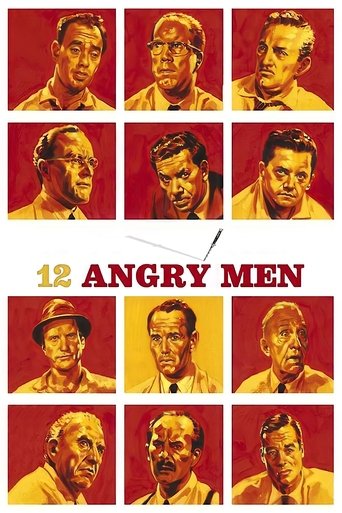
12 Angry Men (1957)
Another American classic that creates intense drama from a single confined space, relying on performance, staging and the question of what counts as certainty.
Follow the idea
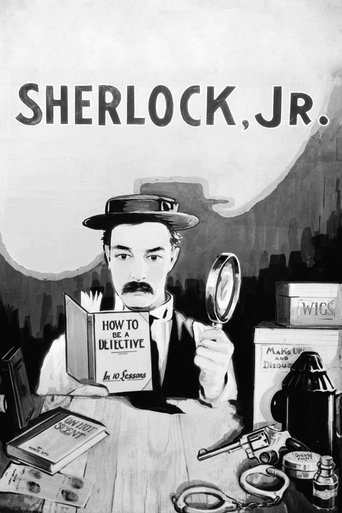
Sherlock Jr. (1924)
A silent comedy that plays with the relationship between a watcher and the images he watches, an earlier take on cinema's fascination with viewing.
See its influence
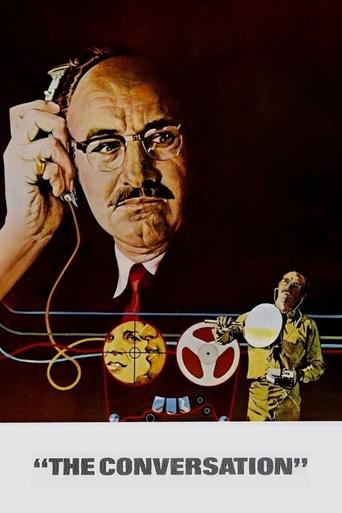
The Conversation (1974)
A 1970s thriller that takes Hitchcock's concerns with surveillance and uncertain interpretation into a more paranoid, post-Watergate mood.