Crime · Drama · Mystery
Rashomon
Japanese
1950 · Directed by Akira Kurosawa · 88 min


Crime · Drama · Mystery
Japanese
1950 · Directed by Akira Kurosawa · 88 min
Meaning, unpacked
Central idea
The film can be read as an inquiry into why people lie, not only to others but to themselves. It suggests that self-image, pride and fear shape memory so strongly that even honest witnesses distort events, and it asks what faith in people survives that.
What it means
Three men shelter from the rain beneath a ruined gate, and one of them cannot stop talking about a killing in the forest. A samurai is dead, and every witness tells it differently. But Rashomon is less about what happened than about why nobody can say so honestly.
The film can be read as an inquiry into why people lie, not only to others but to themselves. Pride, fear and self-image bend memory so strongly that even honest witnesses distort events, and even the dead man, speaking through a medium, has honour to protect. You will often hear that the film says truth is impossible to know. But it invites you to judge, because each narrator has a clear motive, and the ending turns on a moral question, not a philosophical shrug. At the gate, the men ask whether people are basically selfish, and for the priest it becomes a test of his faith.
Why it mattered
Rashomon stacks its story in three layers: testimony at court, retold by the men at the gate, then relived through each witness. That makes you the juror. It treats a flashback as someone's claim rather than as proof, and it established the multi-perspective narrative as a lasting form.
It was also made with real daring. Cinematographer Kazuo Miyagawa pointed the camera straight at the sun through the leaves, then considered bad practice, and used mirrors to throw light into the forest. Kurosawa said he wanted to recover the pure visual storytelling of silent cinema. Early reaction was poor, and in Japan the response in 1950 was muted. Then the Golden Lion at Venice in 1951 made Kurosawa an international name and opened Western eyes to Japanese film.
Before anyone tells you what to think: what did you make of it?
Log in to rate it and leave commentsIt takes one click with Google or an email link. You come straight back here.
Rate it, keep your notes, and find the next film.
Free, no ads. Your journal, your lists, a Cine Guide that remembers you.
Create your free spaceThe title became everyday shorthand for conflicting, self-serving accounts of one event, used in journalism, law, psychology and history. Television has its "Rashomon episodes", the film was remade as The Outrage in 1964, and it influenced Hero in 2002. Teachers still use it for ethics, law and the study of memory. It also brought attention to Ryūnosuke Akutagawa's fiction.
Today it stands among the key films of world cinema, and the one that made Kurosawa an international figure. Its Western success is now seen as the start of a wider discovery of Japanese cinema, not the whole of it. Perhaps its real gift is this: it does not ask whether we can know the truth. It asks what we do, once we know how badly we tell it.
What happens
The woodcutter admits he saw the killing and has left out the stolen dagger, so even he is lying. Then a baby cries at the gate. The commoner robs it, but the woodcutter takes the child home, restoring some of the priest's faith.
The last image
The rain stops, and the woodcutter walks out from under the ruined gate carrying the abandoned baby.
What it says
The film suggests everyone distorts the truth to protect their self-image. It ends on a moral choice rather than a verdict: after so many lies, one small act of kindness is what lets the priest keep believing in people.
Or follow an idea from this film


Continue the director
Seven Samurai (1954)
Kurosawa's epic returns to the period setting with Mifune and Shimura, trading ambiguity for large-scale action and a clear moral structure.
Explore the era or movement
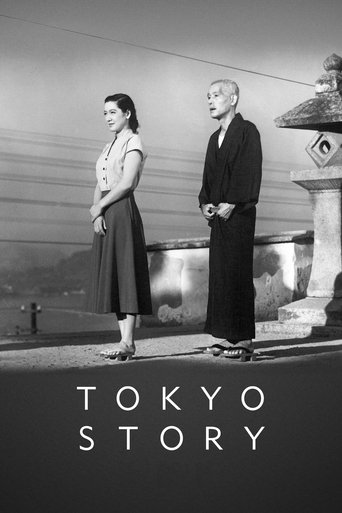
Tokyo Story (1953)
Ozu's quiet family drama shows the other great side of Japanese cinema from the same period, with a still camera and a very different approach to storytelling.
Follow the idea
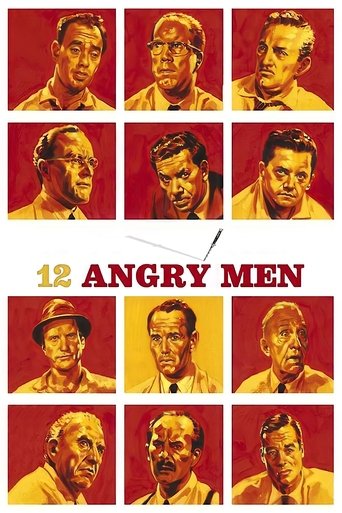
12 Angry Men (1957)
Another film about weighing testimony and doubt, in which a group has to decide what to believe about a crime.
Compare another approach
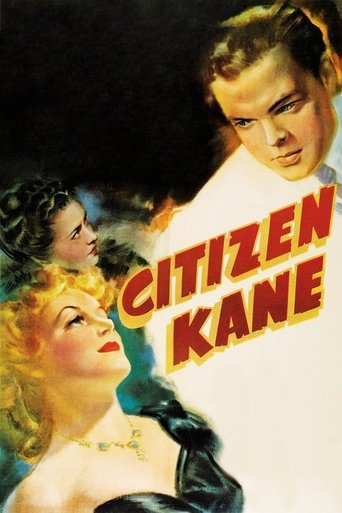
Citizen Kane (1941)
Both build a story from several perspectives, but Kane sets out to build a portrait while Rashomon questions the teller.