Documentary
Man with a Movie Camera
Soviet (Человек с киноаппаратом)
1929 · Directed by Dziga Vertov · 68 min


Documentary
Soviet (Человек с киноаппаратом)
1929 · Directed by Dziga Vertov · 68 min
Meaning, unpacked
Central idea
The film proposes cinema as a new way of seeing, more capable than the human eye, which can join scenes from different places into one reality. It can be read as a manifesto for the camera as a tool of both knowledge and revolution.
What it means
You have just watched a film with no story, no actors and no script. A cameraman goes out into a city, and the city goes about its day. That is about all the plot there is, and it is not really the point. The point is a claim: Dziga Vertov proposes that the camera is a better eye than the one in your head. It can slow things down, speed them up, run them backwards, and stitch together places that are nowhere near each other. Cinema, in his view, is a new way of seeing.
The film also compares people with machines. Trams, factories, telephone exchanges and human bodies at work move to the same rhythm, and the imagined day moves from labour to rest and play, as if the new Soviet society were one collective organism. And it will not hide how it was made. It opens in an empty cinema that fills with viewers, and it shows Elizaveta Svilova in the editing room, treating editing as a creative act. Here cinema is making and watching, not a finished illusion.
Why it mattered
In 1929 this was a bold argument that film did not have to borrow from theatre or literature. Vertov belonged to a group that rejected scripted drama, and the film announces itself as an experiment in conveying visible events without intertitles, scenario or theatre. It pushed the Soviet montage movement to its limit, using split screens, double exposures, stop motion, reversed motion and rapid cutting on real streets and real people.
Before anyone tells you what to think: what did you make of it?
Log in to rate it and leave commentsIt takes one click with Google or an email link. You come straight back here.
Rate it, keep your notes, and find the next film.
Free, no ads. Your journal, your lists, a Cine Guide that remembers you.
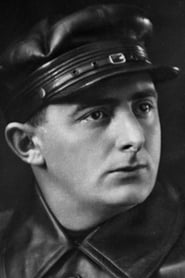
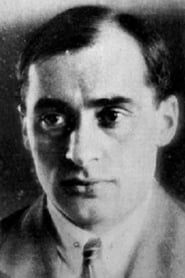
Create your free spaceIt was also a family project: Vertov directed, his brother Mikhail Kaufman shot it from trams, cars and heights, and his wife Svilova edited it. Now the myth. It is often called a documentary of one day in a Soviet city, but the footage comes from several cities, including Moscow, Kyiv and Odessa, shot over a long period, and some scenes were staged. The unity you felt was built in the edit. That was the point: film does not just record reality, it reshapes it.
Reception at the time was mixed. It had admirers in avant-garde circles abroad and was shown in Europe and the United States. At home, some critics found it too formalist and hard to follow, it was not a hit with ordinary audiences, and Vertov's relationship with the film authorities grew harder in the years after.
Its reputation grew steadily from the 1960s, as filmmakers and scholars rediscovered him. His ideas fed into cinéma vérité, Jean-Luc Godard's Dziga Vertov Group, essay films and experimental documentary, and its mix of observation and visible technique anticipates video art and music-video editing. It is now seen as one of the key films of silent cinema, and in a critics' poll in the 2010s it placed very high.
What happens
The editing speeds into a blur of factories, athletes, traffic and crowds. Then the film shows its own lens, and the audience leaves an emptying cinema. The day was built from many places and times, and the film shows you the machinery behind it.
The last image
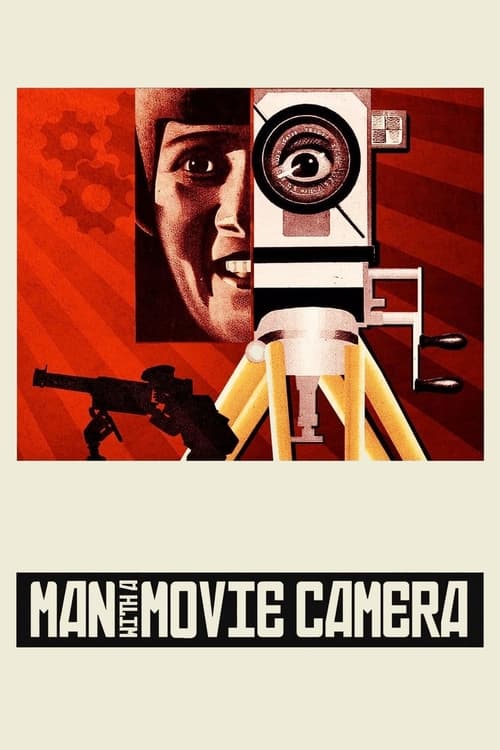
A camera lens is seen through a human eye, and the film ends on that image of looking.
What it says
The ending turns the film back on itself. Having argued that the camera sees better than we do, Vertov leaves you with the lens and the eye together, asking you to notice who is doing the looking.
Or follow an idea from this film

Explore the era or movement
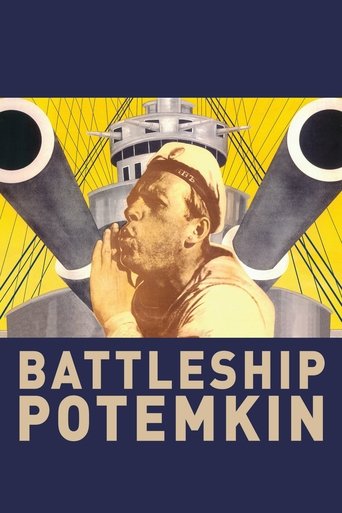
Battleship Potemkin (1925)
The other great Soviet montage landmark. Eisenstein uses editing for dramatic emotion, which makes a revealing contrast with Vertov's non-fiction approach.
Compare another approach
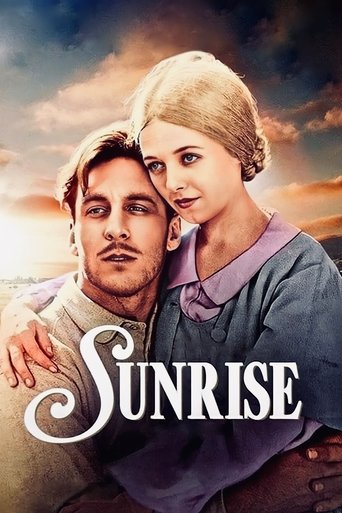
Sunrise (1927)
Another late silent film that pushes camera movement and visual invention, but in the service of a story. It shows what fiction cinema could do with similar freedom.
Follow the idea
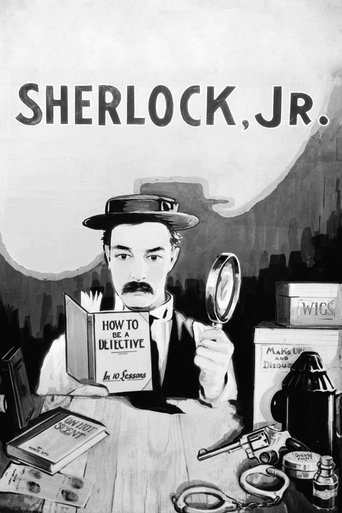
Sherlock Jr. (1924)
Buster Keaton's comedy about a projectionist who enters a film is another silent work about cinema's own illusions.
Jump forward
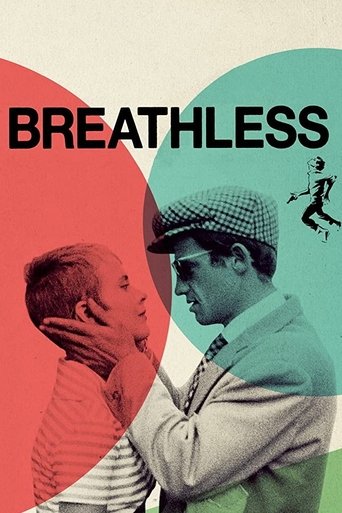
Breathless (1960)
Godard's New Wave debut treats editing and the camera as visible, expressive tools, in a spirit close to Vertov's.