

Drama · History · War
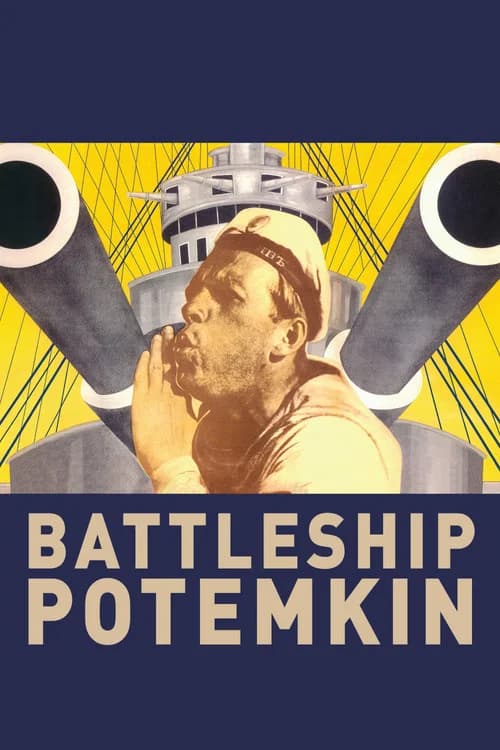
Battleship Potemkin
Avg rating 8.8 / My rating TBC
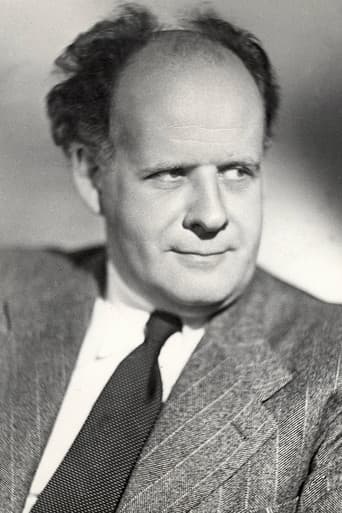
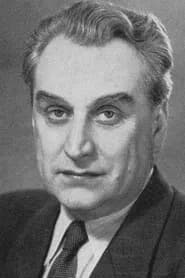
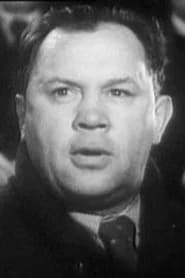
1925 · Directed by Sergei Eisenstein · With Aleksandr Antonov, Vladimir Barsky, Grigori Aleksandrov
- Soviet Montage
- Silent Cinema
- Historical Epic
Russia, 1905. On a warship in the Black Sea, anger over conditions below deck builds toward a confrontation between crew and officers. Eisenstein turns a historical episode into a tightly structured, five-part drama of pressure, defiance and consequence, told almost entirely through images and cutting.
Film info
- Runtime
- 1h 15m · 75 min
- Format
- Silent, with intertitles in five titled parts. A live or recorded score is part of the experience.
- IMDb
- 7.9 / 10 (65,711 votes)
- Rotten Tomatoes
- 100% (critics)
- Metacritic
- 97 / 100
- TMDB
- 7.6 / 10 (audience, 1,341 votes)
- Trailer
- ▶ Watch the trailer
Before watching
Spoiler-free · about 2 minutes
Why watch this?
The landmark of Soviet montage cinema
Made when Eisenstein was 27, it is the most celebrated film of the Soviet montage movement and the clearest demonstration that editing, not just photography, can generate meaning and emotion.
A film with no individual star
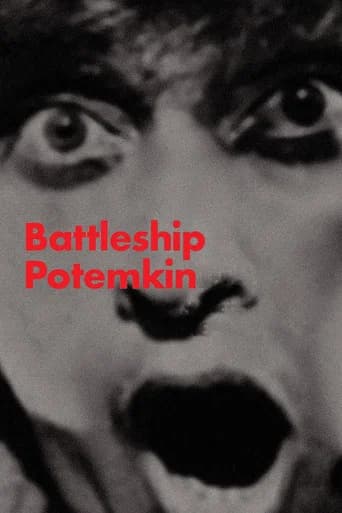
Instead of following one hero, it builds its drama from groups and masses, a radical choice for 1925 that shapes how every shot is framed and cut. Watch how faces and crowds become the story.
Propaganda that taught cinema its grammar
Commissioned as political celebration, it became a film school in itself. Its rhythms, contrasts and collisions of images are still studied, borrowed and argued over a century later.
Why it matters in cinema history
A defining work of the 1920s Soviet avant-garde and the film most often used to explain montage theory. It showed silent cinema could be both state propaganda and formal experiment.
Watch with intention
Your lens
Watch it as an argument made through editing: ask what each cut does to you, not only what each shot shows.
Three things to notice
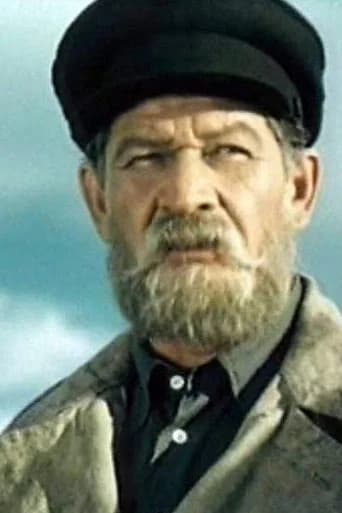
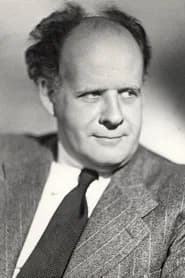
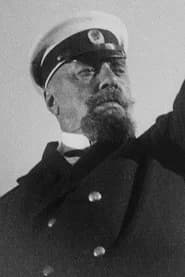
- Faces: Eisenstein casts for look and type, often in tight close-up, so that individuals read as representatives of a class or role.
- Cutting rhythm: notice where shots lengthen into stillness and where they quicken, and how the pace changes your own tension.
- Objects and details: small things like food, tools and fabric are filmed as carefully as people, and carry meaning.
One question to carry with you
If no single character carries the story, whose experience are you being asked to share, and how does the film achieve that?
- Industry
- Commissioned by the Soviet state for the twentieth anniversary of the 1905 revolution. Film was treated as a tool for educating a largely illiterate, newly revolutionary population.
- Dominant styles
- Hollywood favoured star-led narrative and smooth continuity editing. Soviet filmmakers, shaped by Kuleshov's experiments, argued that meaning arises from the clash between shots.
- Director's moment
- Eisenstein came from avant-garde theatre and had made only one feature, Strike, earlier in 1925. Potemkin let him test his ideas about editing on a larger scale.
- Audience
- Silent films were shown with live music. The German release carried a new score by Edmund Meisel, written to drive the film's rhythms.
Where it came from
Filmmaker
Lev Kuleshov
His experiments showed that meaning arises from the order and combination of shots, the principle Eisenstein developed into his own theory of montage.
Film
Intolerance (1916)
D. W. Griffith's cross-cutting between epochs and parallel actions inspired Soviet filmmakers to think of editing as a method for building ideas.
Tradition
Proletkult and avant-garde theatre
Eisenstein's stage work with type-casting, physical performance and agitation shaped the film's emphasis on collective action and shock effects.
This film
Battleship Potemkin (1925)
New at the timeIt treated a crowd, rather than a character, as the hero, and used deliberately conflicting shots to produce emotion and ideas in the viewer.
- Format
- Silent, with intertitles in five titled parts. A live or recorded score is part of the experience.
- Pace
- Short at 75 minutes and tightly built. Slow, tense stretches alternate with rapid, forceful cutting.
- Style
- Stylised and deliberately non-naturalistic. Characters are types, not psychological portraits, and this is by design.
- Colour / ratio
- Black and white, in the near-square silent frame. Some prints show a hand-tinted detail.
- Versions
- Several cuts and scores exist, since the film was censored and re-edited in many countries. Restored editions are the best choice.