Comedy · Drama
La Dolce Vita
Italian
1960 · Directed by Federico Fellini · 174 min


Comedy · Drama
Italian
1960 · Directed by Federico Fellini · 174 min




Meaning, unpacked
Central idea
The film can be read as a study of a man who is surrounded by pleasure, fame and conversation but cannot find anything to commit to. Rome becomes a mirror of an age with abundant spectacle and fading belief.
What it means
Over a series of nights and dawns in Rome, a gossip journalist named Marcello drifts from scandal to party to scandal. He wants to be a serious writer, and he never quite gets there. The film is a study of a man surrounded by pleasure, fame and conversation who cannot find anything to commit to.
Rome becomes a mirror of an age with plenty of spectacle and fading belief. Miracles, celebrities and parties are all treated as events to be photographed and consumed, and the film keeps asking what is left once the show is over. Marcello's slide is easy because it is glamorous: nobody forces him to give up writing, he simply never has a reason to stop enjoying himself. Religion shows up as a parade, a media circus and a real longing, and the film never decides which weighs most. At dawn on the beach, Marcello faces an innocent figure across the water. Whether he answers is left open.
Why it mattered
In 1960 this was both a scandal and a hit. Catholic and conservative groups in Italy condemned its treatment of sex, religion and wealth, yet it won the Palme d'Or at Cannes and did strong business at home and abroad.
What was new was the shape. Instead of a tight plot, it gives you a prologue, seven episodes and an epilogue, joined by Marcello rather than by cause and effect. The rhythm of night and dawn repeats, and the repetitions slowly add up to decline. It showed that a three-hour, plotless social panorama could be a popular success and a major critical event. It also marks Fellini's shift from neorealist roots to a personal, spectacular style.
Before anyone tells you what to think: what did you make of it?
Log in to rate it and leave commentsIt takes one click with Google or an email link. You come straight back here.
Rate it, keep your notes, and find the next film.
Free, no ads. Your journal, your lists, a Cine Guide that remembers you.
Create your free spaceThe film established the long, episodic art film about a drifting hero, and it shaped how cinema shows celebrity, photographers and nightlife. Fellini carried its freedom further in 8½, and Paolo Sorrentino's The Great Beauty, from 2013, openly revisits this world. Its title entered everyday language, and so did one of its characters: the photographer Paparazzo gave us the word paparazzi.
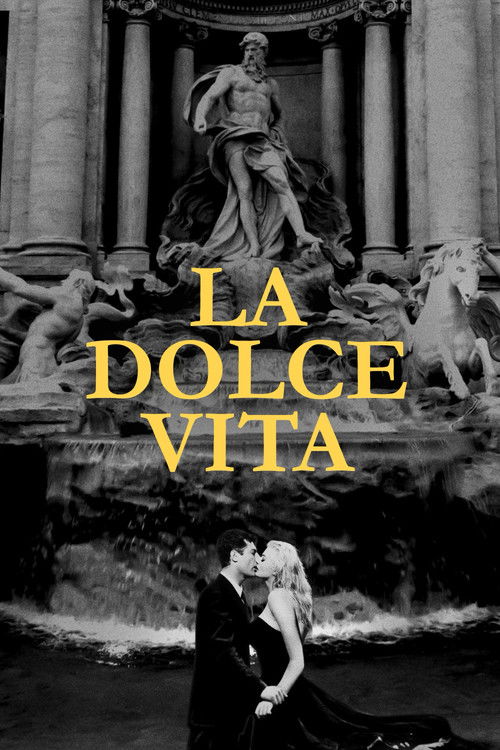
Its images are everywhere. Anita Ekberg wading into the Trevi Fountain is endlessly copied in advertising and parody, and Fellini revisited it in Intervista in 1987. The sunglasses and dark suits of Via Veneto fixed an image of Italian cool, and Mastroianni became its icon. Today the shock has faded. People talk about its structure, its images and its sad, ambivalent portrait of modern celebrity, and it is seen as one of the central works of European art cinema.
What happens
After a night of excess at a seaside villa, fishermen drag a strange sea creature onto the beach. Across an inlet, a young girl calls to Marcello. He can't hear her, doesn't follow, and rejoins the group.
The last image
Marcello looks across the water at the girl, smiles faintly, and turns back toward the party.
Three readings
What it says
The ending offers no rescue and no verdict. After Steiner's death closes off the idea of a settled, serious life, Marcello is left suspended between wasted nights and something purer. The film ends on that distance.
Or follow an idea from this film

Continue the director
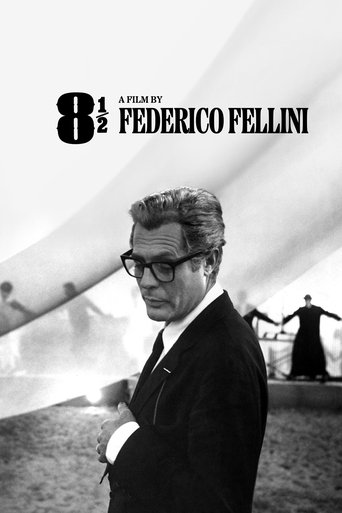
8½ (1963)
Fellini's next great film takes the same freedom of structure and applies it to a director's own creative crisis. It is the natural companion piece.

Compare another approach
L'avventura (1960)
Released the same year, Antonioni's study of idle wealth and emotional distance shows a much cooler, quieter response to the same postwar Italian world.
Follow the idea
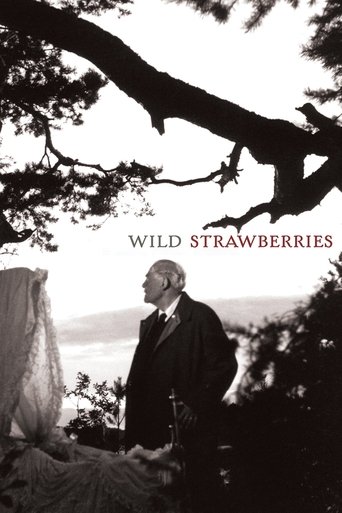
Wild Strawberries (1957)
Bergman also follows a man reckoning with how he has lived, but through memory and dream, for a more intimate and Nordic view of regret.
Explore the era or movement
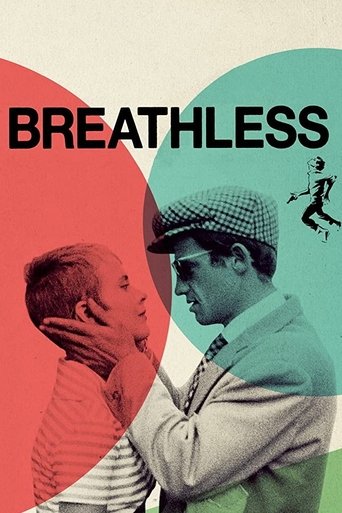
Breathless (1960)
Another 1960 landmark that broke with conventional storytelling. It is French, fast and street-level, where Fellini is Roman, ornate and expansive.
Jump forward
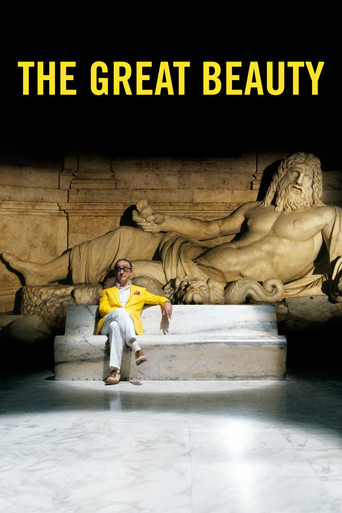
The Great Beauty (2013)
A modern reworking of Fellini's Rome that shows how lasting the film's images and attitudes have been.