Loading…







Meaning, unpacked
Central idea
The film explores how impossible it is to reduce a life to a single explanation. It can be read as a study of how wealth and power can fill a man's world while leaving something essential missing, and of how biography always misses the person.
What it means
A reporter chases a dying man's last word and never finds an answer that settles anything. That is the trick at the heart of Citizen Kane. You watch a whole life laid out, and the film still insists you don't know him. A life cannot be boiled down to one explanation, and biography always misses the person.
Each narrator gives a partial portrait, shaped by their own interests and regrets, so perspective itself becomes the subject. Memory here is selective and self-serving. The film also asks what power does to a man. Kane begins as a crusading idealist and ends up controlling people the way he controls his newspapers. He can buy almost anything, but not real affection. The film hints at an early separation in childhood, with possession standing in for love, but that is a reading, not a verdict. Even the opening newsreel gives you the whole life in minutes, then declares it insufficient. Facts are not understanding.
Why it mattered
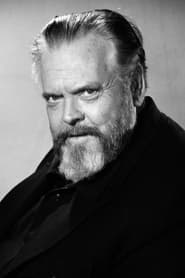
Citizen Kane arrived through a rare opportunity. After his 1938 radio broadcast of The War of the Worlds made him famous, Welles was offered a deal at RKO that gave him creative control, including final cut. That is a key reason the film feels so personal and uncompromising.
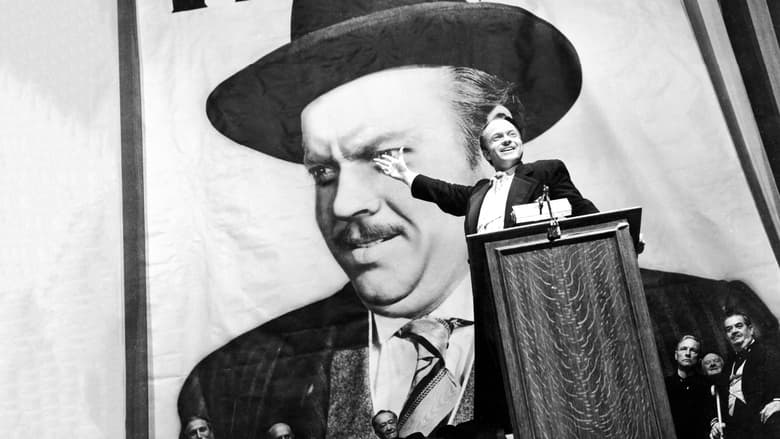
Its style made the frame itself a source of meaning. Gregg Toland's deep focus kept several planes sharp at once, so one shot could show a child at play while a mother and a guardian sign an agreement, and space showed who held control. Welles did not invent deep focus, which had been used before. What was new was how thoroughly the film built its style around it. Low-angle shots, sound bridges, overlapping dialogue and a multi-narrator structure showed how daring a Hollywood film could be.
Before anyone tells you what to think: what did you make of it?
Log in to rate it and leave commentsIt takes one click with Google or an email link. You come straight back here.
Rate it, keep your notes, and find the next film.
Free, no ads. Your journal, your lists, a Cine Guide that remembers you.
Create your free spaceThe film was not hated on release. Many critics praised it, and it earned nine Oscar nominations, winning only for screenplay. But Hearst's papers attacked it and refused its advertising, some theatres avoided it, and it lost money at first.
Its standing grew after the war, especially through French critics and later through television and repertory screenings. Its deep-focus compositions and fractured storytelling shaped film noir, later auteur cinema and many biopics. "Rosebud" became shorthand for a hidden motive, and The Simpsons and other comedies have borrowed its imagery. Today its reputation is so large that the challenge is seeing past it. Try looking for the human story, with all its flaws, and ask what you would have said about Kane.
What happens
Thompson gives up, concluding no single word could explain a man. Only you see the answer: workers at Xanadu burn a child's sled, and its painted name, Rosebud, appears in the flames. Kane's secret was a lost childhood.
The last image
The sled's painted name, Rosebud, curls and blackens in the furnace as the workers throw it on the fire.
Two readings
What it says
Welles gives you the answer the reporter never finds, then shows how little it settles. The ending says a life can't be reduced to one explanation, and that biography, however thorough, always misses the person.
Or follow an idea from this film
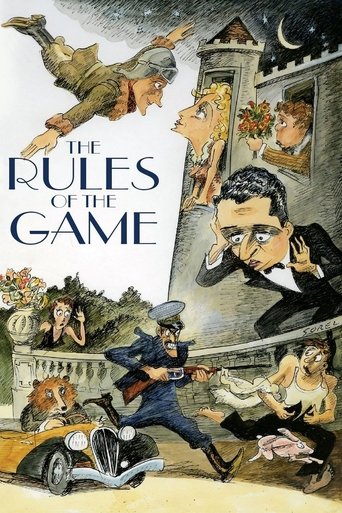

Compare another approach
The Rules of the Game (1939)
Another ambitious film often set beside Kane, using deep focus and long takes in a very different European social satire.
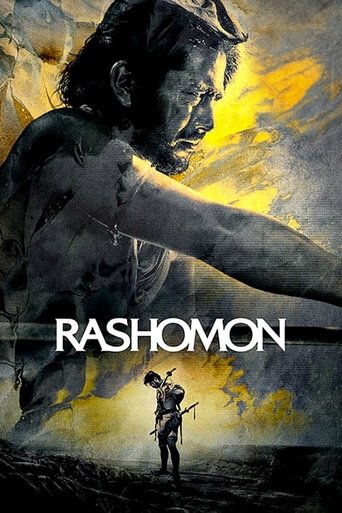
Follow the idea
Rashomon (1950)
Where Kane offers partial accounts of one man, Rashomon builds a whole story from contradictory testimonies about a single event.

Continue the director
The Magnificent Ambersons (1942)
Welles's second film continues his visual ambition, though it was cut and altered by the studio, which makes it a lesson in what control means.
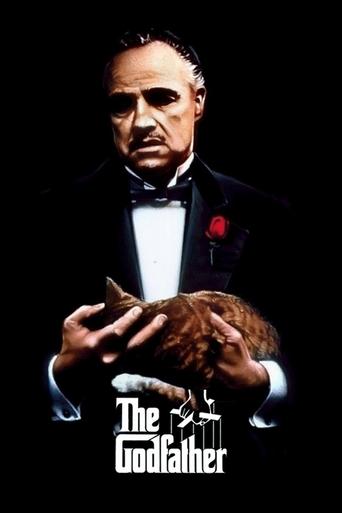
See its influence
The Godfather (1972)
A later American epic of power and family that shows Kane's lighting, structure and tragic ambition in a new form.
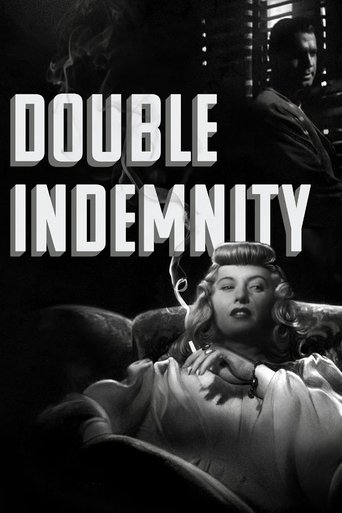
Explore the era or movement
Double Indemnity (1944)
A prime example of the shadowed, voiceover-driven Hollywood style that Kane helped open the way to.