Drama · History
The Passion of Joan of Arc
French (La Passion de Jeanne d'Arc)
1928 · Directed by Carl T. Dreyer · 81 min


Drama · History
French (La Passion de Jeanne d'Arc)
1928 · Directed by Carl T. Dreyer · 81 min



Meaning, unpacked
Central idea
The film can be read as a study of a person alone against an institution, in which faith, conscience and suffering become visible in the face rather than in argument. Dreyer treats the trial as a psychological and spiritual ordeal more than as history.
What it means
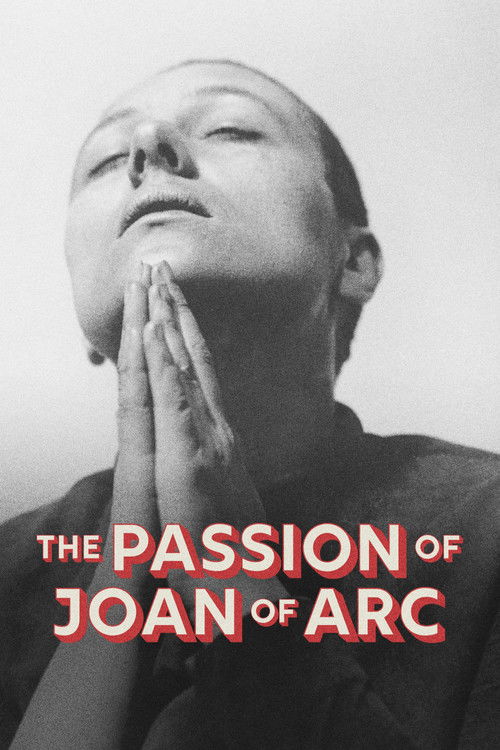
This is a film about conviction under pressure. One person's inner certainty stands against an institution that holds the building, the law and the numbers. Joan has only herself, and Dreyer's answer to where that struggle can be seen is the human face. Faith, conscience and suffering show up in her expression, not in argument. Dreyer treats the trial as a spiritual and psychological ordeal more than as history, and the words are not invented: they come from the real trial records.
The film keeps asking who speaks for God. The judges stand for the Church as an organisation, many of them serving English interests as much as heaven. Joan stands for a private, unmediated belief. Pressure arrives as mockery, threat and even false kindness, like the forged letter, and her wavering matters as much as her resolve. Courage here is fragile. Her tears, trembling and exhaustion count as testimony, and the film insists on the experience of one individual.
Why it mattered
In 1928 this was a radical experiment. The opening interrogation is a duel of close-ups, with no establishing shot, so you are never given a map. The pale, abstract set resists orientation, and cuts often break the usual rules of screen direction. You feel Joan's lack of footing. Rudolph Maté's camera favours extreme close-ups, steep angles and slow, looming movement, and the faces are held longer than usual so you can read the smallest shifts. It drops stage-bound storytelling and shows that cinema could express inner experience through the face alone.
Before anyone tells you what to think: what did you make of it?
Log in to rate it and leave commentsIt takes one click with Google or an email link. You come straight back here.
Rate it, keep your notes, and find the next film.
Free, no ads. Your journal, your lists, a Cine Guide that remembers you.
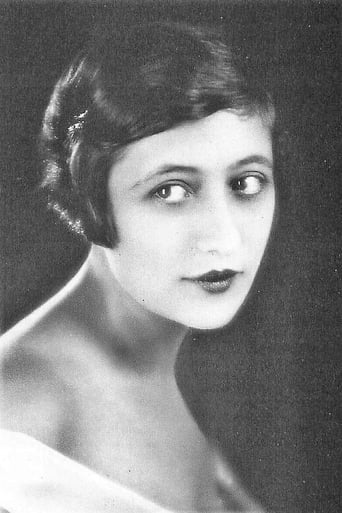
Create your free spaceIt isn't all close-up, though. After its long confinement, the film widens in the square, with crowds, soldiers and movement, and that release changes how the whole film feels. Maria Falconetti, known for comedies on the Paris stage, worked without makeup and built everything from small expressions. Critics admired the boldness and her performance, but audiences were less certain, censors demanded cuts, and the commercial run was modest as sound was arriving.
Its sustained close-ups shaped later spiritual and austere cinema, from Bresson to Bergman, and filmmakers still turn to it when a face must carry a scene. Godard quoted it in Vivre sa vie. Falconetti's tear-streaked face and cropped hair became shorthand for martyrdom. Richard Einhorn's oratorio Voices of Light, from 1994, was written as a score for the film and is often performed live alongside screenings.
Its reputation has grown with every restoration. The original negative was destroyed in a fire, Dreyer's reassembled version was lost too, and for decades only altered prints survived. In 1981 a copy of the original turned up in Oslo. Today the film is regarded as one of the greatest silent films, and Falconetti's performance is regularly named among the finest ever recorded.
What happens
Joan retracts her forced confession, knowing it means death, and is burned at the stake. As she dies, the watching crowd turns on the soldiers in anger. The court wanted her silenced, but she leaves the square a martyr.
The last image
Smoke rises from the stake as the crowd fights the soldiers around it.
What it says
Joan's collapse and her return to her voices show courage as fragile, not fixed. After so much confinement, the film opens out onto the crowd, so her private ordeal becomes a public reckoning. The institution wins the verdict but loses the argument.
Or follow an idea from this film

Continue the director
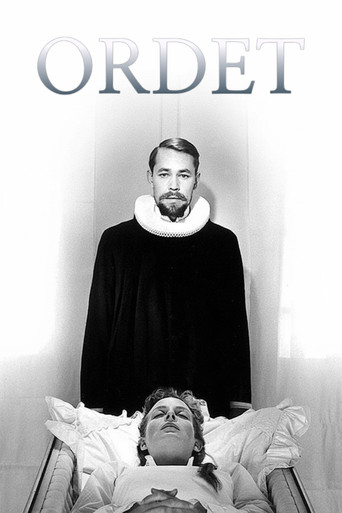
Ordet (1955)
Dreyer's later masterpiece swaps close-up intensity for long takes and stillness, yet remains a sustained inquiry into faith, doubt and miracles.
Compare another approach
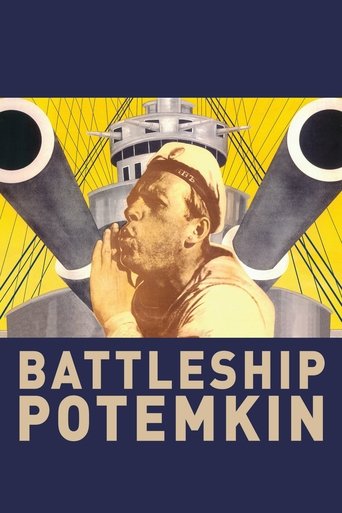
Battleship Potemkin (1925)
Soviet montage built emotion through rapid editing and crowds. Compare how Eisenstein and Dreyer each make collective suffering and moral outrage felt.
See its influence
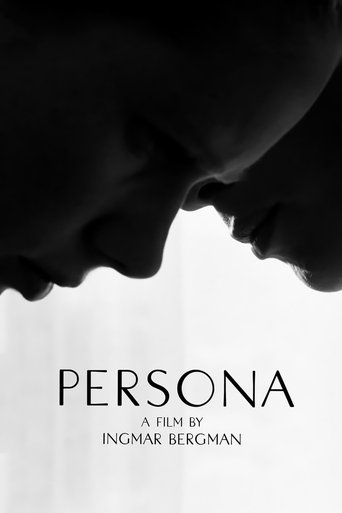
Persona (1966)
Bergman's film pushes the close-up still further, making the face the whole drama and exploring identity at its edge.
Jump forward
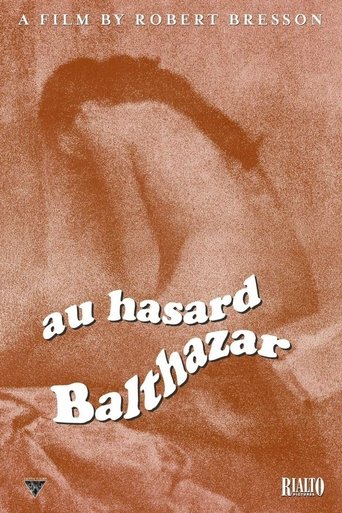
Au Hasard Balthazar (1966)
Bresson, a devoted student of Dreyer, shows how spiritual cinema can work with restraint, minimal acting and moral suffering.
Follow the idea
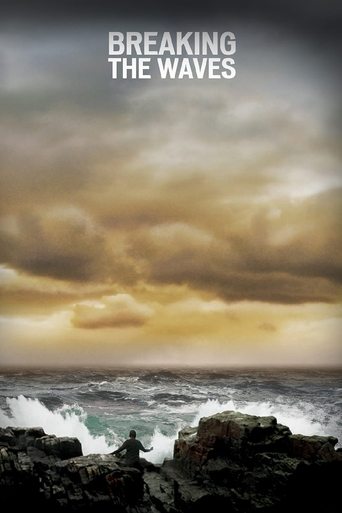
Breaking the Waves (1996)
A modern drama of faith and martyrdom, centred on a woman's suffering, that continues Dreyer's concerns in a handheld, contemporary style.