


Drama · History
The Passion of Joan of Arc
Avg rating 8.9 / My rating TBC
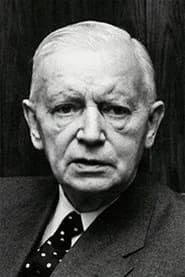
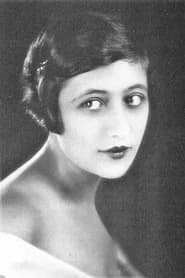
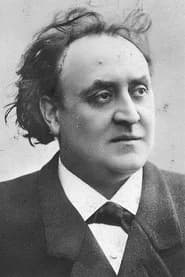
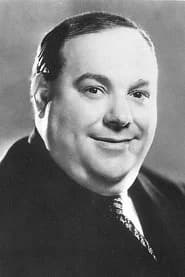
1928 · Directed by Carl T. Dreyer · With Maria Falconetti, Eugène Silvain, André Berley
- Silent Cinema
- Art Cinema
- Auteur Cinema
Rouen, 1431. A young peasant woman who says she hears divine voices is questioned by a panel of churchmen determined to make her contradict herself. Dreyer builds the whole film around the faces in that room and the pressure between them.
Film info
- Runtime
- 1h 21m · 81 min
- Format
- Silent, black and white, roughly 1.33:1, with intertitles taken from the trial record. Music depends on the version you watch.
- IMDb
- 8.1 / 10 (67,728 votes)
- Rotten Tomatoes
- 98% (critics)
- Metacritic
- 98 / 100
- TMDB
- 8.0 / 10 (audience, 1,136 votes)
- Trailer
- ▶ Watch the trailer
Before watching
Spoiler-free · about 2 minutes
Short on time? Spoiler-free
A 4-minute summary
Why watch this?
The silent era's most famous act of screen acting
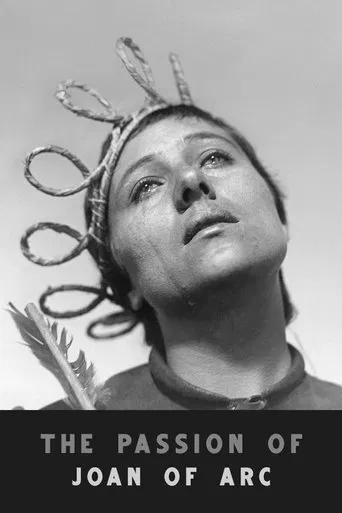
Maria Falconetti's performance, held in extreme close-up for much of the film, is the one most often cited when people ask what a face alone can do in cinema.
A landmark of Carl Dreyer's art and of late silent cinema
Made at the very end of the silent period, it is Dreyer's best-known early work and one of the boldest experiments in how a film can be shot, cut and staged.
History told as an ordeal, not a pageant
Drawn from the actual trial records, it skips battles and spectacle and stays in one room of judges and questions, which makes the story feel immediate and personal.
Why it matters in cinema history
A defining film of the late silent era and a touchstone for art cinema, it showed that close-up, framing and performance could carry a story without the usual machinery of period spectacle.
Watch with intention
Your lens
Treat the faces as the landscape: watch how each close-up shifts power between the accused and the men who question her.
Three things to notice
- The backgrounds: walls are pale and bare, and the sets give almost no sense of where one room ends and the next begins.
- Camera angles: figures are often shot from sharply below or above, and people seem to loom over one another, which sets up who holds power in each exchange.
- Skin and texture: with so little makeup, you can see pores, tears and sweat, and the judges' faces are given as much attention as hers.
One question to carry with you
When a film gives up scenery and spectacle and keeps only faces, what can it show that a wider shot never could?
- Technology
- Sound was arriving: The Jazz Singer appeared in 1927. Silent film was reaching peak visual refinement just as the industry was about to abandon it.
- Industry
- Dreyer, a Dane, was invited to France by the Société Générale des Films. The production built a large, costly set and gave him unusual freedom and time.
- Dominant styles
- German Expressionist design, Soviet montage and Hollywood continuity editing were the main models. Historical films usually meant crowds, costumes and large-scale spectacle.
- Director's moment
- After Master of the House (1925), a domestic chamber drama, Dreyer applied the same close attention to faces and spaces to a much larger historical subject.
Where it came from
Tradition
Religious painting and devotional imagery
Dreyer's frontal faces, stark compositions and attention to expression echo devotional painting, which asks the viewer to look at a face for a long time.
Film
Master of the House (1925)
Dreyer's earlier chamber drama already used close observation of faces and enclosed spaces, a method he scaled up for this film.
Movement
German Expressionism
The stark, non-realistic set design, with Hermann Warm among its creators, draws on Expressionist ideas of space reflecting inner states.
This film
The Passion of Joan of Arc (1928)
New at the timeIt strips a historical subject of spectacle and builds it almost entirely from faces, using bare backgrounds, unusual angles and unbroken scrutiny of an actor's expression.
- Country and moment
- France in the 1920s was recovering from the First World War's losses. Joan of Arc, canonized in 1920, was embraced as a symbol of national unity and Catholic faith, making her a charged subject.
- Politics and religion
- Joan's story touched sensitive ground in France, where Church and state had been formally separated in 1905. The film drew on the surviving trial records and faced scrutiny from church and state censors, who demanded changes.
- The filmmaker's situation
- Carl Dreyer was a Danish outsider, a Protestant by background, invited to make a film in France. He had struggled to finance projects in Denmark and Germany, and the Société générale des films backed this production.
- Society and audience
- Audiences of the time knew Joan as a patriotic heroine. The film instead stresses her ordeal as a young woman facing institutional power. Its reception was mixed at first, and it was cut and reedited after censorship disputes.
- Pace
- Slow, intense and concentrated. It is short at roughly 81 minutes, but it asks for sustained attention, and the drama sits in interrogation rather than action.
- Style
- Extreme close-ups, tilted angles, bare white sets and a restless, gliding camera. Unconventional editing sometimes disregards the continuity rules you may be used to.
- Performance
- Large, direct emotion played largely in the face, without theatrical gestures. It feels closer to modern screen acting than much silent film.
- Format
- Silent, black and white, roughly 1.33:1, with intertitles taken from the trial record. Music depends on the version you watch.
- Versions
- The original negative was lost, and for decades only altered prints circulated. Modern restorations use a copy found in 1981, and their running speed and scores differ.
12+
Suggested age
Teens
German and French ratings are both 12 and the US has none, so 12 fits: the content is intense and emotional rather than graphic, and the silent format suits older children.
Official ratings
- USNR
- Germany12
- France12
Good for
Older children and teens curious about history, faith or film craft may be absorbed by the extraordinary close-up faces, the powerful central performance and the way a story can be told without sound.
May unsettle
- Intensity: Relentless emotional pressure and distress throughout, with a heavy, sombre mood and almost no lighter moments.
- Violence: Includes threats and some harsh physical treatment, plus a disturbing climax. Little is graphic by modern standards, but it is upsetting.
- Mature themes: Religious persecution, abuse of power and the pressure placed on a young person standing by her beliefs.
- Pace: Silent, black-and-white and slow, built mostly from close-ups and intertitles. Younger children may struggle to stay engaged.
Explain first
- It is a silent film: dialogue appears as written title cards, so readers need to keep up, or you may need to read them aloud.
- The story is based on a real 15th-century trial, where church officials judged a young woman's religious claims during a time of war.
- The acting is deliberately intense and theatrical, and the camera stays close to faces. This is a style choice, not a mistake.
Talk about it after
>How did the film make you feel what the characters were feeling without using sound or spoken words? Which faces or moments stayed with you?
Cinespective's own guidance, a draft: check it against the official ratings and your own judgement. Second opinions: Common Sense Media, IMDb (see its Parents Guide). Ratings from TMDB.