Action · Comedy · Mystery
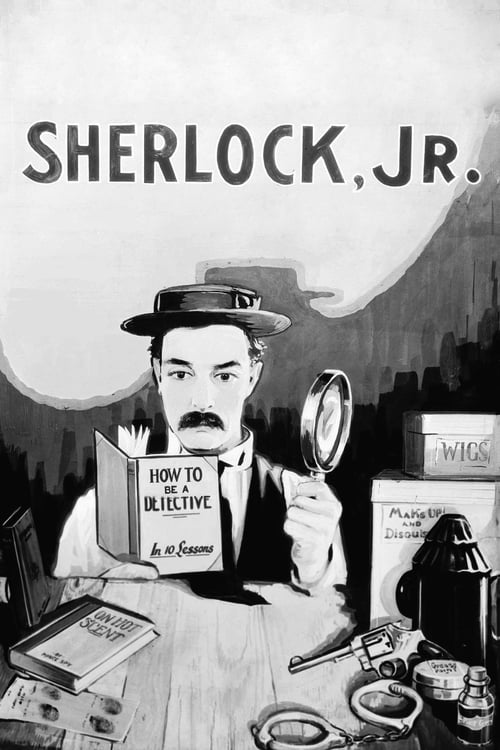
Sherlock Jr.
American
1924 · Directed by Buster Keaton · 45 min


Action · Comedy · Mystery
American
1924 · Directed by Buster Keaton · 45 min

Meaning, unpacked
Central idea
The film is about the gap between the life we have and the life the movies promise us. It can be read as a comedy about cinema's power to shape desire, and about how a shy, ordinary person learns to act in the real world.
What it means
A humble projectionist falls asleep, steps into the film he is showing, and becomes a glamorous detective. Back in the real world, he is the same awkward young man as before. At its heart, this is a film about the gap between the life we have and the life the movies promise us. It is a comedy about cinema's power to shape desire, and about how a shy, ordinary person learns to act in the real world.
Notice how he borrows his gestures from the screen. Films teach people how to behave, how to love, how to solve problems, and here that is both a joke and a sharp observation. Courtship becomes a set of rules nobody ever taught him, and the humour comes from an earnest man trying to perform romance correctly. Even the mystery plot plays with the idea: evidence misleads, the wrong person is condemned, and a convincing story turns out to be wrong. Keaton's hero is neither a fool nor a genius. He is a determined amateur, and the comedy comes from effort meeting an indifferent physical world.
Why it mattered
When the hero walks into the screen, the setting changes around him with every cut. Editing becomes a physical force, something that happens to his body, and it is the film's most famous technical feat. This is a comedy that understands cinema's own grammar. It showed that slapstick could be rigorous, formally adventurous and truly cinematic, not just a string of pratfalls.
Most of the illusions were made in the camera, by precise staging, not by trick editing afterwards. For the dream sequence, the camera and Keaton had to be placed exactly the same way from shot to shot, and Keaton reportedly used a surveyor's methods to line things up. He kept the camera wide and still, so you can see the danger and the timing is part of the joke. The billiard table sequence turns a booby-trapped ball into a choreographed run of near-misses, and the motorcycle ride on the handlebars is a stunt with real danger, filmed clearly enough that you believe it.
Before anyone tells you what to think: what did you make of it?
Log in to rate it and leave commentsIt takes one click with Google or an email link. You come straight back here.
Rate it, keep your notes, and find the next film.
Free, no ads. Your journal, your lists, a Cine Guide that remembers you.
Create your free spaceIt was not one of Keaton's biggest earners. Reviews were polite and often admired the stunts, but audiences expecting a simple small-town romance sometimes found the trick sequences odd. Over the decades, the inventiveness that baffled some viewers came to look like an achievement. Today it is seen as one of his most inventive and formally ambitious films, and its short length and technical daring make it a regular first choice for introducing people to silent comedy.
Its idea of a character crossing between the screen and the real world recurs in later films that play with the border between audience and fiction. Its clear, real physical comedy also influenced stunt-based filmmakers. The dream sequence is a staple of film courses and video essays, used to teach editing, continuity and how audiences read the screen. And the image of the deadpan projectionist helped fix the Great Stone Face as shorthand for unflappable comic stoicism. Remember the booth: we have all learned something about life from a screen. Keaton noticed that, and made it funny, a century ago.
What happens
He wakes to find the girl has cleared him herself, tracing the stolen watch to the pawnbroker. They reconcile. Unsure how to kiss, he copies the couple on screen, then finds himself holding twins.
The last image
Holding a pair of infants, he scratches his head in bewilderment, his deadpan face turned toward the camera.
What it says
The dream hero was brilliant, but real life has no script, and the girl solves the mystery while he sleeps. The ending shows him still learning love from movies, and the film laughs warmly at how much we borrow from the screen.
Or follow an idea from this film

Continue the director
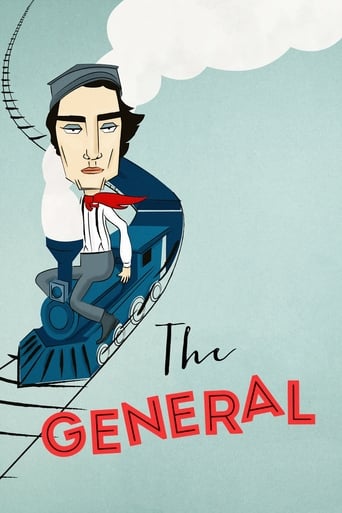
The General (1926)
Keaton's most celebrated feature builds a whole narrative around a train chase. It shows the same precision at larger scale and with a more developed story.
Compare another approach
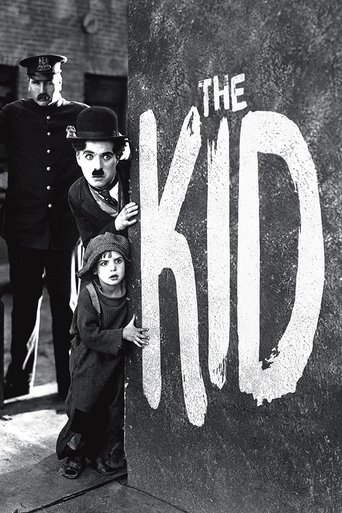
The Kid (1921)
Chaplin's comedy blends slapstick with sentiment, a useful contrast with Keaton's cooler, more mechanical, formally driven style.
Follow the idea
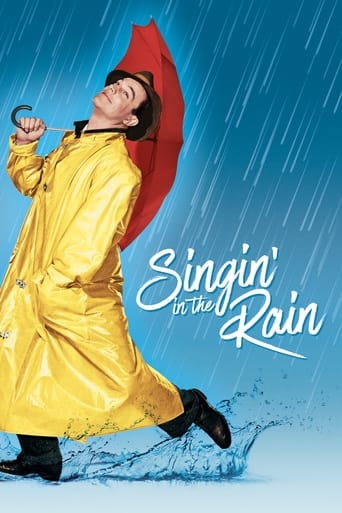
Singin' in the Rain (1952)
Another comedy about the film industry itself, treating the movies' craft and illusions with affection and wit.
See its influence
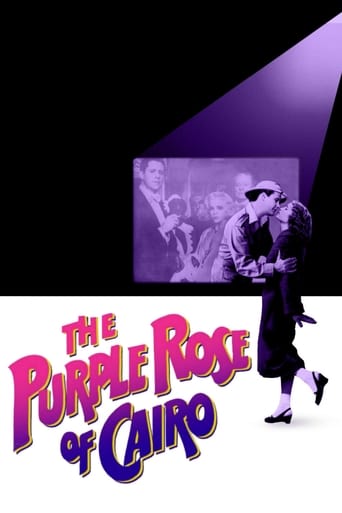
The Purple Rose of Cairo (1985)
Allen's romantic comedy about the border between audience and screen shows how one of this film's central ideas travelled.