Drama
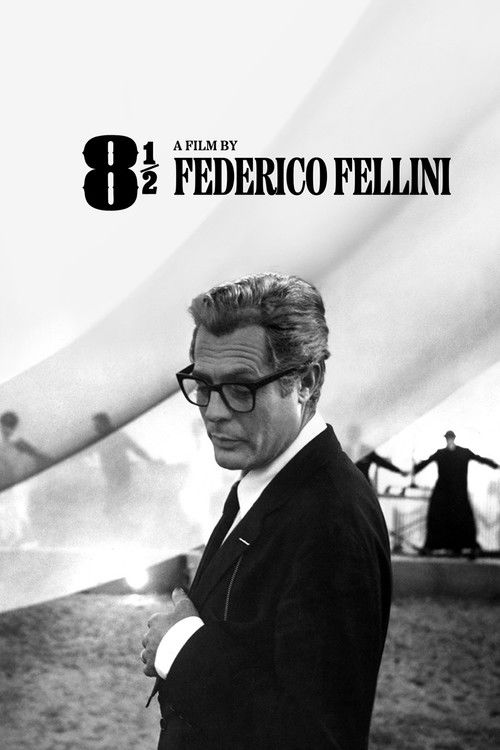
8½
Italian
1963 · Directed by Federico Fellini · 139 min


Drama
Italian
1963 · Directed by Federico Fellini · 139 min




Meaning, unpacked
Central idea
The film can be read as Fellini's argument that a crisis of creativity is itself material for art: by admitting he has nothing planned to say, Guido, and Fellini, find a way to make a film from confusion, desire and memory.
What it means
A film director goes to a spa to prepare his next picture. He has no story, and everyone wants answers. In the end he admits it, and that admission becomes the film. That is the central idea: Fellini argues that a crisis of creativity is itself material for art. By confessing he has nothing planned to say, Guido, and Fellini with him, builds a film out of confusion, desire and memory.
The film treats pretending to know as the real failure. Guido dodges confrontation with charm, evasions and fantasies, so his emotional cowardice matters as much as his creative block. The women in his life appear through his eyes, and the film can be read as exposing how he uses them. Memories of strict religious schooling, and a punished glimpse of desire, suggest shame and pleasure were taught to him together. The ending embraces contradiction: life and art do not need to be tidied up to be meaningful.
Why it mattered
The film works by association, not cause and effect. Fantasies and memories are cut in as directly as events, so the structure mirrors a mind that cannot separate them. The opening dream shows Guido's anxiety as a surreal image rather than explaining it, and teaches you to read everything after as inner experience. Gianni Di Venanzo's crisp black and white makes the fantasies feel like heightened reality, not obvious special effects.
Its structure is loose but carefully built, with recurring images and a clear emotional movement from evasion to acceptance. At the time it was received as a major event, in Italy and abroad. It won the Oscar for Best Foreign Language Film and became a big arthouse success. Some critics were put off by the dream structure and the artist's own anxieties, but it was widely discussed.
Before anyone tells you what to think: what did you make of it?
Log in to rate it and leave commentsIt takes one click with Google or an email link. You come straight back here.
Rate it, keep your notes, and find the next film.
Free, no ads. Your journal, your lists, a Cine Guide that remembers you.
Create your free spaceIt set the template for films about artists blocked by their own success, from Bob Fosse's All That Jazz to Charlie Kaufman's Synecdoche, New York. It also encouraged filmmakers to treat memory and fantasy as ordinary cinematic material. It was reworked as the Broadway musical Nine in 1982, which won the Tony for Best Musical, and Rob Marshall made a film version in 2009. The word Felliniesque, and the image of Guido's black suit, dark glasses and hat, live on.
Today it is treated as one of the central films of European art cinema, and the key film about the creative process. Its reputation has stayed high. The debate now centres on its treatment of women and the male artist's self-regard, which are fair questions. If you want to go on, try La Dolce Vita, then All That Jazz.
What happens
At the launch site, pressed by the press and cast, Guido imagines his own death and gives up the film. Then Luisa says she will accept him honestly, and he accepts his confusion and everyone in it.
The last image
Every figure from Guido's life, living and remembered, joins hands and dances in a circle.
What it says
The ending says you don't need to tidy life or art to make them meaningful. Guido's honest admission that he has nothing to say becomes the film you just watched. The circle gathers contradiction into one frame, turning failure into acceptance.
Or follow an idea from this film

Continue the director
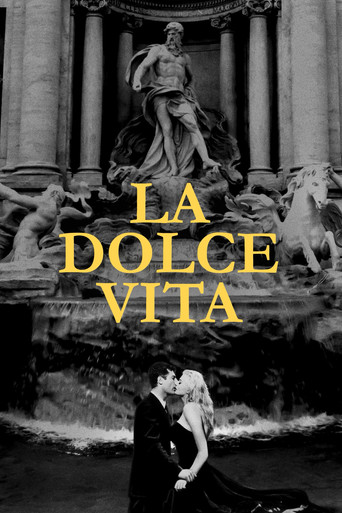
La Dolce Vita (1960)
Fellini's earlier landmark shows the same circling, episodic form, with Mastroianni again at its centre, and is the best way to feel how far 8½ turns inward.
See what influenced it
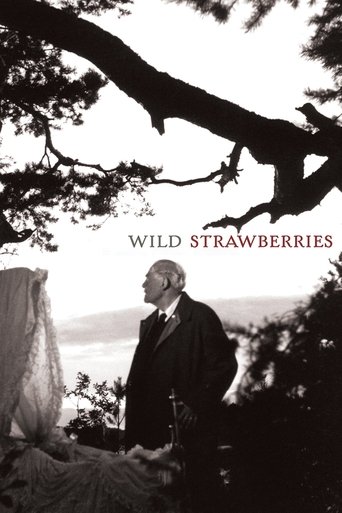
Wild Strawberries (1957)
Bergman's quieter, colder treatment of dream and memory offers a useful contrast to Fellini's comic, exuberant version of the same inward turn.
Follow the idea
Day for Night (1973)
Truffaut looks at a film set from the inside, so it makes a good companion on the act of making a film.
Jump forward
All That Jazz (1979)
A direct descendant that reworks 8½'s structure for a Broadway choreographer, with a far darker approach to the artist's self-destruction.

Explore the era or movement
The 400 Blows (1959)
Truffaut's autobiographical debut shows the other major route for the personal film of the period, grounded in real childhood rather than fantasy.