Drama · Science Fiction
Things to Come
British
1936 · Directed by William Cameron Menzies · 100 min


Drama · Science Fiction
British
1936 · Directed by William Cameron Menzies · 100 min











Meaning, unpacked
Central idea
The film is a debate about whether humanity can be steered by reason and science, or whether its attachment to war, tradition and fear will always pull it back. It argues for the first, while letting the second have real voices.
What it means
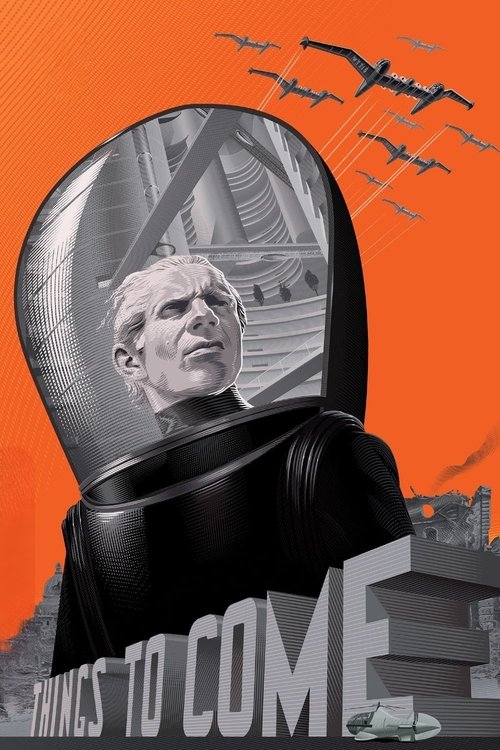
Things to Come is less a story than an argument, dressed in extraordinary sets. Everytown is bombed at Christmas, a long war drags on until civilisation collapses, and then airmen arrive and a bright new world is built. The film asks whether humanity can be steered by reason and science, or whether its love of war, tradition and fear will always pull it back.
H. G. Wells, who wrote it, argues for reason, but he lets the other side speak at real length, and that keeps the film alive. Technology is neither good nor bad in itself. What matters is who commands it and what they want from it, so progress becomes a moral choice. Peace arrives through engineers and aviators, which you can read as inspiring or as naive about rule by experts. Most viewers feel both. The film ends on a choice between the stars and oblivion, and nearly ninety years on, that question is still open.
Why it mattered
In 1936 it was a rare attempt to treat science fiction as serious public argument rather than pulp adventure. Few films had tried to show a whole future civilisation on this scale. Wells adapted his own book, The Shape of Things to Come, and negotiated a strong say over the film, so his ideas about science, war and government arrive directly. It is as much an essay in pictures as a story.
It was also a designer's film. William Cameron Menzies, one of Hollywood's leading production designers, was brought to London by Alexander Korda to give each era its own look, from rubble and improvised weapons to polished, geometric architecture. Miniatures, matte paintings and composite shots built the vast cityscapes. Arthur Bliss's score added ceremonial weight, and its marching theme became one of the best-known pieces of British film music of the decade.
Before anyone tells you what to think: what did you make of it?
Log in to rate it and leave commentsIt takes one click with Google or an email link. You come straight back here.
Rate it, keep your notes, and find the next film.
Free, no ads. Your journal, your lists, a Cine Guide that remembers you.
Create your free spaceIts streamlined, designed future helped set the visual language of later science fiction. Its idea of the genre as a forum for social argument runs through films such as The Day the Earth Stood Still and 2001: A Space Odyssey, which are the natural places to go next. Its gleaming rebuilt city and tunic-clad technocrats still stand as the image of how the 1930s pictured tomorrow, and Bliss's music lived on in concert halls.
At the time, audiences and critics admired its scale and design, while others found the speeches heavy and the characters thin. It cost a lot and was not a clear commercial triumph, and Wells himself had reservations. Today it is valued less for its drama than as a document of 1930s hopes and fears about technology, planning and war. The design is widely admired, while its faith in benevolent rule by experts now looks debatable. The limits are real: speeches outweigh character, and many scenes turn static.
What happens
The space gun launches before the mob can stop it, sending the first travellers around the Moon, including Cabal's daughter. Cabal watches her go, then asks whether humanity will choose the whole universe or nothing at all.
The last image
Cabal's closing speech about the universe or nothing is delivered over images of the stars, so the film ends looking outward.
What it says
Wells argues that progress is a choice each generation must make again. The mob lost this time, but nothing guarantees the next time. So the film ends on a question put to you, not a promise.
Or follow an idea from this film
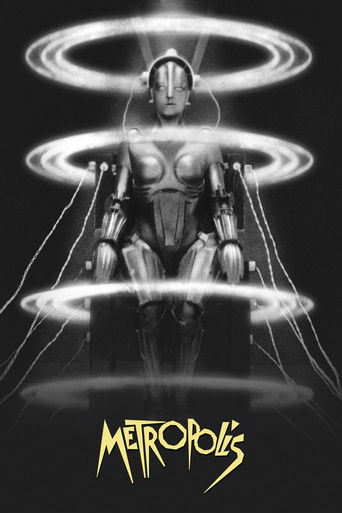

Compare another approach
Metropolis (1927)
Another monumental city of the future. Compare its visual imagination and ambivalent politics with Wells's confident, rationalist version.
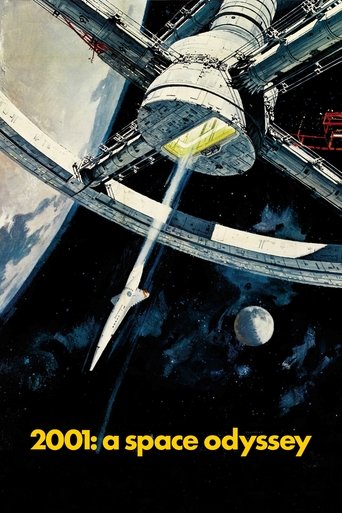
Jump forward
2001: A Space Odyssey (1968)
The grand successor to the large-scale, idea-driven science fiction tradition. It treats progress as a question rather than an answer.
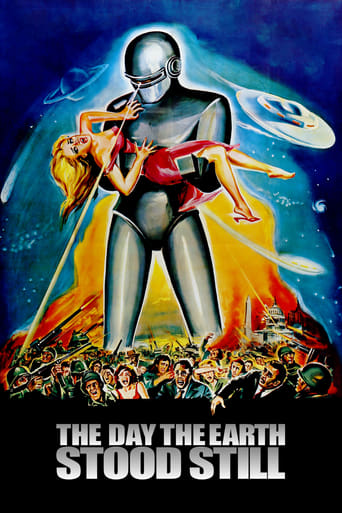
See its influence
The Day the Earth Stood Still (1951)
A postwar science fiction film that uses the genre for open argument about war and humanity's future.
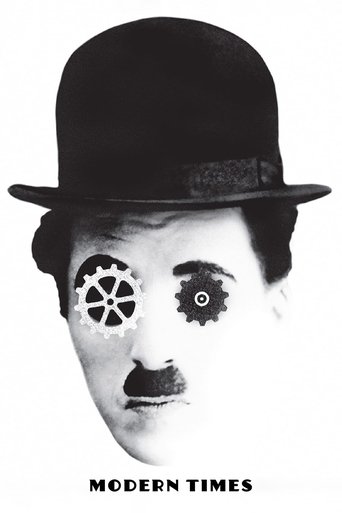
Explore the era or movement
Modern Times (1936)
Released the same year, it looks at the machine age with comic scepticism, a useful counterweight to Wells's faith in technology.
Continue the director
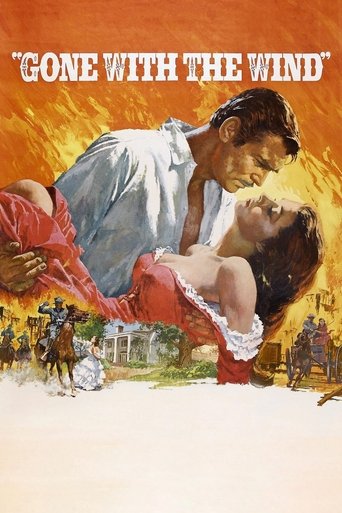
Gone with the Wind (1939)
Menzies was its production designer. It shows his visual scale and planning in a very different genre.