

Drama · War · Romance
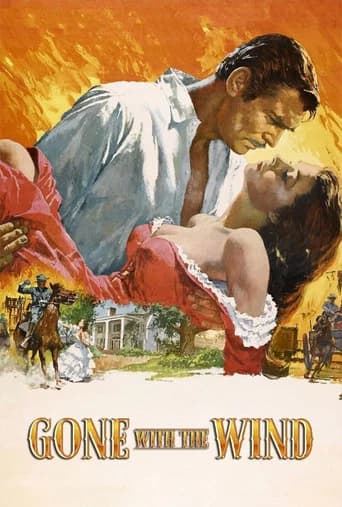
Gone with the Wind
Avg rating 8.7 / My rating TBC
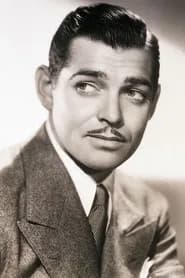
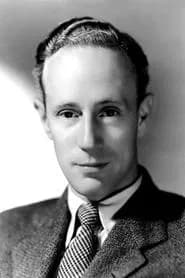
1939 · Directed by Victor Fleming · With Vivien Leigh, Clark Gable, Olivia de Havilland
- Classical Hollywood
- Historical Epic
- Melodrama
- War Film
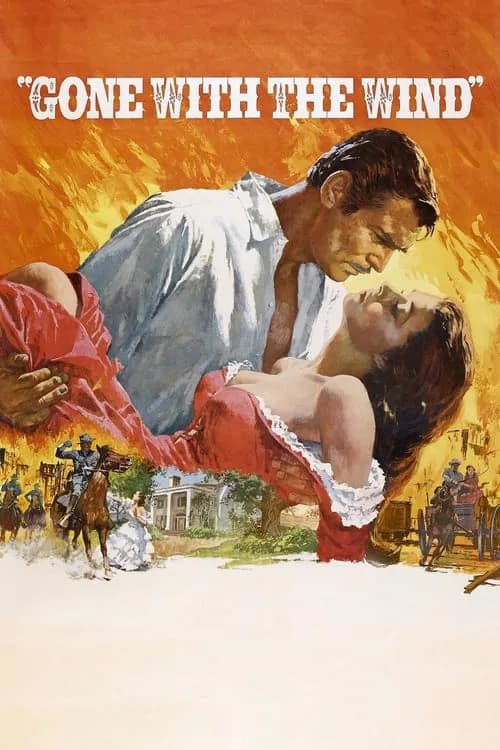
Scarlett O'Hara, the headstrong daughter of a Georgia plantation owner, is used to getting her own way. As the Civil War breaks over the South, her world is stripped away, and she meets Rhett Butler, a man who sees through her. A four-hour Technicolor epic of romance and survival.
Film info
- Runtime
- 3h 58m · 238 min
- Format
- Originally a roadshow release with an overture and intermission music. Restored versions keep them.
- IMDb
- 8.2 / 10 (354,268 votes)
- Rotten Tomatoes
- 90% (critics)
- Metacritic
- 97 / 100
- TMDB
- 7.9 / 10 (audience, 4,499 votes)
- Trailer
- ▶ Watch the trailer

Before watching
Spoiler-free · about 2 minutes
Short on time? Spoiler-free
A 3-minute summary
Why watch this?
The defining Hollywood studio-system epic
Produced by David O. Selznick and released in 1939, it won eight competitive Academy Awards and sums up what the studio era could do with money, colour and stars at maximum scale.
One of the great star performances
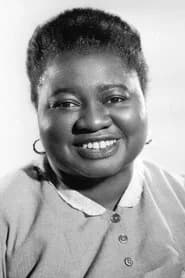
Vivien Leigh carries almost every scene as Scarlett, a heroine who is charming, selfish and determined all at once. Clark Gable and Hattie McDaniel give her equally strong opposition.
A landmark you must also read critically
Its Technicolor spectacle is extraordinary, but its picture of the Old South is a romanticised, contested one. Watching it well means admiring the craft while questioning the history it presents.
Why it matters in cinema history
A culmination of the 1930s studio system and its early Technicolor era, it set the template for the prestige roadshow epic and shows how Hollywood shaped popular memory of American history.
Watch with intention
Your lens
Watch it as a star-driven melodrama built on a complicated, often unlikable heroine, and notice how the film's picture of history is made to feel natural.
Three things to notice
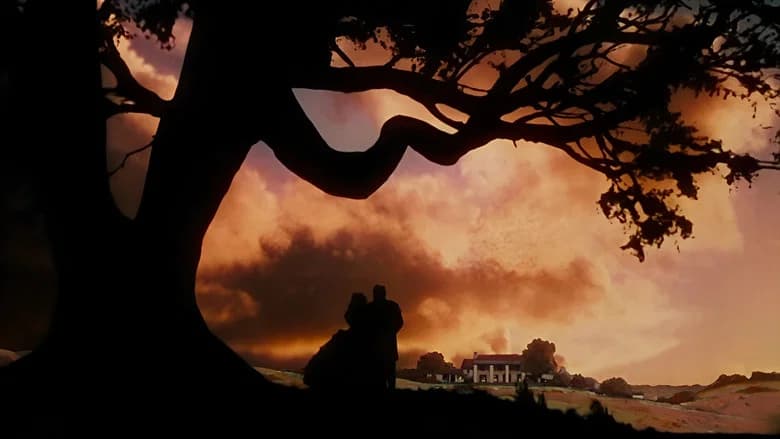
- How colour is used: costume, skies and firelight are designed to signal mood and change, not just to decorate the frame.
- How Vivien Leigh's face and posture register shifts of calculation and feeling, often within a single shot.
- Whose point of view the film adopts, and whose lives stay in the background of the frame.
One question to carry with you
Is Scarlett someone you are meant to admire, or merely someone you cannot look away from, and does the film seem to know the difference?
- Technology
- Three-strip Technicolor was still new and expensive, used mainly for cartoons, musicals and a few features. Using it for a long, serious drama of this size was a major commitment.
- Industry
- Producer David O. Selznick, not the director, was the controlling creative force. Backed by MGM distribution, he ran a publicised casting hunt for Scarlett and a famously troubled, multi-director production.
- Dominant styles
- Classical Hollywood storytelling favoured clear continuity, big stars and emotional melodrama. Literary best-sellers were prized source material, and Margaret Mitchell's 1936 novel was a publishing phenomenon.
- Audience
- Audiences in 1939 had lived through the Depression and expected war in Europe. A story of ruin, endurance and rebuilding spoke to those anxieties, and the film was sold as a major event.
Where it came from
Film
The Birth of a Nation (1915)
An earlier epic that set a template for large-scale Civil War and Reconstruction drama, and for a sympathetic view of the white South.
Tradition
Plantation romance and the Lost Cause
A literary and cultural tradition, drawn on by Mitchell's novel, that remembered the antebellum South as a vanished gracious order.
Film
Snow White and the Seven Dwarfs (1937)On Cinespective
Showed that Technicolor and a very long feature could draw a mass audience, helping make colour a viable bet for big productions.
This film
Gone with the Wind (1939)
New at the timeFew films had tried this scale: a four-hour running time with an intermission, full Technicolor, and enormous crowd and set-piece spectacle in service of a melodrama.
- Country and moment
- Shot in 1938–39 and released in December 1939, after years of Depression hardship and just as war broke out in Europe. A story of a society upended and rebuilt spoke to an anxious public.
- A national phenomenon
- Margaret Mitchell's 1936 novel sold in vast numbers and won the Pulitzer Prize. The casting of Scarlett became a nationwide guessing game, so expectations were enormous before filming began.
- Race and the Lost Cause
- The film romanticises the antebellum South, a view widely shared in white America then. Black critics and press objected to its portrayal of slavery. Segregation also kept Black cast members from the Atlanta premiere.
- Politics and censorship
- Producer David O. Selznick had to negotiate with the Hollywood Production Code office over the novel's sexual content and language. He also toned down some of its racial material after protests.
- Pace
- Unhurried and episodic: it plays like a serialised novel, with an intermission roughly midway. Plan it as two sittings if needed.
- Style
- Lavish studio-era melodrama: sweeping orchestral score, painted backdrops, large sets, heightened emotion and theatrical dialogue.
- Colour
- Rich three-strip Technicolor with saturated reds and golds, in the standard 1.37:1 frame.
- Content
- Contains a romanticised view of slavery and the Confederacy, with racial stereotypes and dated attitudes. Many viewers read it alongside historical context.
- Performance
- Large, stagey gestures typical of 1939, balanced by close-ups that let Leigh and Gable play real nuance.
- Format
- Originally a roadshow release with an overture and intermission music. Restored versions keep them.
12+
Suggested age
Teens
US G and French TP allow all ages, GB says PG and Germany 12; 12 suits the length, adult themes and the need to discuss its view of slavery.
Official ratings
- USG
- UKPG
- Germany12
- FranceTP
Good for
Older children and teens who enjoy sweeping Technicolor epics, lavish costumes and a headstrong, flawed heroine. It's a good way into classic Hollywood melodrama and into discussing how films present history.
May unsettle
- Dated attitudes: Slavery and the Old South are shown in a romanticised way, with demeaning racial stereotypes and period language. This is the most significant concern and needs context.
- War aftermath: Scenes of wounded and dying soldiers, chaos and fire during wartime. Little graphic detail, but some sequences are distressing.
- Mature themes: Troubled marriages, obsessive love, grief and some coercive behaviour between adults. These are implied rather than shown explicitly.
- Intensity: Long stretches of emotional hardship and loss, plus a grim, bleak tone in places, may weigh on sensitive viewers.
Explain first
- The film shows the Civil War South from the planters' point of view and glosses over the cruelty of slavery. Tell children that this is a distorted picture.
- It runs nearly four hours with an intermission, so plan two sittings with younger teens.
- It's a 1939 melodrama, so the acting is theatrical and the pace is slow compared with modern films.
Talk about it after
Whose experiences does the film put at the centre, and whose are pushed to the edges? How might the story feel different told from another character's point of view?
Cinespective's own guidance, a draft: check it against the official ratings and your own judgement. Second opinions: Common Sense Media, IMDb (see its Parents Guide). Ratings from TMDB.