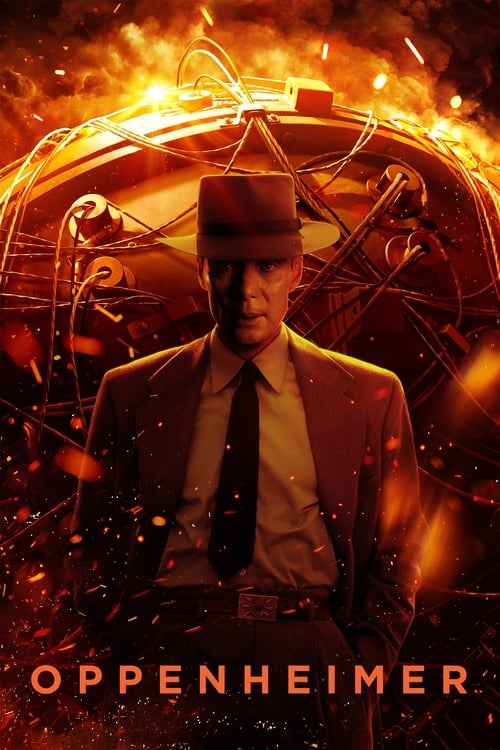
Drama · History
Oppenheimer
American
2023 · Directed by Christopher Nolan · 181 min


Drama · History
American
2023 · Directed by Christopher Nolan · 181 min








Meaning, unpacked
Central idea
The film can be read as a study of what it means to create something world-changing and then be unable to control its meaning. It explores ambition, guilt and the politics of reputation, and how history is shaped by those who tell it.
What it means
Oppenheimer is about making something that changes the world, and then losing control of what it means. J. Robert Oppenheimer builds the atomic bomb, then learns that its use belongs to governments and generals. The question running through the film is what moral claim a creator keeps over their creation.
Two timelines carry it. One, in colour, is Oppenheimer's own view. The other, in black and white, is the public account, where you learn that Lewis Strauss engineered his fall. Together they suggest that biography is argued from competing motives, not simply recorded. Around that sit other themes: pure science cannot stay apart from war and politics, ego and envy drive events as much as principle, and Oppenheimer's imagination is a gift that also isolates him.
Why it mattered
At the time, the film showed that a long, adult, R-rated historical drama on large-format film could still work as a global cinema release in the streaming era. Instead of a cradle-to-grave chronology, it tested the biopic itself, using two timelines with different colour treatments and viewpoints. Jennifer Lame's editing cut even conversations with the urgency of a heist, and the black-and-white sections needed a film stock that did not yet exist in usable form, so Kodak developed it.
It also mattered for how it reached audiences. Nolan left Warner Bros. after it released its 2021 slate in cinemas and on streaming at once, and Universal backed his preference for exclusive theatrical runs. The film opened on 21 July 2023, the same day as Barbie. Audiences turned the clash into Barbenheimer, and both films set box-office records.
Before anyone tells you what to think: what did you make of it?
Log in to rate it and leave commentsIt takes one click with Google or an email link. You come straight back here.
Rate it, keep your notes, and find the next film.
Free, no ads. Your journal, your lists, a Cine Guide that remembers you.
Create your free spaceIts influence reaches beyond the box office. It strengthened the case for large-format film and long, adult historical drama as theatrical events, and helped revive 70mm and IMAX exhibition. It also renewed public talk about the Manhattan Project, Oppenheimer's 1954 hearing and the ethics of nuclear weapons, and sent new readers to American Prometheus, the biography it is based on.
Today it is widely seen as the peak of Nolan's career and one of the major films of the 2020s. It earned close to a billion dollars and won seven Academy Awards, including Best Picture, Best Director and Best Actor for Cillian Murphy. Critics still raise fair objections: thin roles for women, the absence of Japanese or New Mexican victims, and a final stretch heavy with detail. Debate also continues over how far its subjective method can be trusted as history, but its craft is rarely questioned.
What happens
Strauss's confirmation is rejected, exposing that he engineered Oppenheimer's downfall. Then the film returns to the pond: Oppenheimer tells Einstein he fears he started a chain reaction that will destroy the world.
The last image
After the pond talk, Oppenheimer pictures the earth consumed by chain reactions of fire, spreading across the globe.
What it says
Justice for Oppenheimer comes too late to matter. The real verdict is his own: he cannot take back what he made. The film ends on his vision, not a vindication, because the consequences are still unfolding.
Or follow an idea from this film

Continue the director
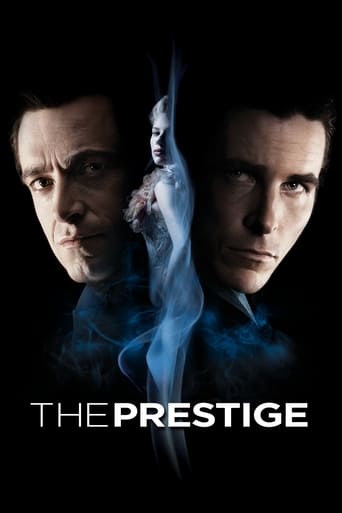
The Prestige (2006)
Nolan's earlier study of ambition and sacrifice, with a similarly layered chronology, shows the themes that Oppenheimer later treats on a historical scale.
Follow the idea
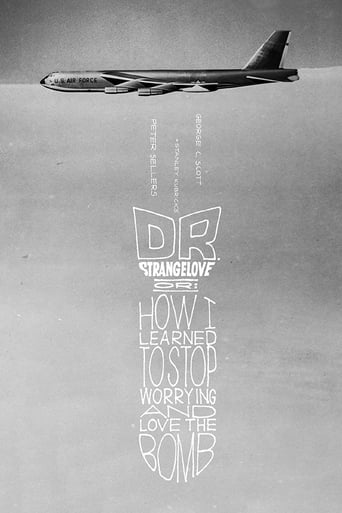
Dr. Strangelove (1964)
The nuclear age told as satire, with institutions and egos driving catastrophe. A useful contrast in tone with Oppenheimer's tragic seriousness.
See what influenced it
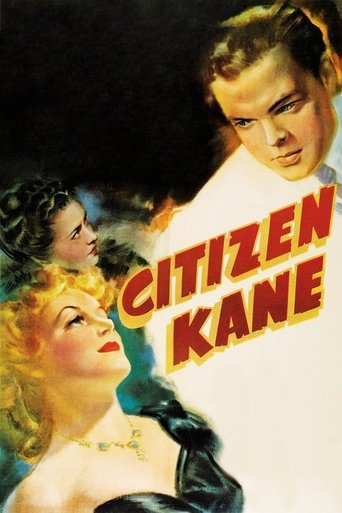
Citizen Kane (1941)
The classic example of building a biography from conflicting viewpoints, which helps clarify what Nolan does with two timelines.
Compare another approach
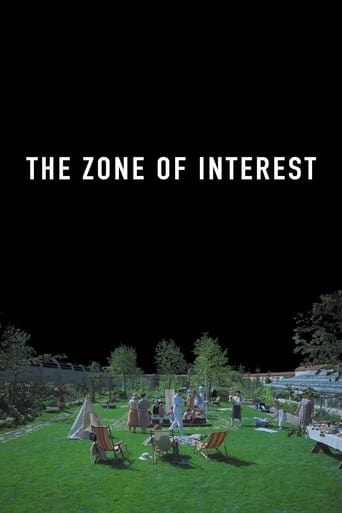
The Zone of Interest (2023)
Released the same year, it handles twentieth-century atrocity through restraint and sound, offering a stark counterpoint to Oppenheimer's immersive intensity.
Explore the era or movement
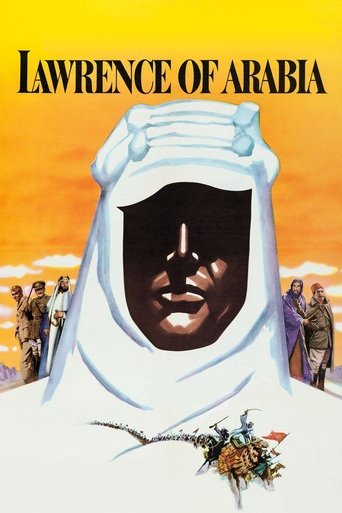
Lawrence of Arabia (1962)
The great large-format biographical epic. Seeing it shows the tradition of expansive cinema that Oppenheimer revives and complicates.