

Adventure · History · War
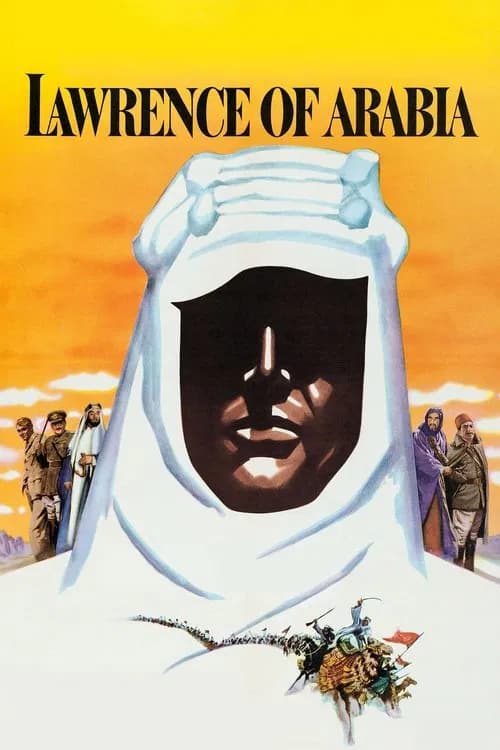
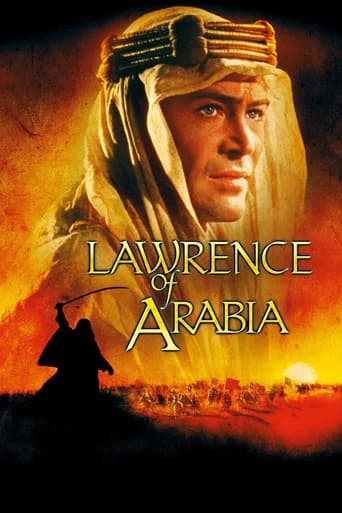
Lawrence of Arabia
Avg rating 8.9 / My rating TBC
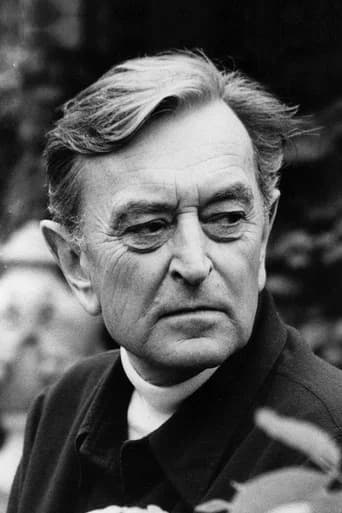
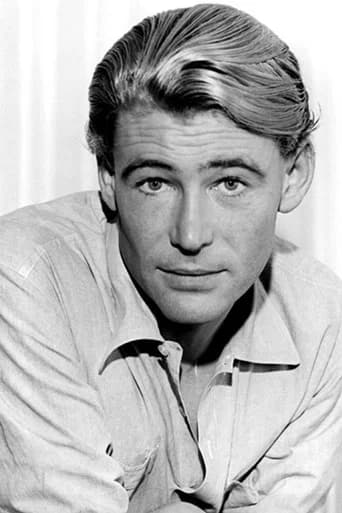
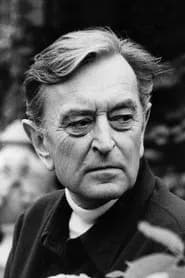
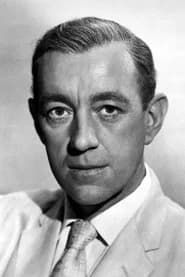
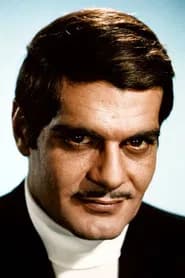
1962 · Directed by David Lean · With Peter O'Toole, Alec Guinness, Omar Sharif
- Historical Epic
- War Film
- Classical Hollywood
In 1916 a restless, unconventional British officer is sent into the Arabian desert and becomes entangled in a revolt against the Ottoman Empire. David Lean's film is a huge, patient portrait of a man and a landscape, more interested in ambition and identity than in battle.
Film info
- Runtime
- 3h 48m · 228 min
- Format
- Shot in 70mm widescreen. Seeing it on a large screen, or the largest you can, makes a real difference.
- IMDb
- 8.3 / 10 (334,419 votes)
- Rotten Tomatoes
- 93% (critics)
- Metacritic
- 100 / 100
- TMDB
- 8.0 / 10 (audience, 3,601 votes)
- Trailer
- ▶ Watch the trailer
Before watching
Spoiler-free · about 2 minutes
Why watch this?
The summit of the roadshow epic
Lawrence of Arabia is widely regarded as the defining epic of the 1960s and David Lean's best-known work. It won seven Academy Awards, including Best Picture and Best Director, and set the standard for large-scale widescreen filmmaking.
A film made for the biggest screen
Shot on 70mm by Freddie Young, it turns the desert into a character. Its images of heat, distance and emptiness are best experienced as large as possible.
An epic with a troubled centre
Peter O'Toole's breakthrough performance gives a heroic story an unsettled psychology. The film asks what drives a man to lead, and whether he knows who he is.
Why it matters in cinema history
A defining film of the widescreen historical epic, it showed that spectacle could carry a morally complex, adult character study rather than only pageantry.
Watch with intention
Your lens
Watch it as a study of a man and the landscape that magnifies him, where every vast image also says something about his mind.
Three things to notice
- How often the frame is mostly empty sky and sand, with tiny figures far away, and how long Lean lets you watch them approach.
- Peter O'Toole's shifts of manner: playful, intense, theatrical, withdrawn. Note how others react to him in the same scene.
- Maurice Jarre's score and the use of silence, and how sound changes between cramped interiors and open desert.
One question to carry with you
Is Lawrence being swept along by events, or is he using the desert and the cause to become someone he wants to be?
- Industry
- Hollywood and British producers answered television's growth with long roadshow films, with overtures and intermissions, sold as special events in large theatres.
- Technology
- Wide 65mm and 70mm formats were prestige tools. Lean and Freddie Young used them for desert expanses and very long lenses, not only for crowds.
- Dominant styles
- Biblical and ancient-world epics such as Ben-Hur dominated the genre. Many leaned on pageant and piety, with relatively simple heroes.
- Director's moment
- Lean came to this film after The Bridge on the River Kwai, which had won him major international success and the freedom to attempt something larger.
Where it came from
Film
The Bridge on the River Kwai (1957)
Lean's earlier war drama also studied an obsessive man and a flawed sense of duty, and gave him the stature to attempt a larger project.
Film
Ben-Hur (1959)On Cinespective
The most successful recent epic, it proved audiences would pay for long, large-format roadshow films.
Tradition
Seven Pillars of Wisdom
Lawrence's own memoir of the Arab Revolt is the principal source for the story and for its self-mythologising tone.
This film
Lawrence of Arabia (1962)
New at the timeIt brought the scale of the Hollywood epic to a modern, ambiguous protagonist and made emptiness, not crowds, the source of spectacle.
- Country and moment
- In the early 1960s Britain was giving up its empire, and the 1956 Suez Crisis had exposed its reduced power. A film about a celebrated imperial-era figure arrived in that uncertain mood.
- Politics and history
- The film looks back to the Arab Revolt against Ottoman rule in the First World War. In 1962 Arab nationalism, oil and Cold War rivalry kept the region in the headlines.
- The filmmaker's situation
- David Lean was a leading name after The Bridge on the River Kwai (1957). He spent well over a year filming in Jordan, Morocco and Spain, with producer Sam Spiegel backing the scale.
- Cold War blacklist
- Co-writer Michael Wilson had been blacklisted in Hollywood during the McCarthy era. His work on the script went uncredited on release, and his credit was restored decades later.
- Pace
- Deliberate and long, with an intermission. The film builds through landscape, travel and conversation as much as through action.
- Format
- Shot in 70mm widescreen. Seeing it on a large screen, or the largest you can, makes a real difference.
- Colour
- Colour, with a bleached, golden palette and strong contrast between the heat of the desert and dim interiors.
- Performance
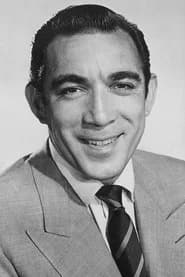
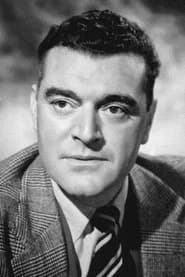
- Large, theatrical performances from O'Toole, Guinness, Quinn and Sharif, in a literate script that favours speeches and argument.
- Versions
- The 228-minute running time reflects the restored cut with overture and intermission. Earlier release versions were shorter.
- Tone
- Epic in scale but sceptical about heroism. It is not a straightforward war adventure.
12+
Suggested age
Teens
US and GB rate it PG, France U and Germany 12; the 12 fits best, since it runs nearly four hours, with war violence and mature themes beyond younger children.
Official ratings
- USPG
- UKPG
- Germany12
- FranceU
Good for
Older children and teens who enjoy epic adventure, vast desert landscapes, big-screen spectacle and a complex, ambiguous central character. It rewards patient viewing and sparks good conversation about heroism.
May unsettle
- War violence: Battle scenes and killing, some of it harsh, though mostly not graphic by modern standards.
- Mature themes: Includes brutality and psychological distress, handled seriously and without much softening. Some scenes are disturbing for younger viewers.
- Peril: Desert travel is shown as dangerous, with moments of real threat and suffering.
- Pace: Very long, with an intermission, and a slow, talky stretch in places. Younger children may lose interest.
Explain first
- It is based on real events in the First World War, when Arab tribes revolted against Ottoman Turkish rule in the Middle East.
- The film is nearly four hours with an intermission, so plan breaks or watch it in two sittings.
- It is a 1962 film, and some depictions of Arab characters and the period reflect the attitudes and casting practices of its time.
Talk about it after
What makes someone a hero, and is the person everyone admires the same as the person he sees in the mirror?
Cinespective's own guidance, a draft: check it against the official ratings and your own judgement. Second opinions: Common Sense Media, IMDb (see its Parents Guide). Ratings from TMDB.