Drama
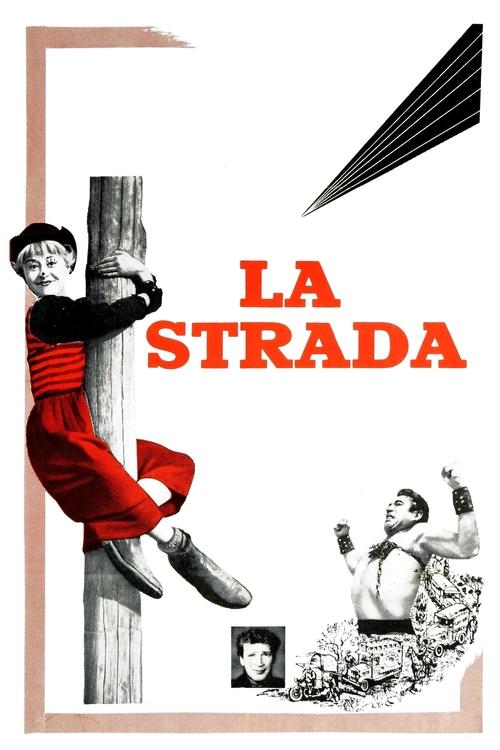
La Strada
Italian
1954 · Directed by Federico Fellini · 115 min


Drama
Italian
1954 · Directed by Federico Fellini · 115 min




Meaning, unpacked
Central idea
The film can be read as a study of how people fail to value those closest to them, and of how every person, however small, has a purpose that others may not see in time.
What it means
La Strada rests on a simple, painful idea: people fail to value those closest to them, and every person, however small, has a purpose that others may not see in time. A strongman buys a young woman, Gelsomina, and takes her on the road. A high-wire performer, the Fool, offers her another way of seeing herself. The film ends on one man's face beside the sea.
Because Gelsomina is bought, the bond starts as ownership, and the film asks whether affection and loyalty can grow inside something that began as property. It never gives an easy answer. Zampanò, whose violence can be read as that of a man with no language for feeling, is the other half of the question. The film asks you to understand him, not to excuse him. In the quietest scene, the pebble conversation, the Fool says even the smallest things have a place in the world. Apparent uselessness, the film argues, is just a failure to look closely.
Why it mattered
In 1954 Italian cinema was known for neorealism: real roads, real poverty, real locations. La Strada keeps all of that, but treats it as fable. Its clown figures, its allegory and its quiet religious undertone turned a story of poor travelling performers into something closer to a fairy tale. Fellini was showing that realism could hold spiritual and emotional truth, and that cinema could move from social record toward inner life.
That mix started an argument. Some Italian critics on the left said he had abandoned neorealism's social duty for sentiment and symbol. Abroad, audiences responded warmly and the film became a significant commercial success. It won the Oscar in the first year Best Foreign Language Film became a regular competitive category, and it was seen as a breakthrough for Italian cinema outside Italy.
Before anyone tells you what to think: what did you make of it?
Log in to rate it and leave commentsIt takes one click with Google or an email link. You come straight back here.
Rate it, keep your notes, and find the next film.
Free, no ads. Your journal, your lists, a Cine Guide that remembers you.
Create your free spaceThe film confirmed Fellini as a leading auteur and opened the way for his later, more personal films, most of them scored by Nino Rota. Giulietta Masina's Gelsomina made her an international star, often compared to Chaplin's Tramp. Rota's trumpet melody became one of the best-known pieces of Italian film music, and in Italian, Zampanò has become a byword for a coarse, domineering brute. Its sad clown and its blend of realism and fable have echoed through European and world cinema.
Today the old quarrel over neorealism has faded. The film is regarded as one of Fellini's most moving works and a cornerstone of 1950s European art cinema. It is more often read as a humane fable and a showcase for Masina, and it is still taught as a bridge between neorealism and Fellini's later work.
What happens
Years after leaving the dying Gelsomina asleep in the cold, Zampanò hears her tune and learns she died alone. He gets drunk, goes down to the beach and breaks down beneath the stars, finally feeling what he has lost.
The last image
Zampanò, alone on the dark beach, falls to his knees and weeps beneath the night sky.
What it says
Zampanò only understands Gelsomina's worth once she is gone, and that is the film's point: people fail to value those closest to them in time. His tears are a late, painful awakening.
Or follow an idea from this film
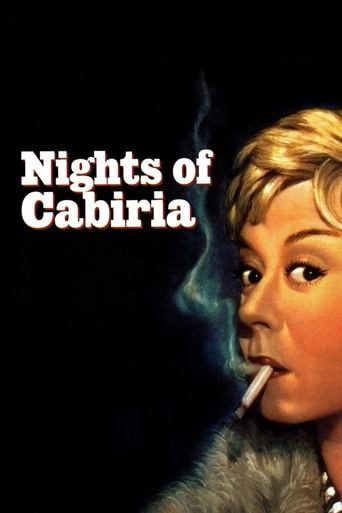

Continue the director
Nights of Cabiria (1957)
Fellini and Masina return in another story of an innocent in a hard world. It is the natural companion to La Strada.
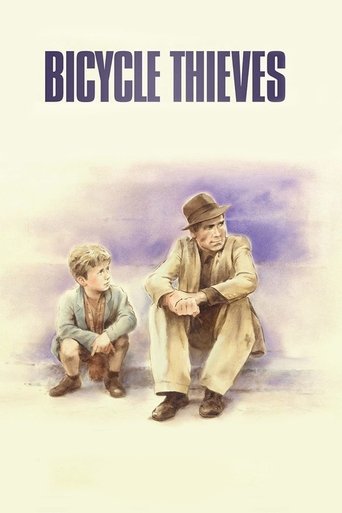
See what influenced it
Bicycle Thieves (1948)
The best-known neorealist film shows the social-realist tradition that La Strada both draws on and departs from.
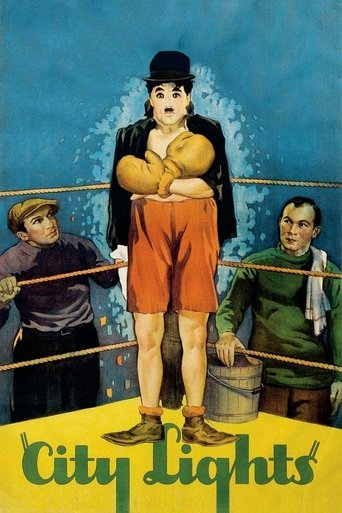
Compare another approach
City Lights (1931)
Chaplin's tramp is the ancestor of Gelsomina. Compare how each film balances comedy, sentiment and a very small, vulnerable figure.
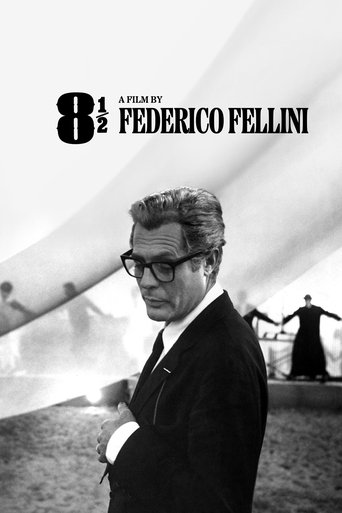
Jump forward
8½ (1963)
Fellini's later masterpiece shows how far his style moved toward memory, fantasy and self-portrait after the circus world of La Strada.
Follow the idea
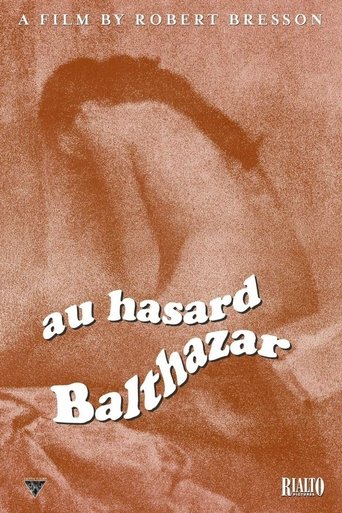
Au Hasard Balthazar (1966)
Bresson also follows a gentle, innocent being across a harsh world, but in a stripped-down style that contrasts sharply with Fellini's.