Animation · Drama · War
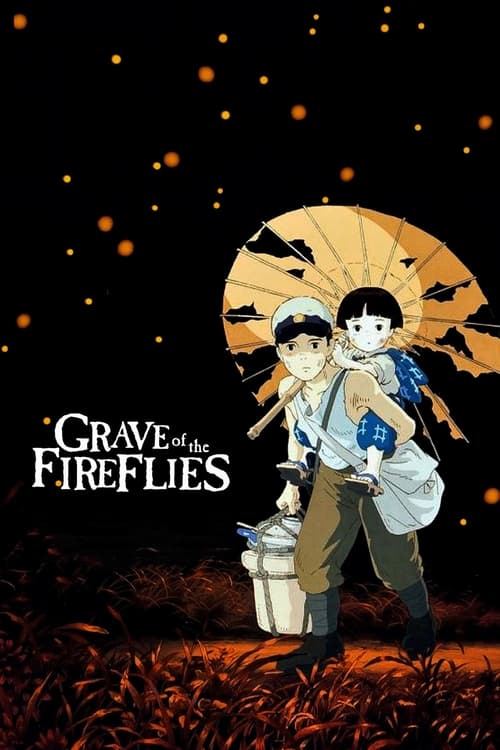
Grave of the Fireflies
Japanese (火垂るの墓)
1988 · Directed by Isao Takahata · 89 min


Animation · Drama · War
Japanese (火垂るの墓)
1988 · Directed by Isao Takahata · 89 min




Meaning, unpacked
Central idea
The film can be read as an account of how a society's collapse lands on its most vulnerable members, and of how pride, love and bad circumstances can combine into tragedy without any single villain.
What it means
Two children in Kobe, Seita and his little sister Setsuko, lose their home to the bombing. The film tells you in its first minutes that neither will survive. It begins at the station with Seita's death, and his voice carries us back. So there is no suspense and no false hope. The question is not what happens, but how, and why, and the whole film becomes remembrance and a kind of reckoning.
Its central idea is how a society's collapse lands on its most vulnerable. There is no single villain. The aunt, the neighbours and the authorities are not monsters; scarcity makes them stingy, and ordinary selfishness becomes lethal. Seita wants to protect his sister alone and stay independent, which is admirable and dangerous. The mud rice ball shows how far hunger has reached, and the film will not soften it. The war barely appears as battle. It comes as bombers, fires and shortages, felt by people far from the front.
Why it mattered
Because it is animated, many people assume it is a children's film. It is not. Studio Ghibli made it for a general audience, and it is a grim adult drama. In April 1988 it opened on a double bill with My Neighbor Totoro, Miyazaki's gentle fantasy, an unusual pairing that confused many about who it was for. It drew attention, but the more widely loved Totoro overshadowed it commercially.
What was new was its realism. Isao Takahata favoured close observation over fantasy, and his team studied Kobe and period details so the drawn world would match the real city of 1945. Setsuko's gestures, tantrums and games are animated with unusual naturalism, and her believable childishness gives the film its force. Here was hand-drawn animation carrying a serious war drama, with no talking animals and no comfort offered.
Before anyone tells you what to think: what did you make of it?
Log in to rate it and leave commentsIt takes one click with Google or an email link. You come straight back here.
Rate it, keep your notes, and find the next film.
Free, no ads. Your journal, your lists, a Cine Guide that remembers you.
Create your free spaceInternational critics gradually recognised it as a serious war drama. It helped show that animation can handle history, trauma and grief at adult depth, paving the way for films such as Waltz with Bashir. It also raised attention to Takahata and Ghibli beyond fantasy. Today it is widely seen as one of the greatest war films and a high point of animation.
In Japan it has become part of August remembrance, shown on television around the anniversary of the war's end. The tin of fruit drops that Setsuko treasures is one of its best-known images. It is also debated. Some see a humane anti-war statement; others note that it centres on Japanese victimhood, not Japan's wartime aggression. Takahata himself was cautious about calling it simply anti-war, suggesting we should also consider Seita's choices and the failure of the people around him. People call it the film they can only watch once, perhaps because it asks something of us afterwards: to notice who is hungry nearby, and who is being turned away.
What happens
Setsuko dies, and Seita cremates her himself, carrying her ashes in a candy tin. He drifts back to the station and dies there, exactly as the film opened. The film ends with their spirits together, looking out over modern Kobe.
The last image
The two children sit side by side on a hillside, looking out over the glittering lights of present-day Kobe at night.
What it says
The ending closes the circle the opening began, so nothing is left to hope for. It asks you to see what the world around the children let happen, and to carry that memory forward rather than look away.
Or follow an idea from this film

Compare another approach
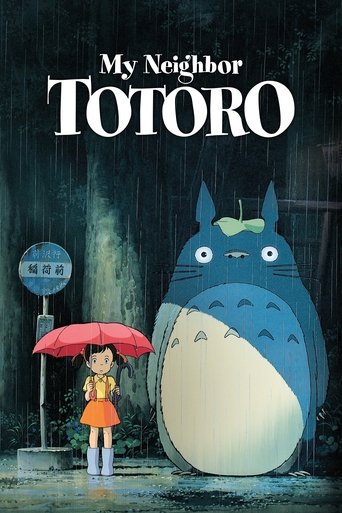
My Neighbor Totoro (1988)
Released alongside it, Miyazaki's film also centres on two sisters and wartime-era Japan, but turns toward wonder. Seeing both shows Ghibli's range.
See what influenced it
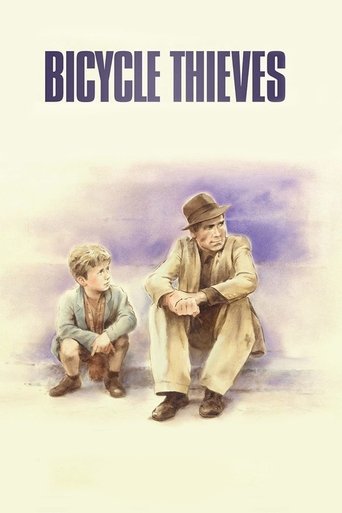
Bicycle Thieves (1948)
A neorealist classic about ordinary people facing poverty, with the same refusal of easy consolation and attention to everyday detail.

Follow the idea
Forbidden Games (1952)
A French film that views war through the eyes of a small child, showing how children process loss differently from adults.
Jump forward
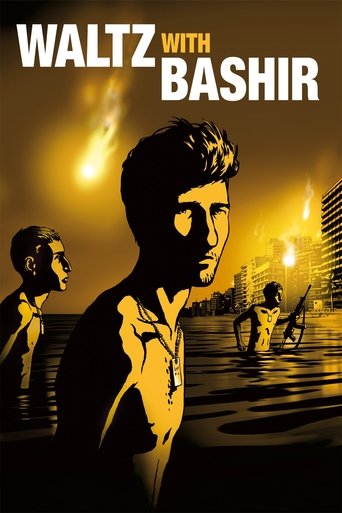
Waltz with Bashir (2008)
A later animated film that uses drawing to explore war memory, extending the idea that animation can handle real history.
Compare another approach
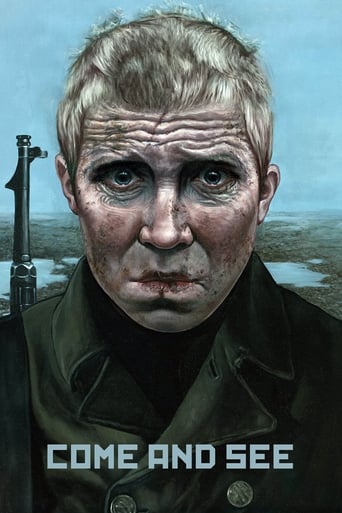
Come and See (1985)
A Soviet war film seen through a young boy's eyes. It is far harsher in style, but similarly focused on how war destroys childhood.