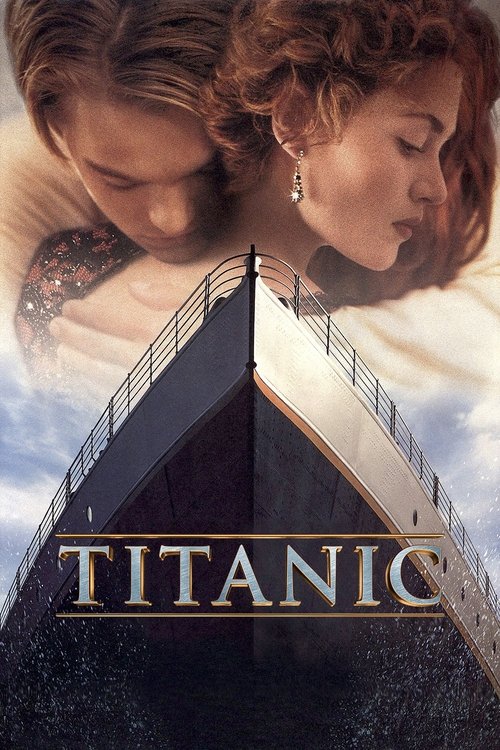
Drama · Romance
Titanic
American
1997 · Directed by James Cameron · 194 min


Drama · Romance
American
1997 · Directed by James Cameron · 194 min











Meaning, unpacked
Central idea
The film can be read as a story about class and memory. A fictional romance is placed inside a real disaster so that an abstract historical event becomes personal and costly, and the ship's rigid divisions are shown as both social and physical.
What it means
Titanic is a fictional love story set inside a real disaster, and that is the whole trick. Rose is trapped by money, family expectation and etiquette. Jack, a penniless drifter, offers her another life. The ship hits the iceberg, and years later she remembers it all. Placing a romance inside the sinking makes an enormous historical event personal and costly.
The ship's divisions are social, but they are also physical: gates, stairs, attitudes. When the sinking comes, those barriers decide who gets help first, and at the gates in third class the film shifts from romance to indictment. Underneath runs freedom against obligation, and the ship's size, speed and prestige are treated as a kind of arrogance, confidence meeting its limits. Memory matters too. Because the story is filtered through recollection, what survives of the past is personal rather than official. The drawing session builds Rose's trust through looking and being looked at, and later gives memory a physical object.
Why it mattered
Cameron persuaded the studio partly by diving to the real wreck in 1995, and that footage opens the film. He then built a huge physical replica of the ship, close to full size, in a new waterfront studio in Baja California, with a very large tank. Actors and camera worked in believable space, not against green screen. Digital water, ship extensions and motion-captured passengers extended the sets, used for scale and continuity so the effects served the story rather than interrupting it.
Before anyone tells you what to think: what did you make of it?
Log in to rate it and leave commentsIt takes one click with Google or an email link. You come straight back here.
Rate it, keep your notes, and find the next film.
Free, no ads. Your journal, your lists, a Cine Guide that remembers you.
Create your free spaceIt was also a gamble that looked like a mistake. The film ran over schedule and budget, its release slipped to December 1997, and the industry press expected a flop. Instead, audiences came back again and again, and it stayed at the top of the box office for months. It used the old grammar of a private love story against history, then rebuilt it with new tools. It also held back the catastrophe for around half the film, so you care before the spectacle begins.
It showed that expensive, effects-driven filmmaking could succeed with emotional, adult-skewing stories, and it helped establish the model of the global event film. It won eleven Academy Awards from fourteen nominations, including Best Picture and Best Director. Cameron carried its mix of new technology and immersive world-building into Avatar and its sequels. It also made stars of Kate Winslet and Leonardo DiCaprio, and renewed public interest in the real 1912 sinking.
Its imprint is everywhere: the arms-outstretched pose at the bow, the much-parodied flute of Celine Dion's song, the endless argument over whether Jack could have fitted on that door. Critics were divided at the time. Many praised the craft and ambition, while some found the dialogue and the villain too broad. Those complaints have not gone away, yet the film has moved from phenomenon to accepted classic, and even sceptics acknowledge its technical command and emotional directness.
What happens
Old Rose drops the Heart of the Ocean into the sea, unseen by the salvage team, and falls asleep. In a dream she returns to the ship, where Jack waits at the grand staircase. The diamond was never the treasure; her memory of him was.
The last image
Young Rose climbs the grand staircase to Jack, as the assembled passengers watch and applaud.
Two readings
What it says
The film starts as a treasure hunt and ends by dropping the treasure. What survives of the past is private and personal, not official. The ending returns Rose to the life she chose, so the loss feels earned and the romance gets its release.
Or follow an idea from this film

Continue the director
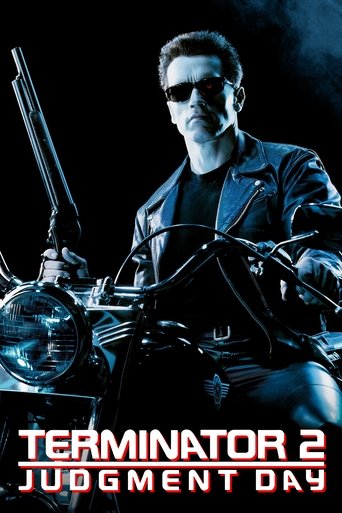
Terminator 2: Judgment Day (1991)
Cameron's earlier landmark of digital effects in service of character. It shows the technical ambition and emotional core that later shaped Titanic.

See what influenced it
Gone with the Wind (1939)
The classic template for a romance set against historic catastrophe, with the same pairing of grand spectacle and melodrama.

See what influenced it
Doctor Zhivago (1965)
David Lean's epic of love and upheaval offers a useful comparison for how a private romance can carry a historical canvas.

Jump forward
Avatar (2009)
Cameron's next great technical leap. It shows how the combination of immersive spectacle and simple emotional storytelling developed after Titanic.

Compare another approach
The English Patient (1996)
Another prestige romance of the 1990s, also a large-scale love story, but quieter and more fragmented in how it handles time and history.