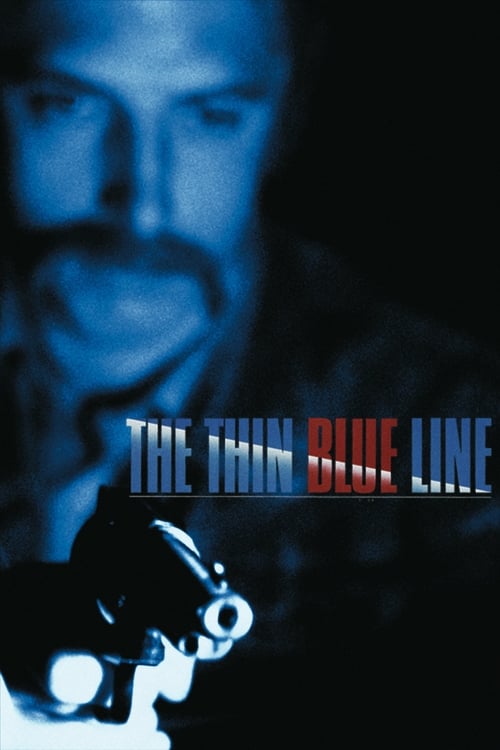
Crime · Documentary
The Thin Blue Line
American
1988 · Directed by Errol Morris · 103 min


Crime · Documentary
American
1988 · Directed by Errol Morris · 103 min

Meaning, unpacked
Central idea
The film explores how a story becomes truth: through testimony, police work, courtroom persuasion and image-making. It can be read as a study of how certainty is manufactured, and of how easily a convenient narrative replaces the facts.
What it means
The Thin Blue Line starts with a shooting one night in Texas and a man, Randall Adams, convicted of it. Errol Morris is less interested in a simple whodunit than in a bigger question: how does a story become truth? The film follows how testimony, police work, courtroom persuasion and image-making can quietly replace the facts with a convenient narrative. It is a study of how certainty gets manufactured.
You can see this in its themes. Witnesses are sincere, self-serving or coached, and memory and motive blur under pressure. Police and prosecutors need a culprit, and that need can steer an investigation toward whoever is available. Expert authority and the death-penalty machinery come across as theatre, and theatre can stand in for proof. People also reveal themselves by how they talk, not only by what they claim. And because Morris stages the same events again and again, the film hints that every telling is a construction, his own included.
Why it mattered
In 1988, this was a bold break from the habit of documentaries trying to look like plain, observational record. Morris made stylized, openly staged reenactments a legitimate tool. There's a common myth that they are fabricated evidence. They aren't. They illustrate competing accounts, replayed with variations, each tied to someone's claim. When the night of the shooting returns again and again, you are shown how differently it is remembered. The disagreement is the subject.
Before anyone tells you what to think: what did you make of it?
Log in to rate it and leave commentsIt takes one click with Google or an email link. You come straight back here.
Rate it, keep your notes, and find the next film.
Free, no ads. Your journal, your lists, a Cine Guide that remembers you.
Create your free spaceThe rest of the style worked the same way. Subjects speak straight into the lens with no narrator, so you judge their reliability yourself. Cross-cutting lets contradictions land without comment. Night scenes are lit like a noir thriller, which builds suspense without inventing a single fact. Philip Glass's cyclical score gives it one obsessive pulse. It's a defining film of the late-1980s shift toward openly authored nonfiction.
The film did not prove Adams innocent in court and was not legal evidence. Texas's highest criminal court overturned the conviction, citing prosecutorial misconduct such as suppressed evidence, but only after the film drew attention to the case. Adams's conviction was overturned in 1989 and he was released. The film is widely credited with bringing the case back into public view.
Critics praised its formal daring and gripping structure, though some documentary traditionalists objected to the staged scenes. Its reputation grew as the story behind it became widely known. Today it is a cornerstone of modern nonfiction film, taught as the clearest example of a documentary that is both rigorous and openly constructed. It helped establish the investigative true-crime documentary, and reenactments that once caused controversy are now a standard tool. Capturing the Friedmans, The Act of Killing and Making a Murderer all owe it a debt.
What happens
The film ends on taped conversation between Morris and David Harris, the key witness against Randall Adams. Harris appears to come close to admitting his own guilt, which turns the case against Adams from doubtful to deeply suspect.
The last image
The film closes on the recorded voice of Harris, with the tape itself carrying the final moments rather than a picture.
What it says
The ending shifts from competing stories to one voice, asking you to judge who sounds truthful. After a film about manufactured certainty, it offers no verdict from Morris, only a confession-like sound and your own listening.
Or follow an idea from this film

Follow the idea
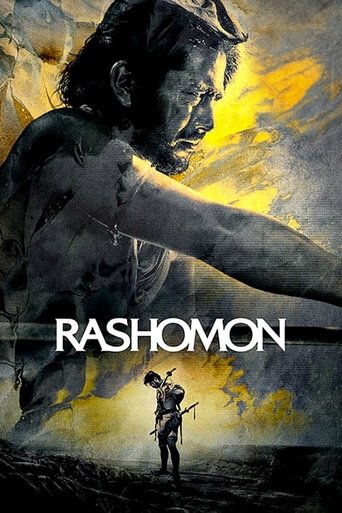
Rashomon (1950)
The classic fiction version of the film's question: how one event can be told truthfully in conflicting ways.
Compare another approach
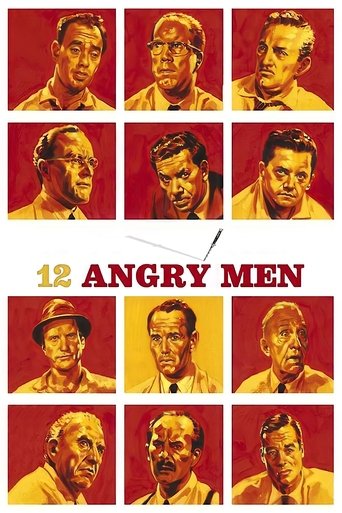
12 Angry Men (1957)
A fictional drama about reasonable doubt and how a jury's certainty is built, a useful companion to the documentary version.
See what influenced it
Night and Fog (1956)
A poetic, carefully constructed documentary that shows how nonfiction can use composition and memory instead of plain reportage.
See its influence
Capturing the Friedmans (2003)
A later documentary that likewise builds a criminal case from clashing testimony and leaves viewers to judge.
Jump forward
The Act of Killing (2012)
Extends Morris's formal experiments, using staged scenes to expose how people justify and perform their own history.