Mystery · Crime · Thriller
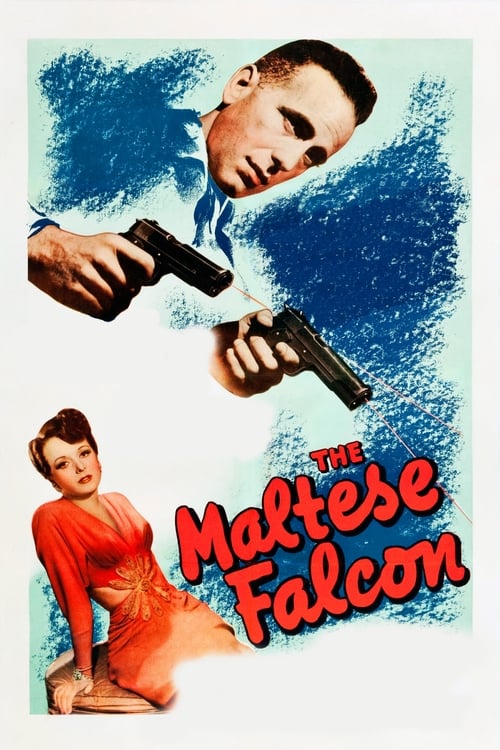
The Maltese Falcon
American
1941 · Directed by John Huston · 100 min


Mystery · Crime · Thriller
American
1941 · Directed by John Huston · 100 min
Meaning, unpacked
Central idea
The film is about the cost of trust and the price of integrity in a world run on self-interest. Spade survives by seeing through everyone, and the film can be read as asking what that clarity costs him.
What it means
On the surface, this is a hunt for a black bird statuette. Private detective Sam Spade is pulled into it by a circle of liars. Everyone wants the bird, and nobody tells the truth about why. Underneath, the film is about the cost of trust and the price of integrity in a world run on self-interest. Spade survives because he sees through everyone, and the film quietly asks what that clarity costs him.
You learn how to watch from Brigid's first visit to the office. She is charming and persuasive, and Spade accepts her story only provisionally. From then on you read her, and you doubt her. The bird is valuable mainly because people believe in it, and their devotion bends their judgment. That is why the closing line, "the stuff that dreams are made of", lands so well. Spade also has a private code that is not the law's and not sentimental. In the final confrontation in his apartment, the mystery turns into a moral decision. Everyone chased a dream, and the man who didn't is left in a very quiet room.
Why it mattered
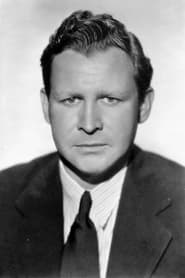
In 1941 this was a first film for John Huston as director. He was a successful screenwriter, and reports say he sketched many shots in advance, which helped him work quickly. Warner Bros. had already filmed Hammett's novel in 1931 and again, as a comedy, in 1936. This version worked by sticking closely to the book rather than softening it. It showed that a literary crime story could reach the screen almost intact, told through hard dialogue, long conversations and a superb ensemble.
Before anyone tells you what to think: what did you make of it?
Log in to rate it and leave commentsIt takes one click with Google or an email link. You come straight back here.
Rate it, keep your notes, and find the next film.
Free, no ads. Your journal, your lists, a Cine Guide that remembers you.
Create your free spaceIt also changed what a crime picture could look like. Arthur Edeson's low angles, deep shadows and visible ceilings made even ordinary offices feel enclosed and threatening. Bogart, who had played supporting gangsters, became a leading man. George Raft reportedly turned the part down first. The film is not, as people often say, the first film noir. The term came later, and earlier films are sometimes given that title. It is better seen as a key early, defining noir.
It fixed the screen image of the hard-boiled private eye. Later detective films, from Chinatown to The Long Goodbye, drew on it. Its quest for a prize among deceptive rivals was reworked many times, and it was spoofed in The Black Bird and The Cheap Detective. Spade's closing line is now shorthand for an elusive, possibly worthless object of desire. The statuette became a famous prop, and a surviving production piece sold at auction in 2013 for several million dollars.
At release it was a commercial and critical success, praised for its tight construction and ensemble acting. It earned three Academy Award nominations, for Best Picture, Best Supporting Actor and Best Adapted Screenplay, and won none. Its reputation has only grown. As film noir came to be recognised as a category, it became a foundational example and a model of adaptation. The film also gets discussed for Joel Cairo. The Production Code barred open depiction of homosexuality, so Peter Lorre's character is often read as coded gay.
What happens
Spade tells Brigid he knows she killed Archer and, despite his feelings for her, hands her to the police. Gutman finds the falcon is a fake and sets off after the real one.
The last line
"The stuff that dreams are made of."
What it says
Spade's code survives, but it costs him the woman he wants. Everyone else chased a dream and lost, and the film ends on that bitter note: integrity means being left with nothing but your own rules.
Or follow an idea from this film

Continue the director
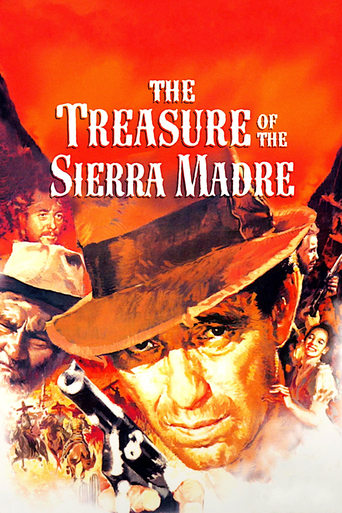
The Treasure of the Sierra Madre (1948)
Huston again follows people consumed by the pursuit of something valuable, and the film explores how greed changes them.
Follow the idea
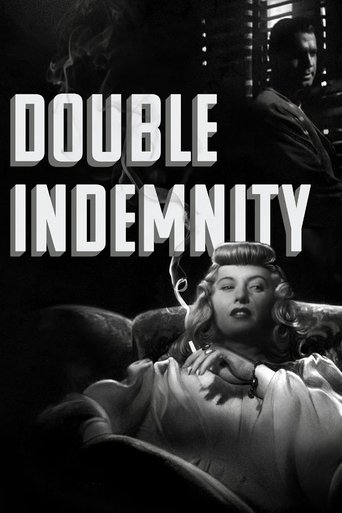
Double Indemnity (1944)
A defining noir with a cynical protagonist and a dangerous woman, now with more shadowed style and voice-over.
Explore the era or movement
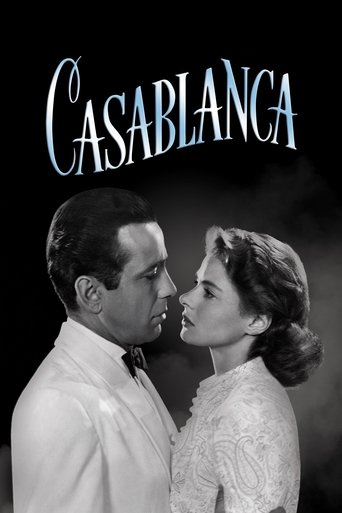
Casablanca (1942)
Bogart, Lorre and Greenstreet reappear in another Warner Bros. film, this time pairing a hard exterior with romance and wartime idealism.
Jump forward
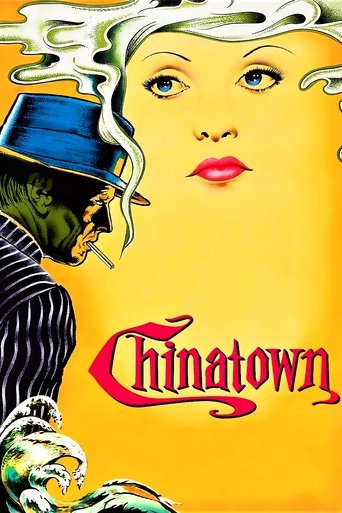
Chinatown (1974)
A 1970s revival of the private-eye story shows how the genre was reinterpreted with greater cynicism.
Compare another approach
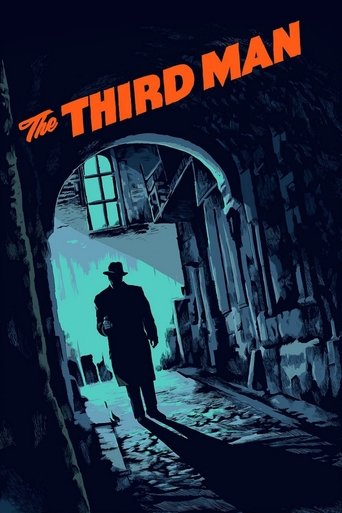
The Third Man (1949)
Another story of a morally uneasy investigator in a corrupt setting, but with a heavily stylised visual approach.