Thriller · Drama · Romance
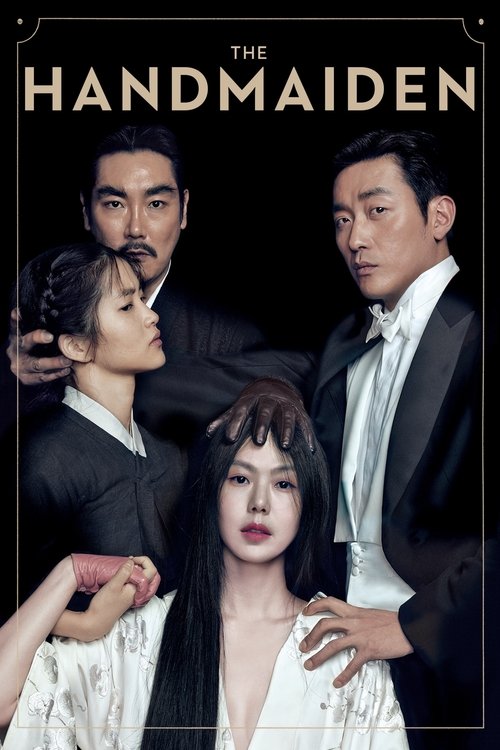
The Handmaiden
South Korean (아가씨)
2016 · Directed by Park Chan-wook · 145 min


Thriller · Drama · Romance
South Korean (아가씨)
2016 · Directed by Park Chan-wook · 145 min
Meaning, unpacked
Central idea
The film is about who gets to control a story, and about two women who take that control from the men who use them. Deception, performance and storytelling become tools of both exploitation and liberation.
What it means
On the surface, this is a con. A thief goes into a mansion as a maid to help a fake Count steal an heiress's fortune. The two women fall in love, turn the con against the men, and sail away together. But the real question is who gets to tell the story. Deception, performance and storytelling start out as tools of exploitation, and by the end they are tools of freedom.
Look at how many people are playing a part: a fake Count, a fake lady, a fake heir. The film asks whether love can grow out of a lie, and here it answers yes. Money, class and gender decide who gets used. Hideko is treated as property and Sook-hee as a tool. The 1930s Korean setting adds another layer, with Korean characters posing as Japanese to gain status, a comment on how colonial power bends people's sense of who they are. In the end, the women get what the men never offered them: they write their own ending.
Why it mattered
The film's three-part structure was its big move. When the story is retold from another vantage point, scenes you thought you understood change meaning. You realise your first impressions were shaped by what each narrator wanted you to see. The film makes you complicit in a false reading, and then lets you feel it. It showed that cinema can teach you to read a film as an act of storytelling, not just a sequence of events.
It also took Hitchcockian suspense and a British novel's structure into a colonial setting, and told its love story from a distinctly female point of view. Park Chan-wook and his co-writer reimagined Sarah Waters's Fingersmith rather than simply moving it. It competed for the Palme d'Or in 2016, and production designer Ryu Seong-hee won the Vulcain Prize there, a sign of how much meaning is built into the sets.
Before anyone tells you what to think: what did you make of it?
Log in to rate it and leave commentsIt takes one click with Google or an email link. You come straight back here.
Rate it, keep your notes, and find the next film.
Free, no ads. Your journal, your lists, a Cine Guide that remembers you.
Create your free spaceThe film helped consolidate the late-2010s international appetite for Korean cinema. It showed that a period thriller could be both a genre piece and an authored work. Its attention to the female gaze and to setting as character has been echoed in later queer and historical dramas. Queer audiences have embraced it as a lesbian love story where the women escape together and aren't punished, unlike the tragic endings that long dominated screen romances between women.
Reviews were strong, with special praise for the design, structure and performances. Critics did debate whether the erotic scenes served the story or the male gaze, and that debate continues. Still, it is widely seen as a high point of Park's career and one of the key films of the 2010s. For many viewers it is a gateway to Korean cinema, often paired with Parasite and Oldboy, and it is used in teaching to show how a genre film can address history.
What happens
Hideko and Sook-hee reunite, cheat the Count themselves, and leave him to die in Kouzuki's basement, where Kouzuki dies too. They destroy the books, then sail to Shanghai. The women's partnership, not the con, was the film's real story.
The last image
The two women aboard the ship, free and together, heading away from the house and the men who owned their stories.
What it says
The film is about who controls a story. The men's story ends in the basement, in brutality. The women's turns playful at sea. Burning the books is the point: deception, once a weapon used against them, becomes the way they win their freedom.
Or follow an idea from this film

Continue the director
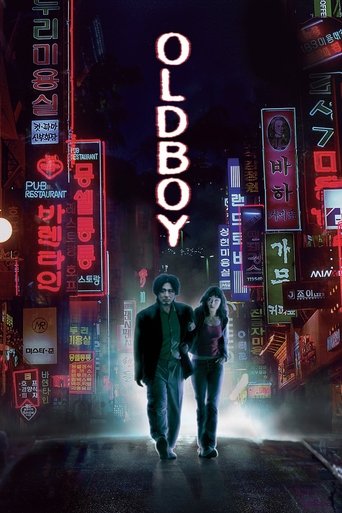
Oldboy (2003)
Park's breakthrough shows the violent, operatic side of his style and his habit of structuring thrillers around concealed information and obsessive plots.
See what influenced it
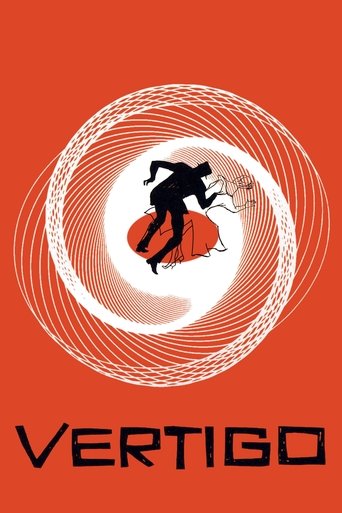
Vertigo (1958)
Hitchcock's masterpiece of staged identity and obsessive looking is a key ancestor of Park's manipulative, visually controlled suspense.
Compare another approach
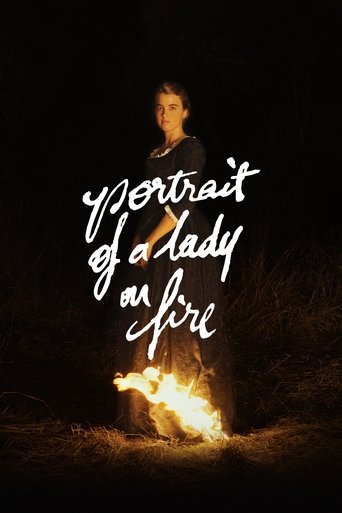
Portrait of a Lady on Fire (2019)
Another period romance between two women, but quiet and restrained where The Handmaiden is lavish and playful. A useful comparison of how the gaze is constructed.

Explore the era or movement
The Housemaid (1960)
A classic of Korean cinema about a servant in a bourgeois household, with class, desire and domestic menace that clearly anticipate Park's concerns.
Follow the idea
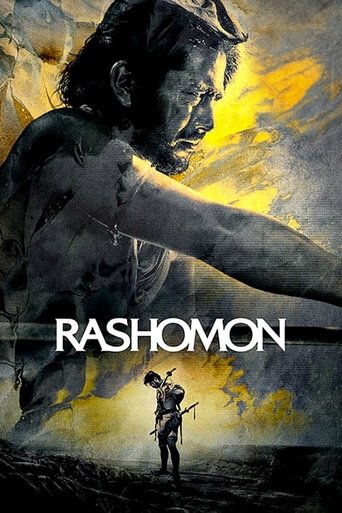
Rashomon (1950)
Kurosawa's film is the best-known example of telling one story through conflicting viewpoints, and it clarifies how The Handmaiden uses perspective.