Western · Crime · Action · Adventure
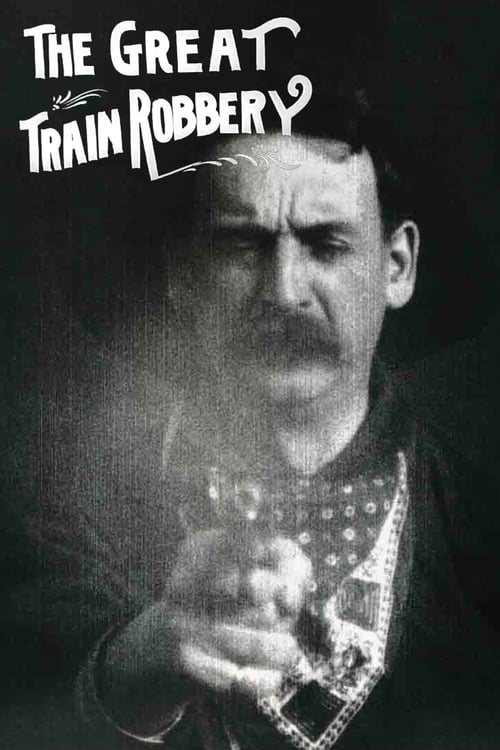
The Great Train Robbery
American
1903 · Directed by Edwin S. Porter · 12 min


Western · Crime · Action · Adventure
American
1903 · Directed by Edwin S. Porter · 12 min
Meaning, unpacked
Central idea
The film can be read as an experiment in turning a stage-style sensational melodrama into pure cinematic motion: crime, chase and justice told through space, movement and cutting rather than words.
What it means
A gang holds up a station, robs a train and is hunted down by a posse. That's the whole story, and it runs about twelve minutes. So what is Edwin S. Porter's film really doing? One good answer is that it turns stage-style melodrama into pure motion. Crime, chase and justice are told through space, movement and cutting, not words.
Four ideas run through it. Lawlessness and pursuit: a crime on the frontier is answered by organised, righteous retaliation, a pattern the Western made its own. Community and justice: it's ordinary townspeople, not a lone hero, who respond, so justice is a group effort raised in a moment of alarm. Technology and the frontier: the train is both target and stage, carrying modern connection and wealth through open country and making this kind of robbery newly possible. And spectacle: the film was built to make crowds gasp, and its final shot, a bandit firing straight at you, treats violence as an attraction.
Why it mattered
Porter strings scenes together to cover both continuous and overlapping action. The film links events happening in separate places at the same time, which is a key step toward parallel editing. That's what turns the story into a chase rather than a string of stage pictures. Most camera set-ups are fixed, but a few pans follow the action, and the camera rides on or near the train, unusual motion for 1903.
It was a major hit in American vaudeville halls and travelling shows, and it showed producers that longer, story-driven films could draw large crowds. Edison's company sold it by length to exhibitors, with catalogue advice on presentation. Early film was a product that showmen assembled and adapted. Porter also drew on sensational theatre, newspaper reports of train hold-ups and Wild West shows, so this was a new kind of storytelling built from familiar entertainment.
Before anyone tells you what to think: what did you make of it?
Log in to rate it and leave commentsIt takes one click with Google or an email link. You come straight back here.
Rate it, keep your notes, and find the next film.
Free, no ads. Your journal, your lists, a Cine Guide that remembers you.
Create your free spaceIt helped make the Western and the chase film staples, inspiring a wave of imitations and the one-reel Western series of the following decade. Its linking of separate spaces helped make cross-cutting a standard narrative tool. Its masked outlaws, hold-up, horseback pursuit and shoot-out became Western shorthand, reused whenever a story needs a train robbery. Martin Scorsese closes Goodfellas in 1990 with a gangster firing at the viewer, widely read as a nod to Porter.
Today it's seen as a foundational film rather than a flawless pioneer. Historians have corrected the myth that it invented narrative cinema or the Western: Méliès and Porter himself, with Life of an American Fireman, made story films earlier. Its importance lies in its scale, popularity and influence. Because it's short and in the public domain, it's often the first narrative film students meet.
What happens
The posse catches the gang in the woods, and a gunfight kills the outlaws and recovers the stolen goods. Order is restored, but the film saves its real punch for one last shot of an outlaw.
The last image
In close-up, one outlaw aims his pistol straight at the camera and fires at you.
What it says
The ending delivers a simple moral shape: a crime is answered by organised retaliation. The final shot then treats violence as an attraction, jolting you the way a fairground show would. The film still sees you as a spectator, there to be startled.
Or follow an idea from this film

Explore the era or movement
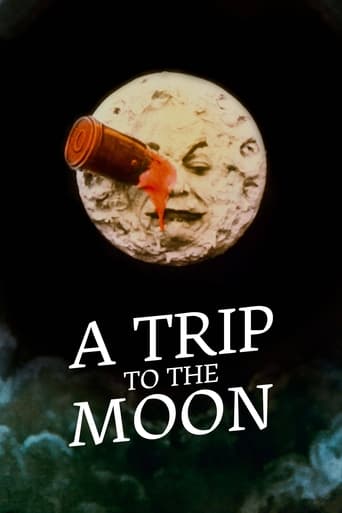
A Trip to the Moon (1902)
Another early landmark from the same moment, but in a different mode: fantasy and stagecraft instead of outdoor action. The pairing shows two directions early narrative cinema could take.
Jump forward
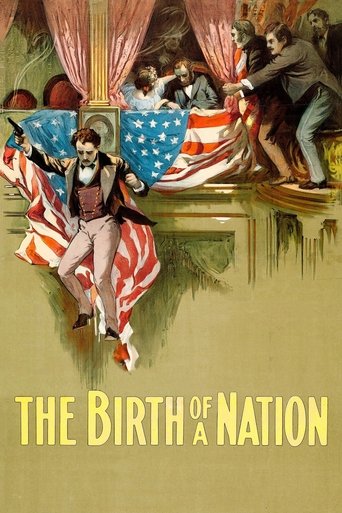
The Birth of a Nation (1915)
Griffith greatly expanded cross-cutting and long-form storytelling, but the film is also infamous for its racism, so it demands critical viewing.
See its influence
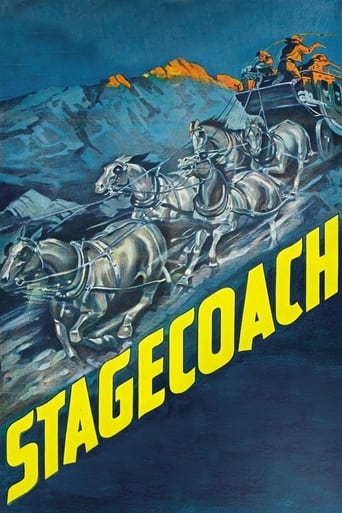
Stagecoach (1939)
A mature Western that shows how the chase, the ambush and the frontier community grew from these early shorts.
Follow the idea
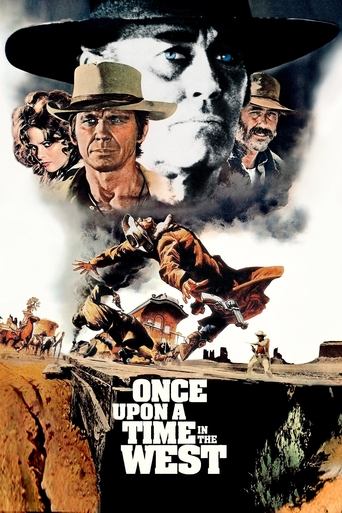
Once Upon a Time in the West (1968)
Sergio Leone's epic opens at a railroad station and treats the train as a symbol of change, reworking the genre's founding images.