Drama
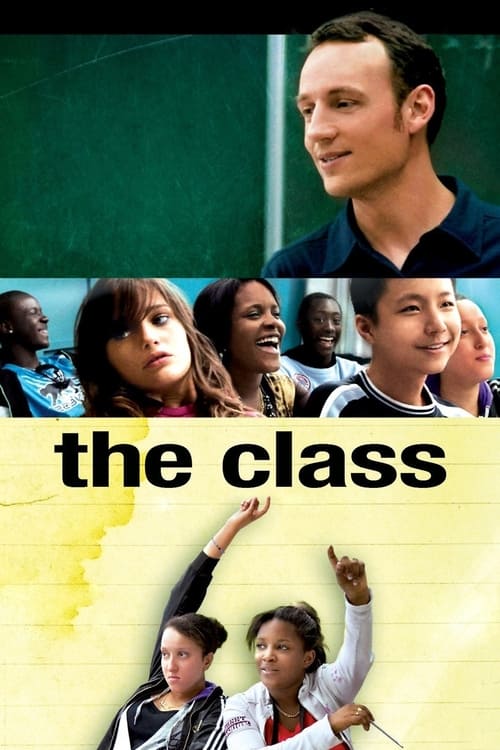
The Class
French (Entre les murs)
2008 · Directed by Laurent Cantet · 128 min


Drama
French (Entre les murs)
2008 · Directed by Laurent Cantet · 128 min




Meaning, unpacked
Central idea
The film examines the school as a place where a society negotiates its own rules: who speaks, who is heard, what counts as respect, and how far good intentions can go inside an institution. The film can be read as refusing easy lessons.
What it means
The Class follows a teacher and his students inside a Paris secondary school, through lessons, staff meetings and one careless remark that leads to a disciplinary council. But it is really about the school as a place where a society negotiates its own rules: who speaks, who is heard, what counts as respect, and how far good intentions can carry you inside an institution.
The teacher's authority is never simply given. It is won, lost and renegotiated in every lesson, and the students test it as much as he tests them. Language marks class and belonging, so correcting a word quickly becomes correcting a person. The teacher is committed and often skilled, yet his mistakes carry consequences that sincerity cannot repair. And the class stands for a country of many origins, where school promises equality while the students feel their differences all the time. The film refuses to hand you an easy lesson, and that is its strength.
Why it mattered
It is easy to take this for a documentary about a real class. It is not. It is scripted fiction, played by non-professional teenagers who spent a year in workshops developing their characters, alongside François Bégaudeau, whose book about his teaching years it is based on. Scenes were outlined, then shaped through improvisation, so the spontaneity you feel is the result of careful preparation.
The method was fresh. Three cameras ran at once, each covering part of the room, so editors could cut between faces during overlapping talk. It feels like eavesdropping. There is no emotional score, only voices, bells and scraping chairs, and the film rarely leaves the school's walls. At Cannes in 2008 it won the Palme d'Or, the first for a French film since Pialat's Under the Sun of Satan in 1987. A quiet film driven by talk had taken the top prize.
Before anyone tells you what to think: what did you make of it?
Log in to rate it and leave commentsIt takes one click with Google or an email link. You come straight back here.
Rate it, keep your notes, and find the next film.
Free, no ads. Your journal, your lists, a Cine Guide that remembers you.
Create your free spaceIt helped establish a kind of school drama built on ensemble improvisation, a single location and no heroic teachers. Later films about classrooms and institutions, in France and elsewhere, often echo its observational method and shared sense of voice. In France it was a considerable popular success and prompted wide discussion about schools, language and integration. It was also nominated for the Academy Award for Best Foreign Language Film.
Its classroom exchanges about formal grammar, like the imperfect subjunctive the pupils dismiss as stuffy, became a common reference point for talking about standard French against everyday speech, and about what school does for social mobility. Today it is shown in French courses and in education and sociology classes. Its reputation has held because it avoids easy moral lessons, and people still argue about whether its teacher is admirable, flawed or both. Perhaps that argument is its real achievement.
What happens
Souleymane is expelled after the disciplinary council. When François asks what they learned this year, one girl says nothing, another that she has been reading Plato on her own. The year ends unresolved.
The last image
The classroom is empty after the final lesson, the chairs and desks left behind.
What it says
There is no tidy lesson, because school work is never finished. Good intentions did not save Souleymane, and the students' answers point in opposite directions. The empty room leaves you to judge whether the year succeeded.
Or follow an idea from this film


See what influenced it
The 400 Blows (1959)
Truffaut's early-New-Wave classic shows school as a place of discipline and misunderstanding, seen from the pupil's side rather than the teacher's.
Compare another approach
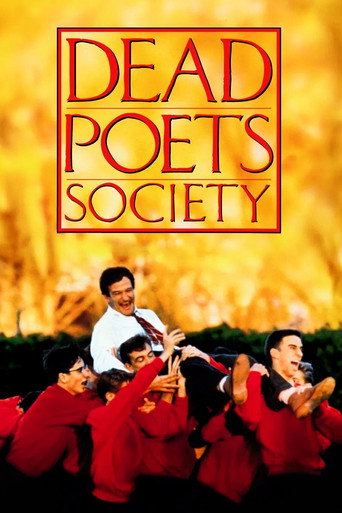
Dead Poets Society (1989)
A well-loved inspirational teacher film offers a sharp contrast: charismatic mentoring and big gestures versus the unglamorous negotiations of The Class.
Follow the idea
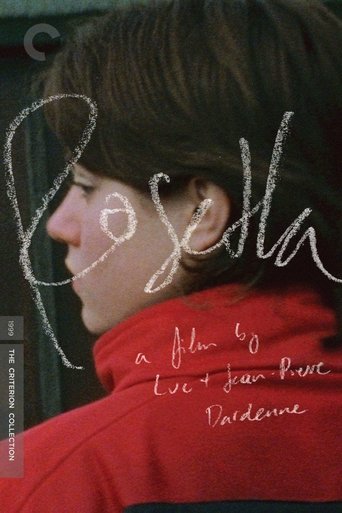
Rosetta (1999)
The Dardenne brothers' Palme d'Or winner uses handheld realism and a non-professional-style intensity to follow a young person pressed by social circumstances.
See what influenced it
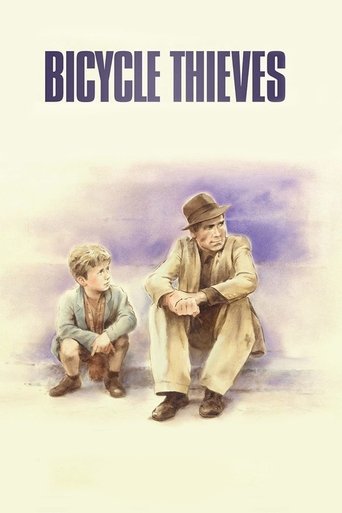
Bicycle Thieves (1948)
This neorealist classic uses non-professional actors and real locations to show how everyday life carries social weight, a method The Class continues.

Jump forward
Dheepan (2015)
Another French Palme d'Or winner, it follows immigrants adapting to life in a Paris suburb and extends the social questions raised in The Class.