Drama · Crime · Thriller
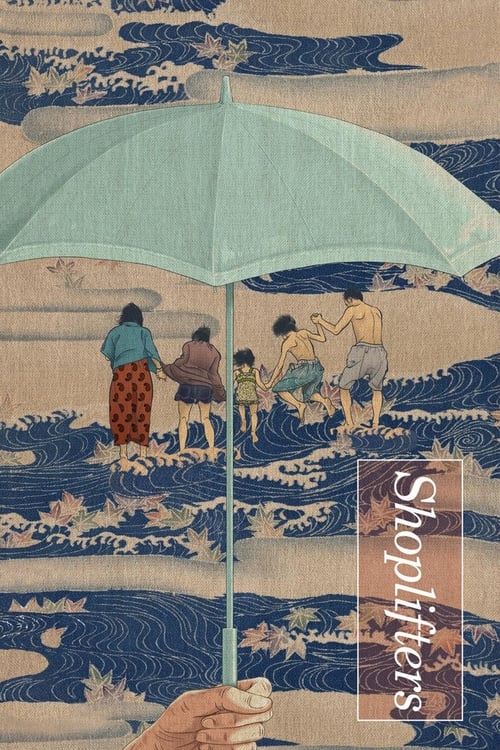
Shoplifters
Japanese (万引き家族)
2018 · Directed by Hirokazu Kore-eda · 120 min


Drama · Crime · Thriller
Japanese (万引き家族)
2018 · Directed by Hirokazu Kore-eda · 120 min











Meaning, unpacked
Central idea
The film asks what makes a family: blood, law, or the daily acts of care that people choose to give one another. It can be read as an argument that love and belonging do not always match the categories a society uses to judge them.
What it means
Shoplifters asks a simple question: what makes a family? Is it blood, or the law, or the daily acts of care that people choose to give one another? Kore-eda offers no answer. He only suggests that love and belonging do not always fit the categories a society uses to judge them.
The film lets two claims stand side by side. The biological families we glimpse are neglectful or cruel, while the crowded household at the centre was built from people who needed one another. Theft is their family trade, and you are asked to feel sympathy and discomfort together. The police interrogations are the moral centre: words like mother, father, kidnapping and abandonment are laid over these people in bureaucratic language, yet you know what they did for each other. The film trusts faces over explanation, and its last gift is that it never tells you who these people were to each other. It only shows you what they did.
Why it mattered
Shoplifters won the Palme d'Or at Cannes in 2018 and was nominated for the Oscar for Best Foreign Language Film, though that award went to Roma. It made Kore-eda a global name. It is not a true story: it is his own screenplay, inspired by news reports of families who kept collecting a dead relative's pension.
Its craft is quiet. Kore-eda began in television documentaries and keeps a documentary patience, watching rooms, routines and small talk and letting plot grow out of behaviour. He gives young actors their lines shortly before shooting to keep them unforced. Handheld and static shots tuck people into doorways and frames within frames, and Haruomi Hosono's score is minimal, with room noise, television and cicadas doing much of the work. It carries on the humanist tradition of Ozu and Naruse, finding large questions inside one small home, and updates it with poverty and a society that looks away.
Before anyone tells you what to think: what did you make of it?
Log in to rate it and leave commentsIt takes one click with Google or an email link. You come straight back here.
Rate it, keep your notes, and find the next film.
Free, no ads. Your journal, your lists, a Cine Guide that remembers you.
Create your free spaceCritics praised its compassion, its ensemble acting and its restrained direction. It was a box-office success in Japan and stirred debate, with some critics on the political right attacking its portrait of Japanese society. Kore-eda also declined a ceremonial congratulation from Japan's education minister, saying independent filmmakers should keep their distance from state power.
The film is often cited in talk of poverty and safety nets in Japan, because it challenged the image of a uniformly prosperous country. Together with Parasite, which won the Palme d'Or the next year, it helped confirm arthouse social drama as an international conversation about inequality. Its warmth and moral ambiguity also shaped Kore-eda's later films, such as The Truth and Broker. Today it is seen as his most complete statement on the family.
What happens
Once the police expose the household, the family is torn apart. Nobuyo goes to prison, Shota to a children's facility, and Yuri is sent home to the parents who neglected her. You see that the law has erased what actually held these people together.
The last image
Yuri stands alone on the same balcony where she was first found, looking out at the street.
Two readings
What it says
The ending lets the law's categories win on paper while the film shows what was lost. By refusing to say whether anyone was helped, it leaves you to weigh bureaucratic labels against the care people actually gave each other.
Or follow an idea from this film

See what influenced it
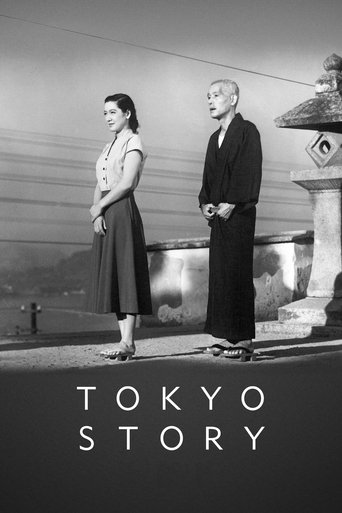
Tokyo Story (1953)
Ozu's masterpiece of the Japanese family shows the tradition Kore-eda draws on, with a calm, humane view of ordinary people.
Compare another approach
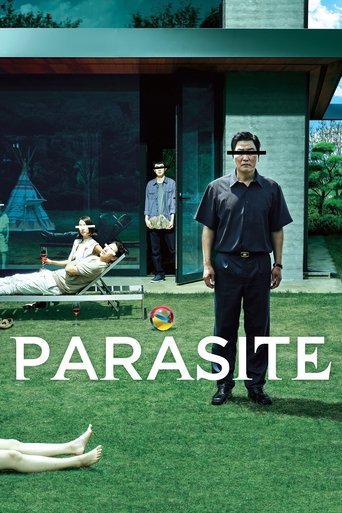
Parasite (2019)
Another Palme d'Or winner about a poor household in a rich city. The comparison shows how differently two directors treat class, sympathy and genre.
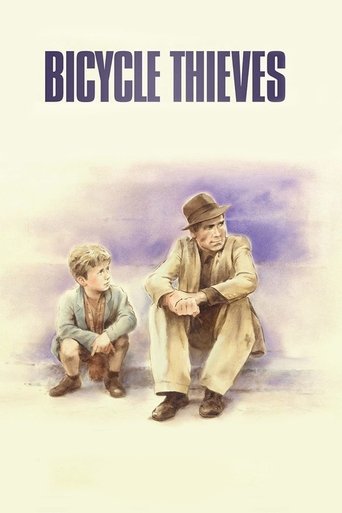
Follow the idea
Bicycle Thieves (1948)
A father steals out of necessity in a story about poverty and a child watching a parent's choices, and it is a key ancestor of socially engaged cinema.
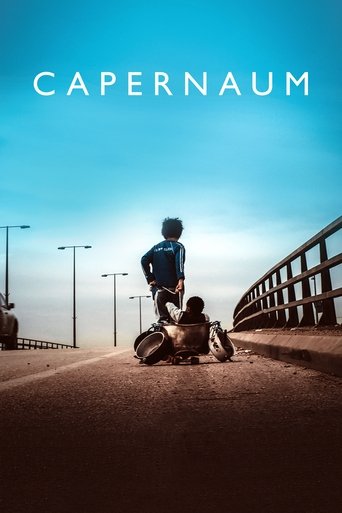
Explore the era or movement
Capernaum (2018)
Released the same year, it follows a neglected child in Beirut and shows how contemporary cinema films poverty and childhood.

Continue the director
Nobody Knows (2004)
Kore-eda's earlier portrait of children left to fend for themselves is harsher and more austere, and shows the origins of the concerns in Shoplifters.