Documentary
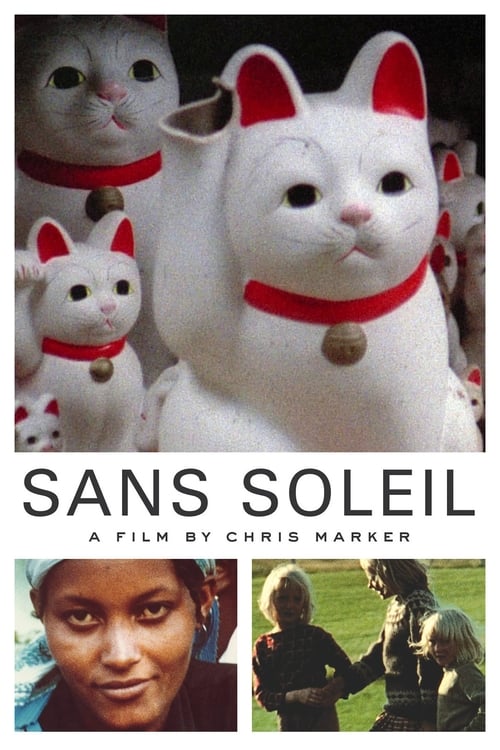
Sans Soleil
French
1983 · Directed by Chris Marker · 100 min


Documentary
French
1983 · Directed by Chris Marker · 100 min




Meaning, unpacked
Central idea
The film can be read as an inquiry into how memory works and how images both preserve and replace it. Marker sets a restless traveller's impressions against history, ritual and technology, and asks what it means to see other cultures through a lens.
What it means
Sans Soleil calls itself a letter, but it is really a thought wandering across the world. A woman reads messages from a traveller named Sandor Krasna, who writes about Japan, Guinea-Bissau and San Francisco. Krasna does not exist. Chris Marker wrote the letters and handed his own footage to an imaginary friend, which is why the voice feels both close and distant.
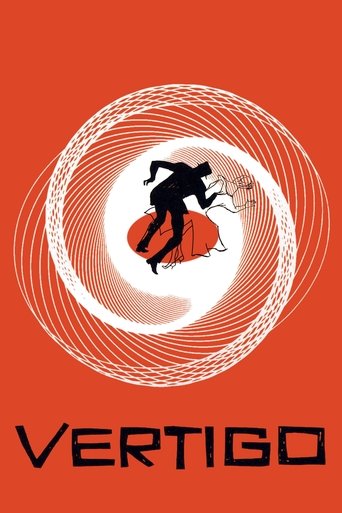
The central idea is that memory is a kind of editing. Images fade, rearrange themselves and stand in for the experience they came from. In San Francisco, the film retraces locations from Hitchcock's Vertigo, showing how a place can be haunted by a movie. Marker also ran footage through a video synthesizer, so faces and landscapes turn painterly and unstable. Every image is processed, by the camera, the editor or the mind. You will not remember the film exactly as it was. You will remember your own edit of it, and the film has already told you that is how remembering works.
Why it mattered
In 1983 this was an unusual thing for a documentary to be. It has no plot and no characters to follow. Marker cuts by echo, so a glance, a texture or a phrase carries you from one continent to another, and the pictures do the thinking while the commentary keeps them from being merely pretty. Much of it was shot by one person with a light 16mm camera, with sound often added later, so it has the texture of a private notebook, not a production.
It also showed how far a documentary could move from reportage toward personal, poetic and fictional reflection. Using a video synthesizer in a documentary was a bold choice at the time, and Marker used it to question the supposed purity of photographic records. The film arrived with no stars and little distribution muscle, reaching mainly festival and art-house audiences.
Before anyone tells you what to think: what did you make of it?
Log in to rate it and leave commentsIt takes one click with Google or an email link. You come straight back here.
Rate it, keep your notes, and find the next film.
Free, no ads. Your journal, your lists, a Cine Guide that remembers you.
Create your free spaceCritics who saw it recognised something original, and its reputation grew by word of mouth and repeated screenings. It helped define the modern essay film, encouraging filmmakers to combine travel footage, voiceover and found images into reflective, personal arguments. Marker carried the approach into later work such as Level Five.
Today it is a central text of the essay film, a staple of film courses and a model for video essayists. The device of an invented correspondent reading letters over travel footage has been widely imitated. Cinephiles still make the Vertigo pilgrimage in San Francisco, and its Tokyo passages remain among the best-known outsider portraits of 1980s Japan.
What happens
There is no plot to resolve. The film closes on the idea that images and memories keep changing, and that all we can do is keep looking and keep writing about what we see. The ending reveals the film's real subject: remembering.
The last image
The film closes without resolution, as its transformed, painterly images keep shifting and the letters simply keep passing from voice to viewer.
What it says
The film has argued that every image is processed, by the camera, the editor or the mind, so no memory is ever finished. Ending without an answer leaves you doing what Marker's traveller does: looking, then making your own edit of what you saw.
Or follow an idea from this film


Continue the director
La Jetée (1962)
Marker's best-known earlier film, told almost entirely in still images. It makes a short, concentrated introduction to the questions Sans Soleil develops.
Follow the idea
Vertigo (1958)
Hitchcock's film about obsession and memory becomes a reference point in Sans Soleil, and seeing it adds a layer to the San Francisco section.
See what influenced it
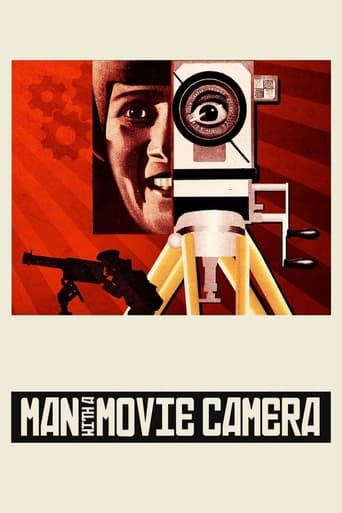
Man with a Movie Camera (1929)
Vertov's experimental city film shows an earlier way of making the camera and editing part of the subject.
See its influence
Nostalgia for the Light (2010)
Guzmán's meditative documentary carries the essay tradition forward, linking astronomy, memory and political history.
Compare another approach
F for Fake (1973)
Welles's essay film also mixes fact and fiction and questions the authority of images and the person speaking.