Drama
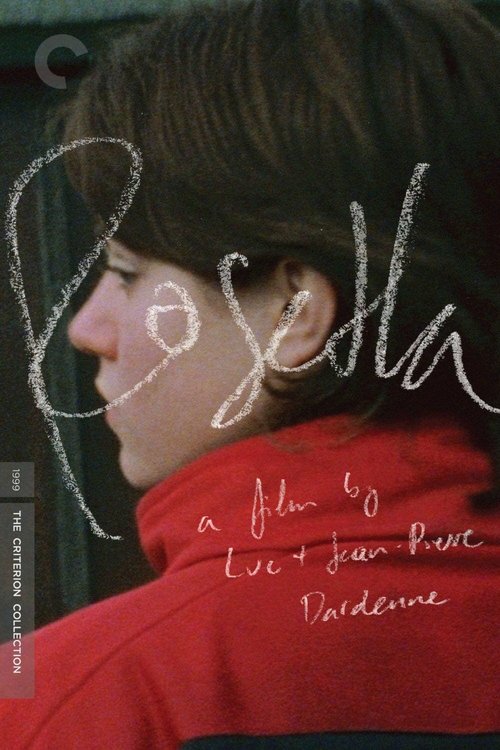
Rosetta
Belgian
1999 · Directed by Jean-Pierre Dardenne & Luc Dardenne · 95 min


Drama
Belgian
1999 · Directed by Jean-Pierre Dardenne & Luc Dardenne · 95 min






Meaning, unpacked
Central idea
The film can be read as an investigation of what happens when a person's whole sense of worth is made to depend on employment, in a world that offers almost no secure work. Rosetta's fierce pride is both her strength and her trap.
What it means
Rosetta is a young woman in a Belgian industrial town, living in a caravan park with her alcoholic mother. She loses her job in the opening minutes, and the whole film is her refusal to accept that. Its central question is what happens to a person whose entire sense of worth depends on having work, in a world that offers almost none that is secure. Her fierce pride is her strength, and also her trap.
For Rosetta, a job is not just income. She turns away charity and welfare because only work proves she belongs to ordinary society. The film also asks what a person will do when decency seems unaffordable, and it never lets you settle into an easy verdict. You may judge her, then find you cannot quite do it. Her suspicion keeps people at arm's length, and she looks after her mother rather than the other way round. Rosetta does not ask for pity. She asks, almost without words, to be allowed a place. The film leaves you to decide who is supposed to answer.
Why it mattered
In 1999, Rosetta won the Palme d'Or at Cannes, with Émilie Dequenne taking Best Actress for her first film performance. The jury was led by David Cronenberg, and the win surprised some observers, but critics widely praised the film's immediacy and physical intensity. It made the Dardenne brothers central figures of European art cinema.
What was new was how stripped back it was. Alain Marcoen's handheld camera follows Rosetta closely, often through doors and corridors, so you learn the world only as she moves through it. There is no score at all. Breath, footsteps, machinery and rubber boots on mud supply the rhythm, so any pause in her movement feels loaded. It carried the neorealist and documentary-influenced tradition into a new, physically immediate style. It feels like a documentary, yet it is fully scripted. The Dardennes began in documentary, but they rehearse at length and shoot many takes. The rawness is control.
Before anyone tells you what to think: what did you make of it?
Log in to rate it and leave commentsIt takes one click with Google or an email link. You come straight back here.
Rate it, keep your notes, and find the next film.
Free, no ads. Your journal, your lists, a Cine Guide that remembers you.
Create your free spaceThat close handheld pursuit of one character, with no music, became a recognisable template for contemporary social realism. You can see it in later Dardenne films, in the work of Ken Loach, and in the austerity of the Romanian New Wave. The film also helped fix the steel region around Liège and Seraing in the public imagination, a setting the Dardennes returned to in later work.
Its reach went beyond cinema. In Belgium, it set off public discussion of youth unemployment, and a youth-employment measure requiring larger employers to hire young workers became known as the Rosetta plan. It is widely reported to be named after the film's heroine, a rare case of a fictional character lending her name to policy. Today it is seen as the Dardennes' breakthrough and a model of tightly focused, character-driven realism. It is often screened in film and social-studies courses, as a story of poverty told through behaviour, not speeches.
What happens
After a failed attempt to end her life with a gas canister, Rosetta collapses outside in tears. Riquet, the boy she betrayed, appears and helps her up. She looks at him in silence, and the film ends.
The last image
Rosetta, on her feet again, looks at Riquet in silence.
Two readings
What it says
The ending strips the story down to one question: can Rosetta accept another person's help? Her pride has kept everyone away, and the film refuses a tidy answer. She asks, almost without words, to be given a place.
Or follow an idea from this film

Continue the director
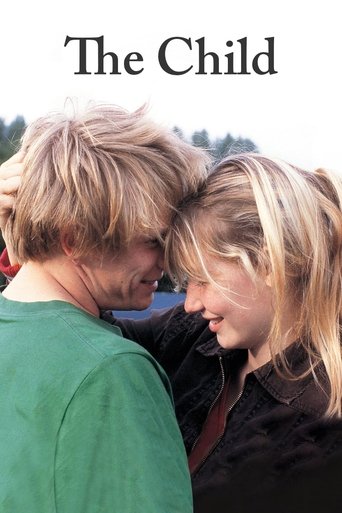
The Child (2005)
The Dardennes' second Palme d'Or winner shows the same method on a different story of poverty and moral failure.
See what influenced it
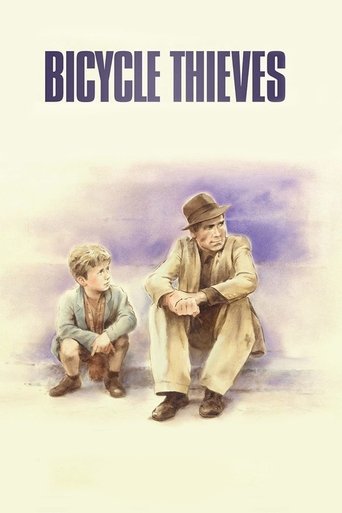
Bicycle Thieves (1948)
The neorealist root of this kind of film, in which getting or keeping work becomes a matter of survival and dignity.
See what influenced it
Au Hasard Balthazar (1966)
Bresson's austere, non-demonstrative style is an important ancestor of the Dardennes' restraint.

Follow the idea
I, Daniel Blake (2016)
A later, more openly political portrait of how bureaucracy and precarious work erode dignity.
Compare another approach
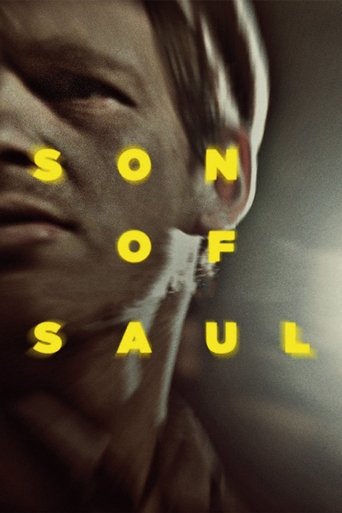
Son of Saul (2015)
Another film that fixes a tight, shaky camera on one person's back and shows the world only through that restricted view.