Drama · Crime
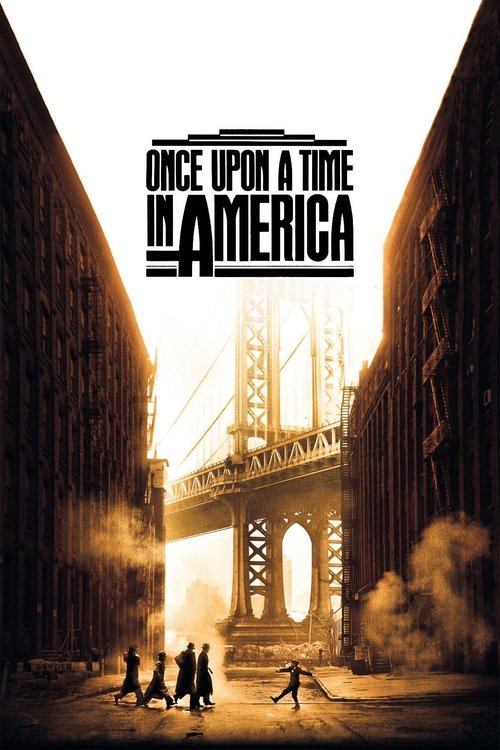
Once Upon a Time in America
American
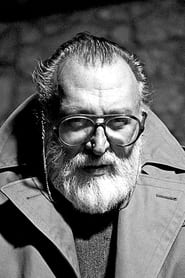
1984 · Directed by Sergio Leone · 139 min


Drama · Crime
American
1984 · Directed by Sergio Leone · 139 min
Meaning, unpacked
Central idea
The film can be read as an elegy for lost youth and a vanished New York, asking whether friendship and love can survive ambition, violence and time, and how a man lives with what he has done and what was done to him.
What it means
An old gangster comes back to a New York he has tried to forget, and memory pulls him through three periods of his life. The friends he betrayed, and who betrayed him, are waiting in every one. At heart this is an elegy for lost youth and a vanished city. It asks whether friendship and love can survive ambition, violence and time, and how a man lives with what he has done and with what was done to him.
Leone builds it like a dream. A telephone rings and no one answers, and the story begins in the middle, so the past keeps returning to reshape the present. Loyalty is the gang's strength and also the source of its undoing. The car ride with Deborah shows Noodles at his worst, and the film does not excuse him. It is also about nostalgia, which sweetens the truth. Perhaps Noodles's smile in the opium den needs no answer: some memories are sweeter than the truth, and we keep them anyway.
Why it mattered
In 1984 a gangster film was usually quick and thrilling. Leone made one that is slow, mournful and reflective. He moved between three periods, linked by sound and image rather than by signposts, and trusted you to follow. Music and close-ups carry the feeling, with Ennio Morricone's score and Gheorghe Zamfir's pan flute doing much of the emotional storytelling.
It was also a late, grand statement from a director known for Westerns. It was his last film, after years of work on Harry Grey's novel The Hoods, and he never directed again. Its first fate became famous in its own right. Leone's cut ran about 229 minutes and was admired at Cannes, but the American distributor released a heavily shortened 139-minute version in chronological order. Viewers were confused, critics were underwhelmed, and it did poorly at the box office.
Before anyone tells you what to think: what did you make of it?
Log in to rate it and leave commentsIt takes one click with Google or an email link. You come straight back here.
Rate it, keep your notes, and find the next film.
Free, no ads. Your journal, your lists, a Cine Guide that remembers you.
Create your free spaceThe film reinforced the idea that a gangster story could be mournful rather than only thrilling. Directors who treat crime as tragedy owe it something, and Quentin Tarantino's Leone homages are one example. Its images and sounds travelled too. Morricone's pan-flute themes became some of his best-known work, and visitors to Dumbo still recreate the shot of the boys walking beneath the Manhattan Bridge. The gap between the two versions also made it a standard example in talk of studio re-editing.
Its reputation rose as the longer version circulated and a restoration of about 251 minutes was shown at Cannes Classics in 2012. Today it is widely seen as one of the great crime films and as Leone's late masterpiece. It is not beyond argument. Some reviewers objected to its harsh treatment of women at the time, and that remains debated.
What happens
In 1968, Noodles learns that Max survived, took the gang's money and Deborah, and arranged the ambush. Noodles refuses to kill him, and Max vanishes. Then we return to the 1933 opium den, where Noodles smiles.
The last image
Noodles, back in the opium den in 1933, smiles at the camera.
Three readings
What it says
The ending leaves truth and memory tangled, which is the film's point. Noodles keeps the past in whatever form he can live with, and Leone suggests we do the same: some memories are sweeter than the truth.
Or follow an idea from this film

Continue the director
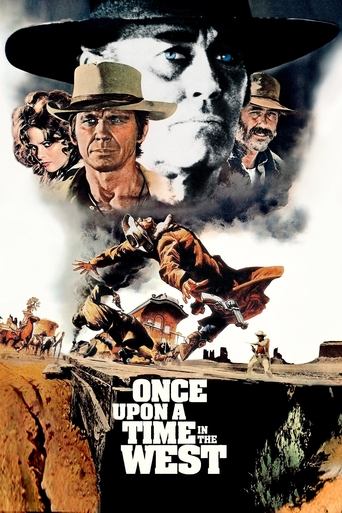
Once Upon a Time in the West (1968)
Leone's other epic about a vanishing era shows the same operatic style and Morricone's music at their peak, in a Western setting.
Compare another approach
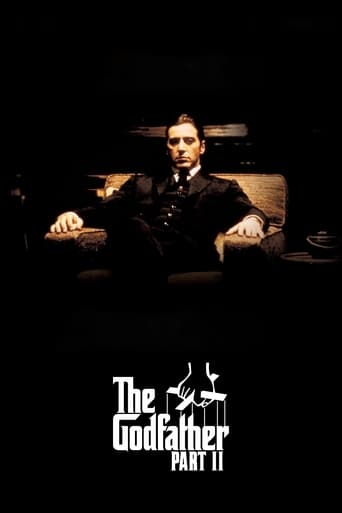
The Godfather Part II (1974)
Moves between eras to follow how an immigrant's rise and loyalties take shape across time, in a very different, more political style.

Jump forward
GoodFellas (1990)
A later gangster saga about friendship and betrayal, told with Scorsese's speed instead of Leone's patience.
Follow the idea
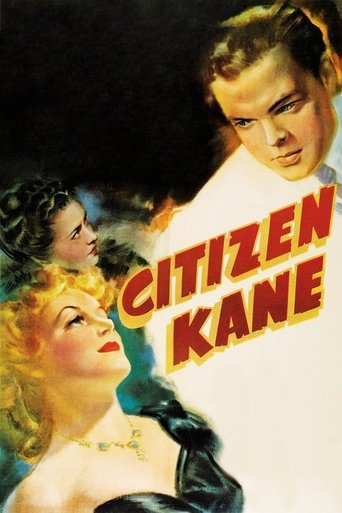
Citizen Kane (1941)
An earlier film that reconstructs a life through fragmented memory, useful for understanding Leone's non-linear approach.
Explore the era or movement
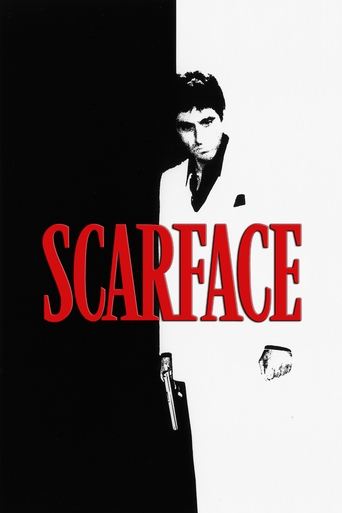
Scarface (1983)
Released just before this film, it shows the excess and violence the early-1980s gangster revival embraced, in contrast to Leone's elegy.