Drama · Thriller
Magical Girl
Spanish
2014 · Directed by Carlos Vermut · 127 min


Drama · Thriller
Spanish
2014 · Directed by Carlos Vermut · 127 min
Meaning, unpacked
Central idea
The film can be read as a study of how love, guilt and fantasy push people into moral choices they cannot undo, and of how a single act of generosity can trigger harm far beyond the person who made it.
What it means
Magical Girl starts with a small act of love and follows it until it becomes something terrible. Luis, an unemployed teacher in debt, wants to fulfil a wish for his ill daughter Alicia, a wish tied to her favourite anime. Then the film moves away from him, and the harm spreads. Its central idea is that love, guilt and fantasy can push people into choices they cannot undo, and that one act of generosity can do damage far beyond the person who made it.
It isn't really a film about a dying child. Alicia's illness sets things moving, but the story belongs to the adults around her and the moral cost of what they do. Luis's devotion is sincere, and that is the danger: the film asks what love permits, and what it excuses. Nearly everyone holds a secret or some leverage over someone else, so relationships become trades in domination and submission. Nobody quite chooses the final outcome. Small, understandable actions pile up until a quiet fatalism takes over, and the film never tells you who is to blame.
Why it mattered
Carlos Vermut keeps the emotion cool. He trusts silence and restraint, and lets small physical details do what dialogue would normally explain. The film is split into sections that change viewpoint, and key events happen off screen, so you have to reconstruct the causes yourself. Rooms are clean, impersonal and symmetrically framed, which makes the moments when the calm breaks cut deeper. Even the ending, a brief and almost anticlimactic confrontation, refuses catharsis.
Before anyone tells you what to think: what did you make of it?
Log in to rate it and leave commentsIt takes one click with Google or an email link. You come straight back here.
Rate it, keep your notes, and find the next film.
Free, no ads. Your journal, your lists, a Cine Guide that remembers you.
Create your free spaceThe music works against the images. There is no traditional composed score. Instead the film lays existing, often sentimental songs, including Remedios Amaya's Eurovision entry "¿Quién maneja mi barca?", over cold or disturbing scenes. That clash of tenderness and dread became a signature. Magical Girl premiered at San Sebastián in 2014 and won the Golden Shell, with the Silver Shell for Best Director going to Vermut. Critics praised its control and dark humour, though some found it cold and withholding. It did modest business in Spain.
The film helped define a strand of Spanish auteur thrillers that mix genre with rigorous restraint, and it made Vermut's cool, elliptical style a reference point for directors who followed. Bárbara Lennie won the Goya for Best Actress, widely seen as her breakthrough, and Vermut was nominated for a Goya for original screenplay.
Its cultural echoes run wide. The fictional series Magical Girl Yukiko draws on Japanese magical-girl anime, which many Spanish viewers grew up with, so Luis's wish is instantly understandable. Many commentators also read his debts and desperation as a portrait of Spain after the 2008 financial crash. Today it is regarded as one of the strongest Spanish films of the 2010s, and it remains a favourite with viewers who prefer ambiguity to resolution. If you liked it, look for Vermut's first feature, Diamond Flash.
What happens
The ending is a short, bleak settling of accounts. Money changes hands, violence follows, and lives are wrecked or ended. It reveals how tightly Luis, Bárbara and Damián were bound together from the start, which changes how earlier scenes look.
The last image
The film closes without comfort or release, leaving the three bound-together lives in the cold aftermath of what has been done.
What it says
Nobody here chooses the outcome. Small, understandable acts, many of them done out of love, pile up into ruin. The film refuses catharsis and never names a culprit, so you are left counting the steps that led there.
Or follow an idea from this film

Follow the idea
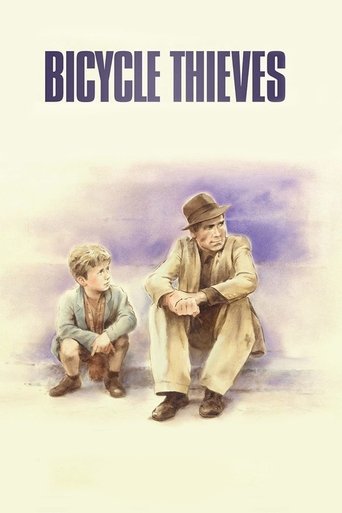
Bicycle Thieves (1948)
Another story of a father whose need to provide drives him to desperate choices, handled with moral seriousness instead of sentiment.

See what influenced it
Double Indemnity (1944)
The classic example of noir's chain of bad decisions and doom, which Magical Girl recasts in a modern, colder register.
Compare another approach
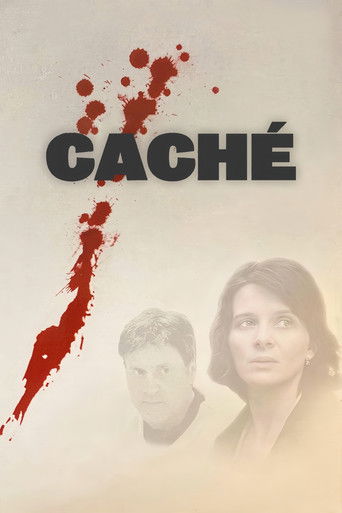
Caché (2005)
Haneke's thriller also withholds information and unsettles through restraint, making it a good companion for seeing the same method at work.

Compare another approach
Talk to Her (2002)
A Spanish film about love and obsession around illness, with a very different warmth and a melodramatic style that contrasts with Vermut's coldness.