Action · Science Fiction
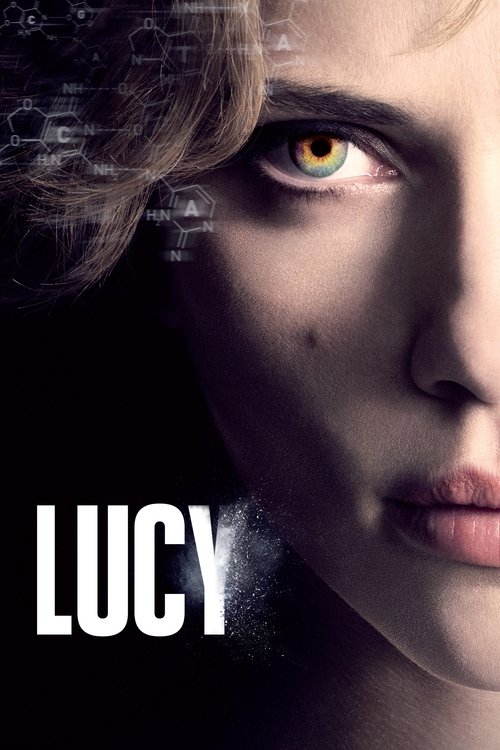
Lucy
French
2014 · Directed by Luc Besson · 89 min


Action · Science Fiction
French
2014 · Directed by Luc Besson · 89 min
Meaning, unpacked
Central idea
The film can be read as a thought experiment about what knowledge and potential would do to a person. It asks whether more capability means more humanity or less, and what is worth passing on if time is all that anyone really has.
What it means
Lucy begins as a trafficking story and turns into a fable. A young woman in Taipei is used as a container for a drug. A beating in a hotel room makes it leak into her body, and her mind begins to expand. She heads for Paris to find Professor Norman, the one man who might understand.
The film borrows a myth, that we use only ten percent of our brains. It is false: brain imaging shows we use nearly all of our brains over a day. The film knows this and treats the idea as a fable about human possibility, not as science. Read that way, it asks whether more capability means more humanity, or less. Scarlett Johansson answers with her voice and movement, moving from panic to a flat, eerie precision. The more Lucy can do, the less ordinary she feels. Her later control over her own body also answers the way the story began, with a body treated as a commodity.
Why it mattered
Lucy was not a conventional action film from start to finish. The first half follows the thriller pattern, then the film turns toward abstraction and philosophical fable. Its editing keeps the ideas moving: short scenes, on-screen percentage counters that make it feel like a countdown, and cutaways to animals and nature that state ideas visually.
It also showed how a European studio could make a fast, glossy, English-language action film for a global audience. Besson had built his name on dangerous, stylised heroines, from Nikita to Mathilda in Léon. Here the realistic assassin becomes an almost superhuman figure, and the effects are used to show what she can do and to illustrate abstract ideas like expanding perception and the passage of time.
Before anyone tells you what to think: what did you make of it?
Log in to rate it and leave commentsIt takes one click with Google or an email link. You come straight back here.
Rate it, keep your notes, and find the next film.
Free, no ads. Your journal, your lists, a Cine Guide that remembers you.
Create your free spaceThe film was a commercial success worldwide, far outperforming its modest budget. Critics were divided. Many praised Johansson, the pace and the audacity of the premise, while others criticised its science and its final act. Audiences split in the same way.
Its reputation remains mixed. It is rarely treated as major science fiction, but it is often cited as a lively, distinctive piece of pulp ambition. It encouraged more mid-budget, idea-driven action films led by women, including Besson's own Anna. Its drug, CPH4, has become shorthand for a pill that grants superhuman ability, and the film is now one of the best-known examples of the ten percent myth. It also sits alongside Under the Skin and Her as Johansson roles about intelligence moving beyond human limits.
What happens
Lucy reaches her full capacity in the lab. She becomes pure intelligence, travels back through time to meet the earliest human ancestor, and vanishes into existence itself, leaving only a flash drive holding what she knew.
The last image
Lucy is gone, and only the flash drive remains, with her message that she is everywhere.
What it says
The film treats Lucy's transformation as a fable, not science. Knowledge is only worth having if it is passed on, so her body fades and her knowledge stays behind. The ending asks what you would leave behind if you could know everything.
Or follow an idea from this film


Continue the director
Léon: The Professional (1994)
Besson's most beloved English-language film shows his style at its most emotionally grounded, with a clear contrast to Lucy's cooler, more abstract tone.
Continue the director
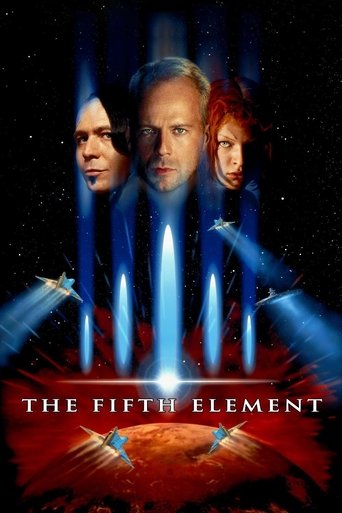
The Fifth Element (1997)
Besson's earlier science-fiction spectacle shows his taste for colour, design and humour, and a different approach to a heroine at the centre of a cosmic story.
See what influenced it
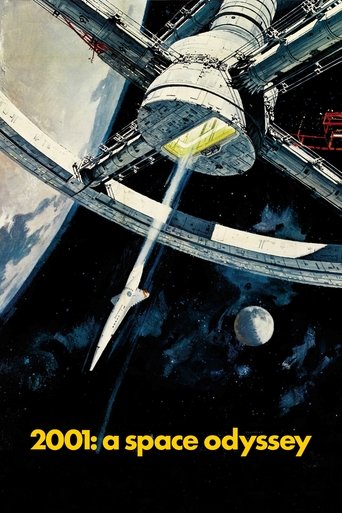
2001: A Space Odyssey (1968)
The classic treatment of human evolution and transformation, handled with great patience and very little dialogue. It shows how differently a related idea can be filmed.
Compare another approach
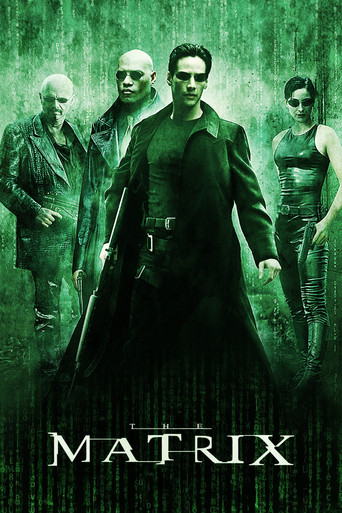
The Matrix (1999)
Another stylish action film built on the idea that a person can unlock hidden capacities, though with a stronger philosophical framework and a more developed world.