Documentary · Music
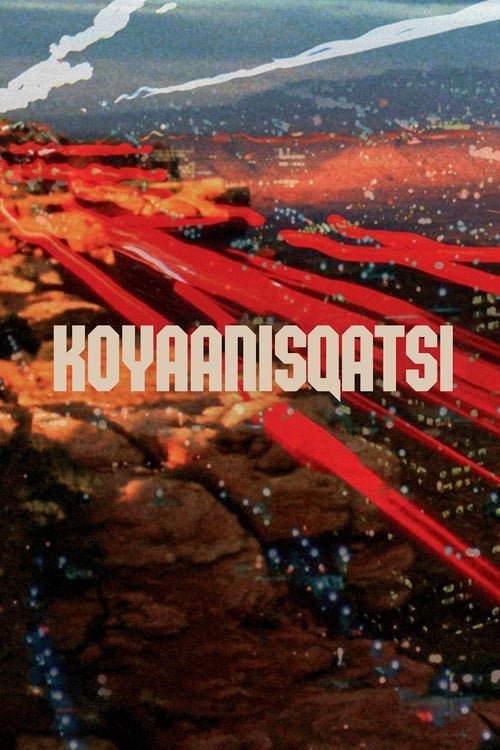
Koyaanisqatsi
American
1983 · Directed by Godfrey Reggio · 86 min


Documentary · Music
American
1983 · Directed by Godfrey Reggio · 86 min



Meaning, unpacked
Central idea
The title is a Hopi word often translated as life out of balance. The film can be read as an argument that technology has become the environment we live inside, not a tool we use, and that it now moves faster than we can see or control.
What it means
Koyaanisqatsi has no story and no characters. It moves from open landscape to city to system, and ends on a rocket launch that goes wrong. What matters is what that journey says to you.
The title is a Hopi word, often translated as life out of balance. It is not an invented name. The film chants it, and the closing titles translate it, which turns everything you have just seen into a diagnosis. The central idea is that technology has stopped being a tool we pick up. It has become the environment we live inside, moving faster than we can see or control. The film doesn't argue this in words. It shows it through pattern and scale: untouched land, then a city filmed like a landscape with its own weather and flows, then speed turning people into streams of bodies and vehicles. Even the demolition of a housing complex, slowed until it is almost graceful, shows the film is not simply scolding. It is also seduced.
Why it mattered
Koyaanisqatsi came out of unusual places. Godfrey Reggio was a community organiser in New Mexico, working through his Institute for Regional Education, not a man of the film world. The film grew from a campaign to use media to examine technology's effects on society. It carried the avant-garde tradition of the 1920s city symphonies into feature-length cinema in the early 1980s.
What was new was the language. Ron Fricke's time-lapse, slow motion, aerial views and long lenses turned crowds and traffic into dense patterns. Editing worked by rhyme rather than plot, so the film plays as a series of visual arguments. Philip Glass's score was written in close collaboration with Reggio, and music and images shaped each other. Words and actors were set aside, and a feature could be built from images and music alone.
Before anyone tells you what to think: what did you make of it?
Log in to rate it and leave commentsIt takes one click with Google or an email link. You come straight back here.
Rate it, keep your notes, and find the next film.
Free, no ads. Your journal, your lists, a Cine Guide that remembers you.
Create your free spaceIts look spread everywhere. Sped-up crowds, freeways and escalators set against slow, ominous music became shorthand for frantic modern life, in documentaries, advertising, title sequences and music videos. Glass's score, especially the opening organ chant and The Grid, is still used to suggest speed or technological unease. The film began the Qatsi trilogy, with Powaqqatsi and Naqoyqatsi, and Fricke carried the approach into Baraka and Samsara.
At first it reached audiences as an unusual independent release, helped by Francis Ford Coppola lending his name as presenter. Many found it hypnotic and overwhelming; others found its message heavy-handed. It became a cult success at repertory and midnight screenings. Today it is seen as a classic of experimental filmmaking and a touchstone of environmental cinema. Its message is sometimes called simplistic, but its form is widely admired.
What happens
A rocket launch fails, and the burning debris drifts slowly down through the sky. The Hopi chant returns, and titles translate its prophecies. Then the title is repeated and defined: a life out of balance.
The last image
The film closes on the falling debris from the failed launch, set against the chant and its translated warning.
What it says
The ending turns everything you've seen into a diagnosis. Technology promised ascent, and the film shows it falling. By ending on the translated title, it tells you the images were a warning, not just a spectacle.
Or follow an idea from this film
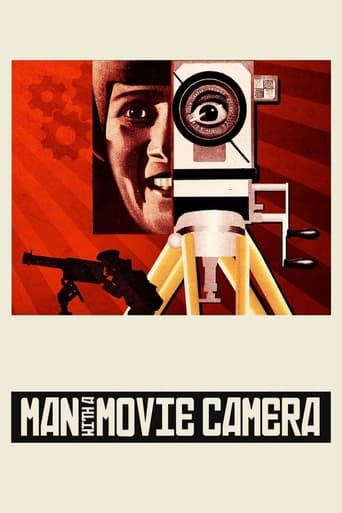

See what influenced it
Man with a Movie Camera (1929)
Vertov's silent experiment is the clearest ancestor of Koyaanisqatsi's rhythmic editing and its fascination with machines and city life.
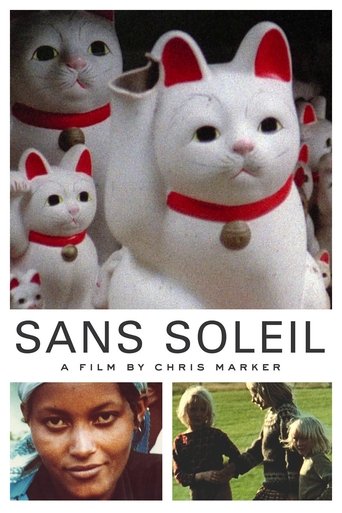
Explore the era or movement
Sans Soleil (1983)
Released the same year, Chris Marker's essay film also reflects on modernity and image-making, but through narration and memory instead of pure music.
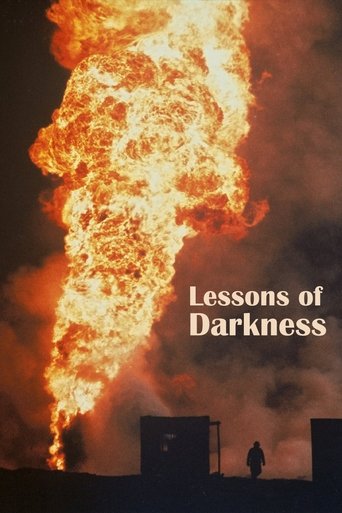
Compare another approach
Lessons of Darkness (1992)
Werner Herzog's near-wordless film also uses music and long images to make a landscape of destruction feel like a vision.
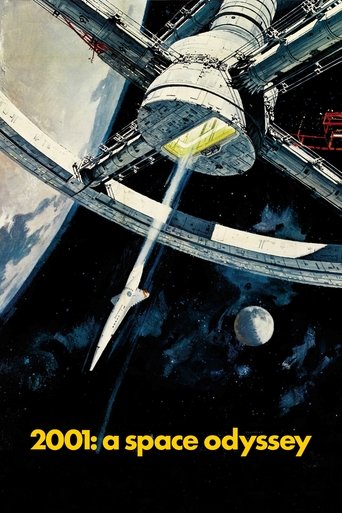
See what influenced it
2001: A Space Odyssey (1968)
Another film where music and image dominate and speech is minimal, with technology at its centre.
Follow the idea
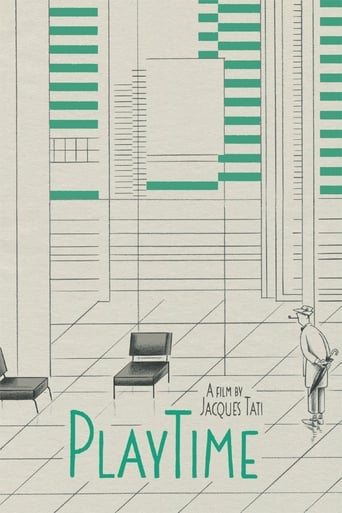
PlayTime (1967)
Jacques Tati's comedy also treats the modern city as a designed environment that people must navigate, but with humour instead of warning.