Drama · History · Romance
Gate of Hell
Japanese (地獄門)
1954 · Directed by Teinosuke Kinugasa · 86 min


Drama · History · Romance
Japanese (地獄門)
1954 · Directed by Teinosuke Kinugasa · 86 min


Meaning, unpacked
Central idea
The film can be read as a study of how a code of honour, built to channel loyalty and violence, cannot manage private desire. It treats obsession as a kind of disguised pride, and shows the cost falling on those who live inside the code.
What it means
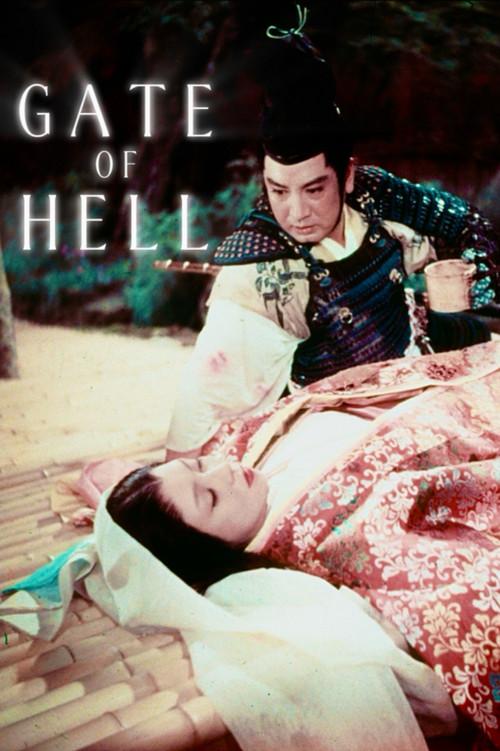
A samurai saves a woman from a burning city, asks for her as his reward, and learns she is already married. You can see where that goes. What matters is what the film does with it.
It is a study of a code of honour meeting something it cannot manage. Moritō is superb at service and self-control, but he cannot tell his wanting from entitlement. The film reads his obsession as pride in disguise: his courage has earned a prize, and he calls it love. Kesa lives in a world where marriage, family and rank set her options, so her composure is her only room to manoeuvre, both strategy and cage. Behind it all sits the Buddhist idea of giving up worldly attachment, a final reckoning beyond the warrior code.
Why it mattered
Gate of Hell gave Japanese cinema a new kind of prestige. Its studio, Daiei, had seen what Rashomon's success at Venice did for a film's standing and went after a festival route. The film won the Grand Prix at Cannes in 1954. Western critics were struck by its colour and formal beauty, though some Japanese critics found it polished and conventional beside Kurosawa and Mizoguchi.
It was not Japan's first colour film. That was Carmen Comes Home, in 1951. But it was among the first to reach wide international audiences and be celebrated abroad for its colour. Sanzo Wada, who trained as a painter, designed costumes and palace interiors as one palette, where colour signals rank, mood and moral temperature. It showed that the historical costume drama could be an art of colour and composition.
Before anyone tells you what to think: what did you make of it?
Log in to rate it and leave commentsIt takes one click with Google or an email link. You come straight back here.
Rate it, keep your notes, and find the next film.
Free, no ads. Your journal, your lists, a Cine Guide that remembers you.
Create your free spaceIts success helped build an international market for Japanese period films in colour, and it encouraged studios to treat costume and colour as artistic assets. Kurosawa's Kagemusha and Ran later carried that pictorial tradition forward on a larger scale. For many Western viewers in the 1950s it was among their first colour glimpses of medieval Japan, and with Rashomon and Ugetsu it shaped how Japanese period cinema was imagined abroad.
Today it is seen as a beautiful, somewhat conservative classic, valued more for palette and performance than for daring. It did not win Best Foreign Language Film; that category wasn't yet competitive in 1955. It received an Honorary Award, plus a competitive Oscar for costume design. Modern viewers often read Moritō's fixation as pursuit, not romance, and maybe that is its lasting power. The beauty is real, but it belongs to a world where everyone is dressed perfectly and no one can say what they mean.
What happens
Moritō creeps into the dark bedroom and strikes the sleeper, then finds he has killed Kesa, who took her husband Wataru's place. Wataru cannot kill him, so Moritō abandons his warrior life and becomes a monk.
The last image
Moritō, his warrior's life given up, turns away as a monk.
What it says
The ending shows obsession mistaken for love and honour mistaken for entitlement. Kesa's sacrifice exposes what Moritō's desire truly cost. His turn to renunciation offers a reckoning that the warrior code could never give him.
Or follow an idea from this film
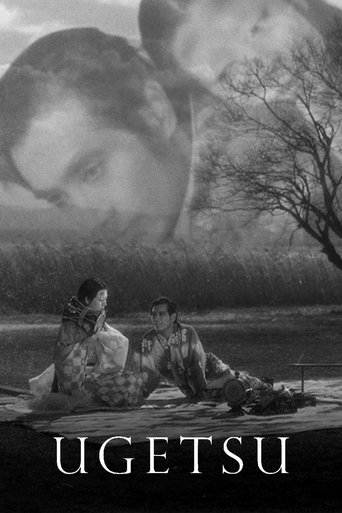

Explore the era or movement
Ugetsu (1953)
Mizoguchi's ghost story from the same moment is another Japanese period film that won Western acclaim, with a very different, fluid camera style.
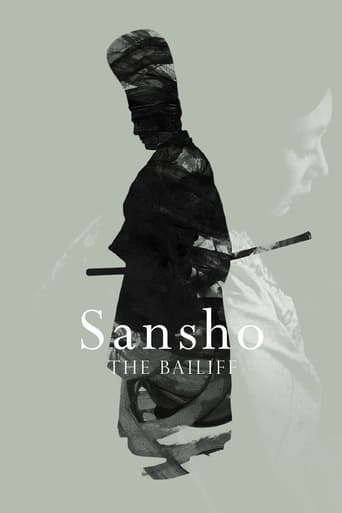
Compare another approach
Sansho the Bailiff (1954)
Released the same year, it is another period tragedy about duty and cruelty, shot in black and white with Mizoguchi's long takes.
Follow the idea
Harakiri (1962)
A harsher look at the samurai code of honour, questioning the values that Gate of Hell treats with more reverence.
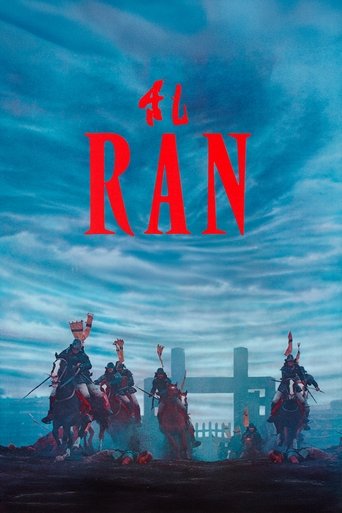
Jump forward
Ran (1985)
Kurosawa's colour epic shows how far pictorial colour design in the period film could go, with costumes as a central dramatic element.
Explore the era or movement
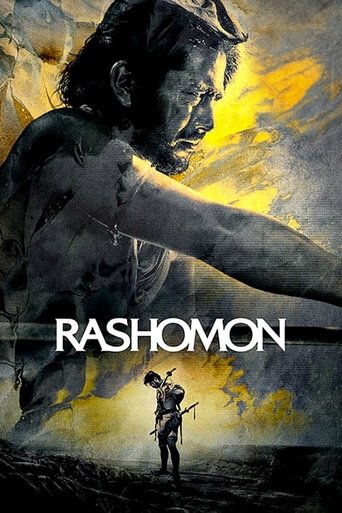
Rashomon (1950)
The film that opened the West's eyes to Japanese cinema, with a radically different, modernist approach to historical storytelling.