Documentary
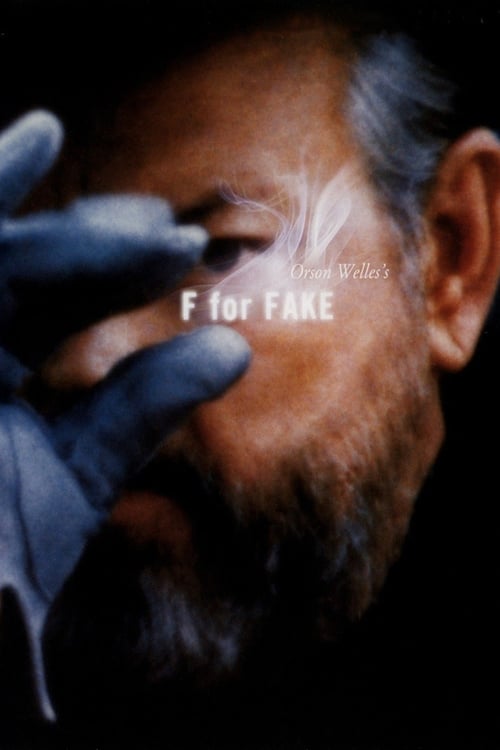
F for Fake
French (Vérités et Mensonges)
1973 · Directed by Orson Welles & François Reichenbach · 89 min


Documentary
French (Vérités et Mensonges)
1973 · Directed by Orson Welles & François Reichenbach · 89 min

Meaning, unpacked
Central idea
The film can be read as an inquiry into authenticity. It asks whether a work's value lies in its maker, its reputation or its effect on the viewer, and it uses its own structure to test the question.
What it means
F for Fake is a magic show that keeps pulling back the curtain. Orson Welles gives you a forger, Elmyr de Hory, and a hoaxer, Clifford Irving. Then he gives you one last story, built around Oja Kodar, that he invented and then admits he invented. That move shows what the film is really about: authenticity. Where does a work's value live? In the person who made it, in the reputation attached to it, or in what it does to you when you look? Welles doesn't answer. He builds the film so that you feel the question.
The experts show how shaky judgement can be. Forged paintings fool critics and hang in museums, and the people who claim to know what is real turn out to rely on reputation and need as much as on evidence. If a name changes, the painting hasn't. Only the verdict has. De Hory and Irving tell their stories with such charm that you enjoy being deceived. Welles calls himself a charlatan, yet the film suggests an honest liar may be more trustworthy than an authority who claims to be truthful. Then the Chartres cathedral monologue praises anonymous makers and complicates all of it: maybe great art doesn't need a famous name.
Why it mattered
The film treated a documentary as a playground for argument, editing and sleight of hand. Welles built it from real footage, staged scenes and direct address, talking straight to you as magician, host and confessor. Editing became the main instrument. He cut reaction shots, archival clips and new material into quick, rhythmic sequences that make connections the footage never held. It showed that footage never speaks for itself: framing, narration and cutting make the case, and editing is a form of authorship.
Before anyone tells you what to think: what did you make of it?
Log in to rate it and leave commentsIt takes one click with Google or an email link. You come straight back here.
Rate it, keep your notes, and find the next film.
Free, no ads. Your journal, your lists, a Cine Guide that remembers you.
Create your free spaceIt also showed what a filmmaker with limited means could do. By the early 1970s Welles worked largely outside Hollywood, funding films through international partners and his own acting jobs. François Reichenbach had shot the footage of de Hory for a television documentary. Welles reused it, shot new material and shaped the finished film. When Irving's fake Howard Hughes autobiography was exposed in 1972, Welles reworked the film around it. Constraint became a formal experiment, with Michel Legrand's playful score carrying you through a film that digresses and returns rather than following a plot.
Reception was mixed at first. Distribution in 1973 was limited, and some saw a clever curiosity while others found it self-indulgent and puzzling. The film reached its audience slowly, through festivals, repertory screenings and video. Over time it helped open the way for hybrid nonfiction, where documentaries openly stage, perform and question themselves. Later filmmakers who play with truth, from essayists to makers of mockumentaries, work in its shadow.
Today it looks prescient. It is regarded as a key work of the essay-film tradition and an unusually sharp film about image, authority and belief. In an age of deepfakes and disputed information, its handling of truth feels more relevant than ever, and it is a favourite in media-literacy and film-studies teaching. It also keeps two real impostors in public memory, and Irving's hoax was later dramatised in The Hoax (2006). Welles's open admission of showmanship echoes his 1938 War of the Worlds broadcast.
What happens
Welles ends by admitting that the long Picasso story, told with such convincing detail, was invented, and that his promised hour of truth ran out long before. You realise you believed it. The film has been making a fake all along.
The last image
The film closes on the admission itself: Welles, the showman, owning up to the trick he has just played on you.
What it says
A fake that announces itself is more honest than one that hides. Welles shows how easily a good story creates belief, then hands that lesson to you. He ends on the trick because trust is the subject, and an honest liar may be the only kind worth trusting.
Or follow an idea from this film

Continue the director
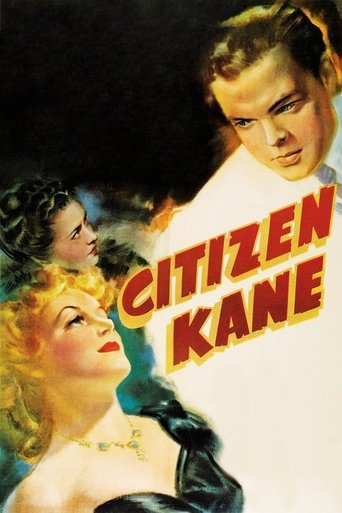
Citizen Kane (1941)
Welles's best-known film also builds a character from conflicting accounts. Seen after F for Fake, its structure looks like an earlier, more dramatic inquiry into the same questions.
Follow the idea
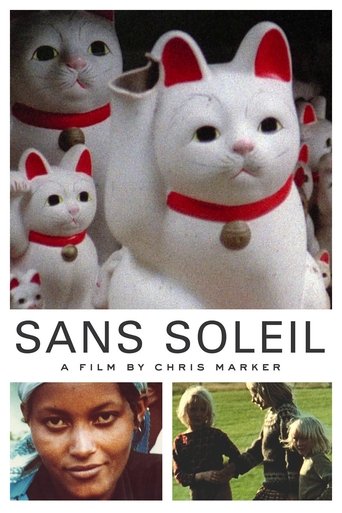
Sans Soleil (1983)
Chris Marker's essay film is the next step in the tradition, with images and a narrator that make a poetic argument.
Jump forward
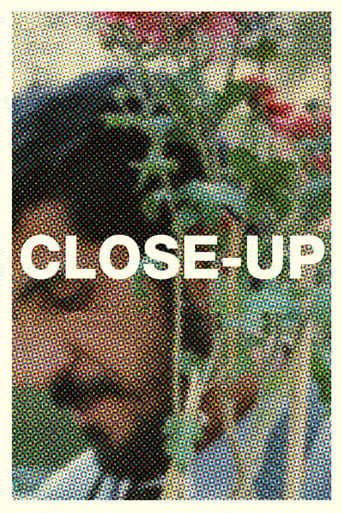
Close-Up (1990)
A documentary-fiction hybrid built around an impostor. It shows another filmmaker using performance to get at a truth that straight observation would miss.
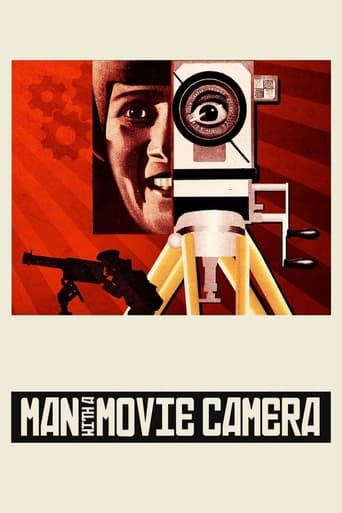
See what influenced it
Man with a Movie Camera (1929)
Vertov's silent film is a foundation of editing-led nonfiction and openly shows how a film is made.
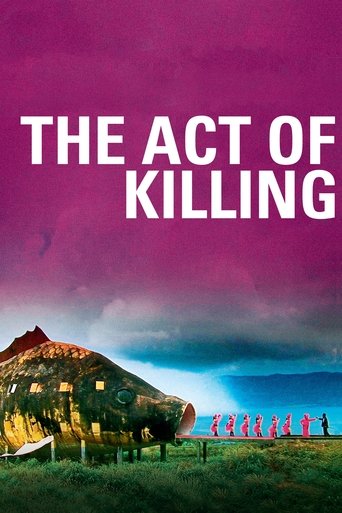
Compare another approach
The Act of Killing (2012)
A very different documentary that uses staging and performance to expose how people construct stories about themselves, and it raises the same question of what a documentary may do.