Drama · Romance
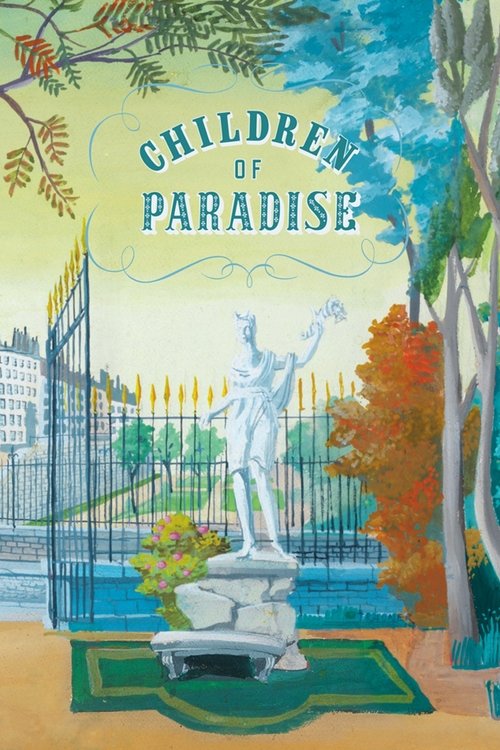
Children of Paradise
French (Les Enfants du Paradis)
1945 · Directed by Marcel Carné · 190 min


Drama · Romance
French (Les Enfants du Paradis)
1945 · Directed by Marcel Carné · 190 min




Meaning, unpacked
Central idea
The film can be read as a meditation on the gap between performance and life. The people who show feeling most convincingly on stage struggle to act on it off stage, and a free woman cannot be possessed by anyone who loves her.
What it means
At its heart, Children of Paradise is about a woman who belongs to no one and the several men who love her. Garance cannot be possessed by anyone who loves her. Each man wants to own her, protect her or perfect her, and the film suggests that the wanting is part of what loses her. That is why she slips away into the Mardi Gras crowd at the end while Baptiste fights after her and cannot reach her.
It is also a meditation on the gap between performance and life. The people who show feeling most convincingly on stage are the ones who struggle to act on it off stage. Nearly everyone here presents a constructed self. Baptiste is the exception: his silence is the film's measure of sincerity, but also his weakness, because the man who cannot speak cannot say the one thing that matters in time. The jump between the two parts makes the same point, that hesitation compounds while people wait for the right moment. The stage can say what life won't allow, but the curtain always comes down, and the crowd moves on.
Why it mattered
Children of Paradise reached Paris audiences in March 1945, only months after the Liberation. It was a major popular success and ran for a long time, and many saw it as proof that French cinema had survived the war. It is also the culmination of the partnership between Marcel Carné and screenwriter Jacques Prévert, and the most celebrated film of the French poetic-realist tradition.
Its scale was remarkable. It was shot during the German Occupation and became one of the biggest productions in French cinema of its day. Alexandre Trauner rebuilt the Boulevard du Temple in the studio, with the street thronged by extras, and the artificiality was deliberate: Paris becomes a stage. Prévert's script, mixing street slang, epigram and lyricism, gives a story of two parts and many characters the feel of a novel. Carné moves his camera fluidly through crowds and saves close-ups for private feeling.
Before anyone tells you what to think: what did you make of it?
Log in to rate it and leave commentsIt takes one click with Google or an email link. You come straight back here.
Rate it, keep your notes, and find the next film.
Free, no ads. Your journal, your lists, a Cine Guide that remembers you.
Create your free spaceThe film became the model for the romantic, theatre-centred period epic, and a touchstone for later films about performers, such as Truffaut's The Last Metro. Its mime sequences also fed a lasting cultural image of Pierrot and the lonely artist. Even its title left a mark: the children of paradise were the poor crowd in the cheap upper gallery, and the phrase became shorthand for popular, unpretentious devotion to the stage.
Today it is regarded as one of the most beloved French films and a model of studio craftsmanship. The New Wave generation sometimes dismissed Carné's polished, literary style as old-fashioned, but the film's emotional force and performances have outlasted that criticism. It remains a fixture of repertory cinemas, restored re-releases and film courses, and Prévert's screenplay earned an Oscar nomination.
What happens
Lacenaire kills Edouard, and Garance leaves Paris again, knowing Baptiste cannot abandon his wife and son. Baptiste chases her through the Mardi Gras crowd, but the carnival swallows her and he cannot reach her.
The last image
Baptiste struggles against the masked carnival crowd as Garance disappears into it, out of reach.
What it says
Garance cannot be owned, and Baptiste, the man who cannot speak in time, loses her to his own hesitation. The crowd stands for life's indifference: the stage can say what life won't allow, but the curtain comes down and everyone moves on.
Or follow an idea from this film


Continue the director
Quai des brumes (1938)
Carné and Prévert's earlier romance, shorter and darker, shows the poetic-realist mood this epic grew out of.
Compare another approach
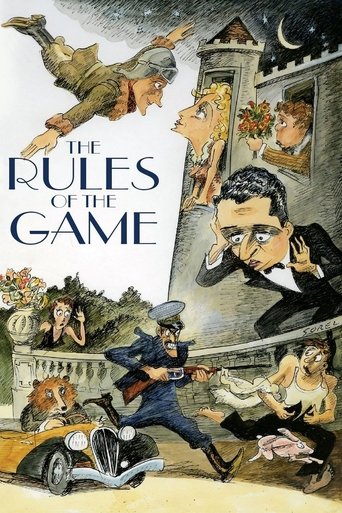
The Rules of the Game (1939)
Another French film about love, class and role-playing, here as satire of the upper classes, and a good counterpoint to Carné's romanticism.

Follow the idea
The Red Shoes (1948)
A lavish film about a performer torn between art and love, with a similarly serious belief in the stage.
Follow the idea
Jules and Jim (1962)
The New Wave's own take on a free-spirited woman and the men who love her, lighter and looser than Carné's version.
See its influence
Day for Night (1973)
Truffaut's affectionate portrait of a company of artists shows how this film's love of performers lived on in later French cinema.