History · Drama
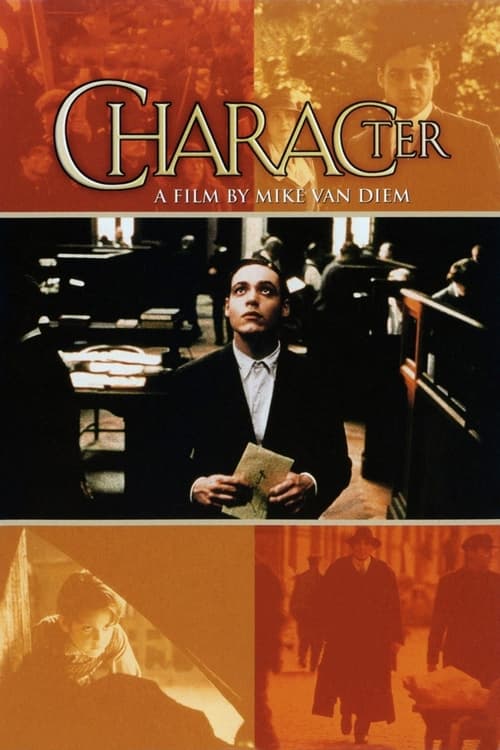
Character
Dutch (Karakter)
1997 · Directed by Mike van Diem · 122 min


History · Drama
Dutch (Karakter)
1997 · Directed by Mike van Diem · 122 min

Meaning, unpacked
Central idea
The film can be read as a study of how character is forged: through opposition, pride and refusal to accept help or love in conventional forms. It sets worldly success against the emotional price of getting there, and it never fully explains the father-son bond.
What it means
Character is a study of how character gets forged: through opposition, through pride, and through a refusal to accept help or love in the usual forms. A young man rises through the law while his father, a feared bailiff, does everything he can to stop him. The film sets worldly success against the emotional price of reaching it, and it never fully explains the bond between Jacob and Dreverhaven. That gap is deliberate.
Almost everything between the two men passes through obstruction, money and silence. Again and again, Dreverhaven offers money or help, and Jacob turns it down. His independence is his strength, and it is also a kind of prison, as his romance with Lorna and his relationship with his mother show. The law, meanwhile, is a ladder open only to those who can pay, endure and be accepted from above. And think again about that last scene: two men who could never accept anything from each other may have given each other everything that mattered, in the only form they could bear.
Why it mattered
The film opens with a police interview, and Jacob's account becomes a defence. You are invited to judge him before you've seen what he went through. That flashback structure turns a rise-and-struggle story into a mystery of motive as well as a biography. Then the final exchange reframes everything, and hostility becomes something more ambiguous, and sadder.
It also showed what a severe, language-specific literary drama could do. Rotterdam is rebuilt as a world of brown wood, dim offices and narrow staircases, and the formal, shadowed compositions keep you at a slight, analytical distance. Some viewers found that cold. Others see it as exactly the point. The film took a long, dense novel, compressed it into episodes, and kept its hardness and irony while giving the plot a clearer emotional line.
Before anyone tells you what to think: what did you make of it?
Log in to rate it and leave commentsIt takes one click with Google or an email link. You come straight back here.
Rate it, keep your notes, and find the next film.
Free, no ads. Your journal, your lists, a Cine Guide that remembers you.
Create your free spaceThis was Mike van Diem's first feature, and it won the Academy Award for Best Foreign Language Film at the 1998 ceremony, a remarkable result for a debut from a small national industry. It helped confirm the Netherlands as a presence at the Oscars in the 1990s, and it proved that a stern drama could succeed abroad without softening its tone. It also sent people back to Ferdinand Bordewijk's novel, including younger readers and readers abroad through translation, and it is often used alongside the book in Dutch schools.
Today it remains one of the best-known Dutch films of that decade, and a standard reference for Dutch literary adaptation. Its reputation rests on the central performances and its sustained atmosphere. Jan Decleir's bailiff has become a reference point for the cold, punishing parent in Dutch and Flemish screen drama.
What happens
Jacob qualifies as a lawyer, and the opening mystery resolves: Dreverhaven's death was suicide, not murder, so Jacob is cleared. Their last meeting suggests the father's cruelty was a harsh way of pushing his son to succeed.
The last image
I'm not certain of the film's final shot, so I won't describe it; what stays with you is the last meeting between father and son.
What it says
Character is forged by opposition, and the ending shows love can survive only in a form two proud men can bear. It ends on that revelation because the film is about what Jacob's success cost, and who truly made it possible.
Or follow an idea from this film

Compare another approach
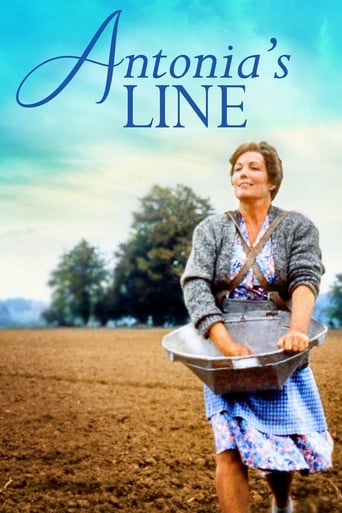
Antonia's Line (1995)
Another Dutch Oscar winner, which approaches family, society and the Netherlands in a warmer, more fable-like register. A useful contrast in tone.
Follow the idea
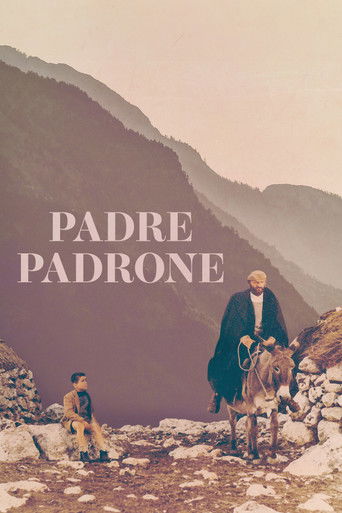
Padre Padrone (1977)
A harsh father and a son struggling toward education and self-definition, treated in a very different, more rural and neorealist setting.
Explore the era or movement
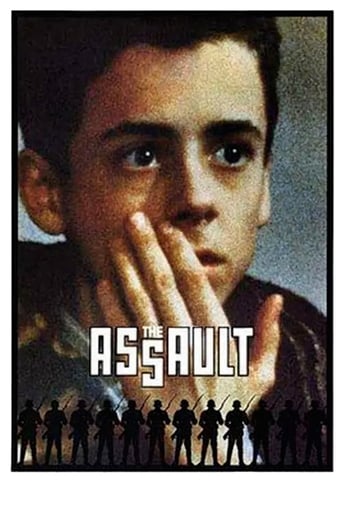
The Assault (1986)
Another Dutch Oscar winner, about memory and the aftermath of war, showing the national cinema's earlier international success.
Follow the idea
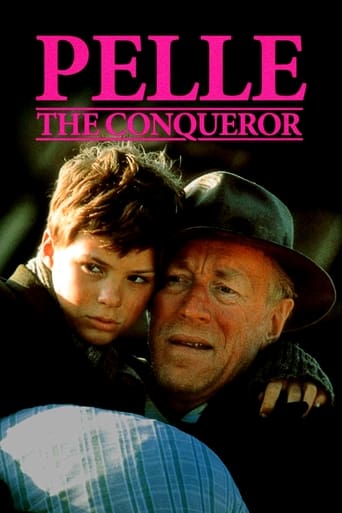
Pelle the Conqueror (1988)
A father and son seeking dignity under poverty and class hierarchy, with a similar mix of severity and emotion.
See what influenced it
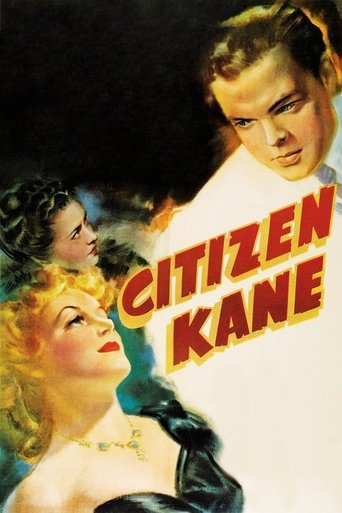
Citizen Kane (1941)
The classic example of a life reconstructed in flashback. Seeing it shows how Character uses structure to shape judgment.