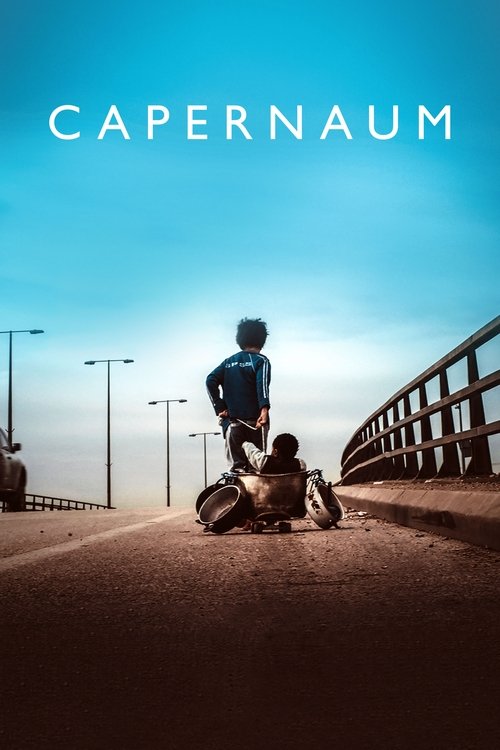
Drama
Capernaum
Lebanese (کفرناحوم)
2018 · Directed by Nadine Labaki · 126 min


Drama
Lebanese (کفرناحوم)
2018 · Directed by Nadine Labaki · 126 min




Meaning, unpacked
Central idea
The film asks who is responsible for a child's life, parents, society or the state, and treats the right to exist on paper, with a name and an identity, as inseparable from the right to be cared for. It can be read as an indictment addressed to adults.
What it means
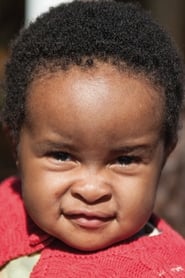
A boy stands in a courtroom and sues his parents for giving him life. That daring idea sits at the heart of Capernaum. Zain ran away from home, was sheltered by an undocumented woman named Rahil, and ended up raising her baby, Yonas, when she vanished. The whole film is the testimony that brought him to court.
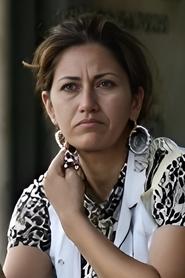
Its central question is simple and hard: who is responsible for a child's life? The parents, society, or the state? Zain has no birth certificate, and Rahil has no valid papers, so neither the law nor the state can see them. The film makes that absence feel like violence. Yet it won't make blame too easy. The parents are shown as products of the same poverty, and the mother's response in court complicates everything. Zain acts like a grown man because nobody else will, which makes his few moments of being a child so precious. And in Rahil's shack, strangers form the most functioning household in the film. Care, it suggests, is an act, not a bloodline.
Why it mattered
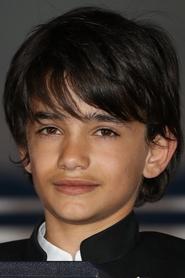
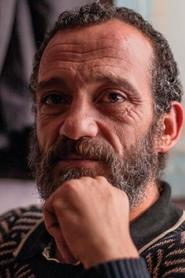
Nadine Labaki spent a long time interviewing children, lawyers and people in detention centres and on the street before she wrote anything. Much of the story is built from real cases. It is still scripted fiction, not a documentary and not one boy's true story. She cast people whose lives resembled their roles, including Zain Al Rafeea, a Syrian refugee spotted on a Beirut street. Their lack of technique gives a rawness, which she shaped with repeated takes and careful direction.
Christopher Aoun's handheld camera stays close, in real alleys, rooftops and cramped flats, so the city feels like a maze nobody can leave. The courtroom frame lets the film work as both social investigation and story. It premiered in competition at Cannes in 2018, reportedly won a long standing ovation, took the Jury Prize, and was talked of as a Palme d'Or contender.
Before anyone tells you what to think: what did you make of it?
Log in to rate it and leave commentsIt takes one click with Google or an email link. You come straight back here.
Rate it, keep your notes, and find the next film.
Free, no ads. Your journal, your lists, a Cine Guide that remembers you.
Create your free spaceCapernaum made Labaki a major international director and drew attention to Lebanese and wider Arab cinema. It showed that non-professional casting and urgent social subjects could reach a large audience and shape public debate. It was nominated for the Academy Award for Best Foreign Language Film, though it did not win. Advocacy groups have used it to illustrate the plight of undocumented and stateless children, child labour and child marriage, and it is often cited in talk of children's rights and migration.
Its reputation still carries a debate. Critics praised Zain Al Rafeea and the film's urgency. Others felt its melodrama and swelling score made suffering too neat, and asked whether it exploited its subjects. Today it is seen as one of the most visible Arab films of its decade, and an important example of humanitarian cinema. Perhaps the better question is the one Zain asks: when a child asks for care, who is listening?
What happens
Zain wins attention for his case, and Rahil and Yonas are traced and brought back into view. Then Zain is photographed for an identity card. For the first time he smiles. The ending gives him what the film says he never had: a recorded existence.
The last image
Zain stands before the camera for his identity photo and, for the first time in the film, smiles.
What it says
The film's whole argument is that being seen on paper cannot be separated from being cared for. So its hope is small and exact: a name, a card, a smile. The ending is not a rescue, but a first step toward being counted.
Or follow an idea from this film

See what influenced it
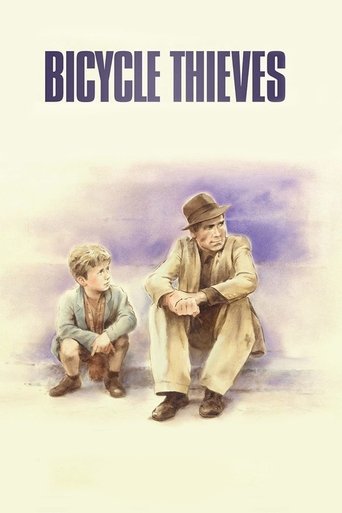
Bicycle Thieves (1948)
The classic neorealist film about a poor family in a harsh city, told with non-professional actors and a child's moral witness.

Compare another approach
The 400 Blows (1959)
Another portrait of a neglected boy, but in a more personal and lyrical register. Compare how each film treats the child's inner life.
Follow the idea
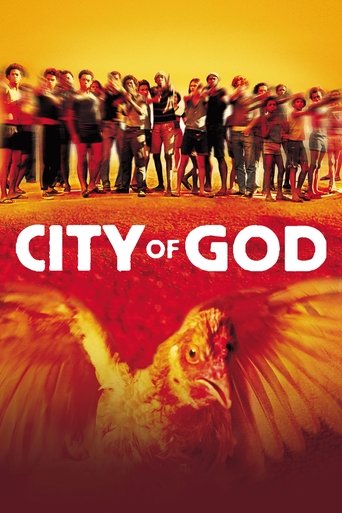
City of God (2002)
A kinetic, stylised story of children raised in poverty. It shows a different way of turning social reality into drama.

Explore the era or movement
Shoplifters (2018)
Released the same year, it also explores a makeshift family of the poor, but with quiet restraint and ambiguity rather than urgency.
Follow the idea
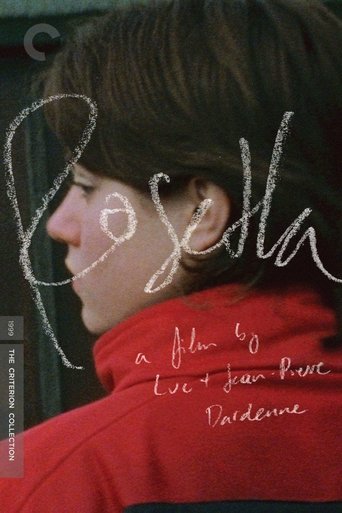
Rosetta (1999)
The Dardenne brothers' stripped-down handheld study of a young person trying to survive, with a stricter and less musical approach than Labaki's.