Adventure · Science Fiction · Comedy
A Trip to the Moon
French (Le Voyage dans la Lune)
1902 · Directed by Georges Méliès · 15 min

Adventure · Science Fiction · Comedy
French (Le Voyage dans la Lune)
1902 · Directed by Georges Méliès · 15 min



Meaning, unpacked
Central idea
The film can be read as a celebration of imagination over realism: a voyage that mocks the self-importance of learned men while making the cinema itself the real marvel, a machine that can take an audience anywhere.
What it means
A group of astronomers fire themselves out of a cannon, land in the Moon's eye, fight off its inhabitants, escape, and are paraded as heroes on their return. That is all the plot you need, because the plot was never the point. The point is wonder. Incident follows incident with a dream's logic, and surprise matters more than consequence. The film treats the trick, and your delight in it, as its real subject. The true marvel is not the Moon. It is the cinema itself, a machine that can take an audience anywhere.
It also pokes fun at its learned men. The astronomers dress like wizards and bicker like schoolboys, and Méliès plays the lead scholar in broad pantomime. The film borrows the language of science, then mocks its pomp. The ending sharpens the joke: the explorers win public honours for a conquest they barely understood. It invites a darker reading too. This was an age of empire, and these travellers reach an unknown place, treat it as something to subdue, and come home celebrated. When the lunar creatures burst into smoke, it is played for laughs, but you can hear a colonial appetite underneath.
Why it mattered
Méliès came from the stage. He ran the Théâtre Robert-Houdin in Paris, and hiding cuts in the action came naturally to a magician. His glass-roofed studio at Montreuil worked like a theatre built to be photographed. Here he turned the stop-trick into a full toolkit: stop the camera, change what is in front of it, start again, and a creature becomes smoke. Dissolves and double exposure added to the kit. The cuts are the illusions.
Before anyone tells you what to think: what did you make of it?
Log in to rate it and leave commentsIt takes one click with Google or an email link. You come straight back here.
Rate it, keep your notes, and find the next film.
Free, no ads. Your journal, your lists, a Cine Guide that remembers you.
Create your free spaceThe look is pure stage show. Each scene is a tableau from one distant position, with depth and action created by where actors stand, not by camera movement. Painted backdrops, cut-out props and stage machinery build a coherent storybook world, and acrobats and dancers bring music-hall energy. You are watching one art form begin turning into another. It was a sensation with fairground and music-hall crowds, and his most successful production.
Its fame travelled much further than Méliès's income. Prints were copied and sold abroad, especially in the United States, without payment to him. As cinema moved toward faster, more realistic storytelling, his style fell out of fashion. He went bankrupt in the 1910s and later ran a toy stand in a Paris station, before being honoured again late in life. Its blend of illusion and storytelling set an early template for fantasy and effects-driven cinema, and its imagery still echoes through science fiction, music videos and animation.
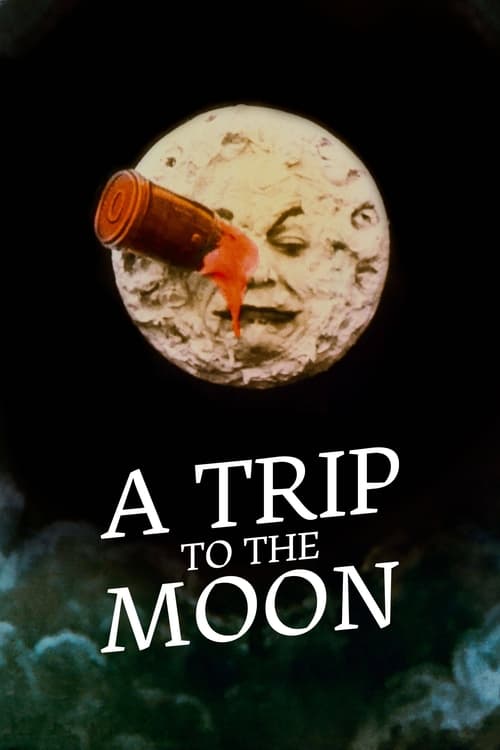
Today it is one of the best-known films of the silent era, a symbol of cinema's first age of wonder. The image of the rocket in the Moon's eye is shorthand for the birth of movie fantasy. A hand-coloured print, painted frame by frame, turned up in a Spanish archive in the 1990s. After a long restoration it premiered at Cannes in 2011 with a new score by the band Air, and that same year Martin Scorsese's Hugo made Méliès a central character.
What happens
The travellers flee the Selenites, and one pushes the capsule off the Moon's edge. It falls into the ocean and is towed home. Back on Earth, they are paraded as heroes, a captured Selenite in tow, and a monument to Barbenfouillis is unveiled.
The last image
The celebration ends on the unveiling of the monument to Barbenfouillis, honouring the professor who led the expedition.
Two readings
What it says
The film cares about wonder, not consequence, so it ends on spectacle rather than reckoning. The parade lets it tease the self-importance of its heroes while the real marvel stays the cinema itself, which took us all to the Moon and back.
Or follow an idea from this film
Explore the era or movement
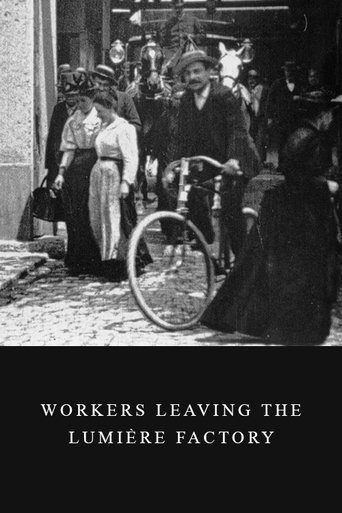
Workers Leaving the Lumière Factory (1895)
The opposite pole of early cinema: a single unstaged shot of real life. Seeing it beside Méliès shows the choice between recording the world and inventing one.
Compare another approach
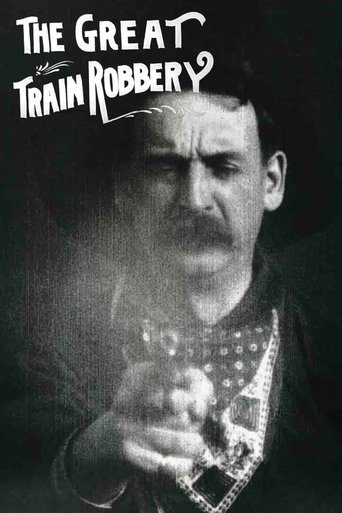
The Great Train Robbery (1903)
Made a year later, it uses several scenes to tell a crime story with a more realistic outlook, showing a different way early film built narrative.
Follow the idea
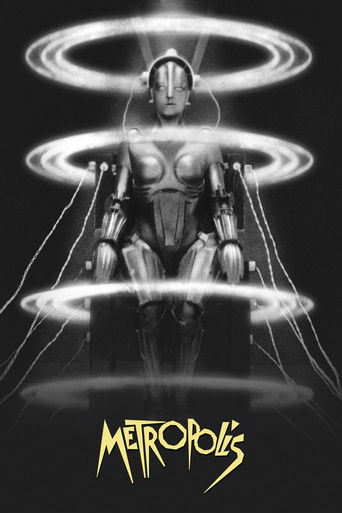
Metropolis (1927)
Follow the constructed imaginary world through to the silent era's grandest science-fiction vision, built with models, giant sets, and trick shots.
Jump forward
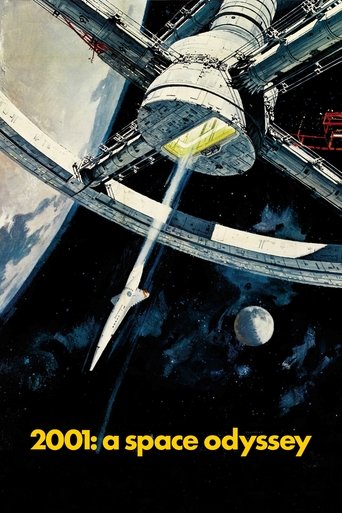
2001: A Space Odyssey (1968)
The same dream of space travel, now treated with scientific seriousness and cutting-edge effects. It shows how far the genre's tools and tone had travelled.
See its influence
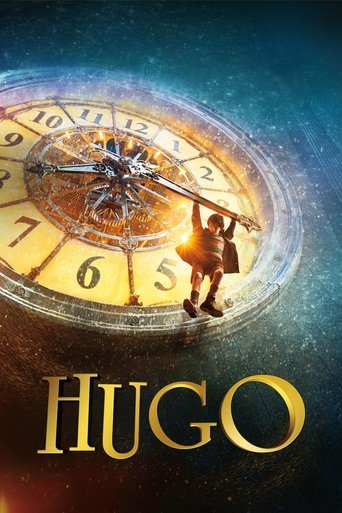
Hugo (2011)
A modern tribute that explains Méliès's career and rediscovery, and recreates his effects with contemporary technology.