Drama
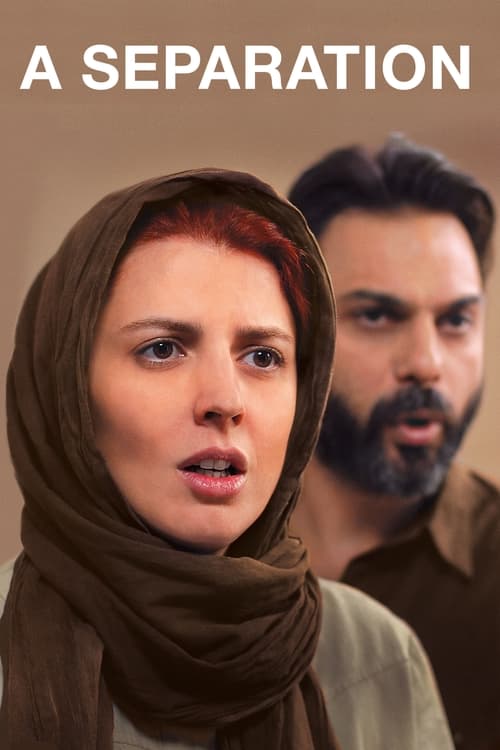
A Separation
Iranian (جدایی نادر از سیمین)
2011 · Directed by Asghar Farhadi · 123 min


Drama
Iranian (جدایی نادر از سیمین)
2011 · Directed by Asghar Farhadi · 123 min









Meaning, unpacked
Central idea
The film explores how decent people can end up in conflict when love, duty, pride, religion and class pressure collide, and how truth becomes harder to establish once each person defends what they hold most dear. It can be read as a study of moral uncertainty.
What it means
A Separation opens with a couple making their case to a judge, and you are placed in the judge's seat. Like the judge, you weigh competing accounts and never see enough. Simin wants to leave Iran to build a better life for her daughter, and Nader will not abandon his father. A caregiver is hired, a messy confrontation happens at an apartment door, and the courts take over.
The central idea is that decent people can end up in conflict when love, duty, pride, religion and class collide. Once everyone is defending what they hold most dear, the truth gets harder to pin down. Simin's duty to her daughter's future meets Nader's duty to his father, and neither claim is simply selfish. The educated Tehran family and the poorer, devout household of the caregiver clash through money, honour and misunderstanding, not through malice. The film refuses to name a villain. At its emotional centre is Termeh, who watches the adults fail each other, and her mostly silent reactions carry some of the most important moments.
Why it mattered
Farhadi builds the film with great care. The script interlocks so tightly that each new piece of information reframes earlier scenes, and cause and responsibility stay uncertain. The actors play restraint, so the rare outbursts of anger land hard. The handheld camera uses doorways, glass and corridors to keep people partly hidden, so you must infer what you cannot see. There is no score, only dialogue, traffic and room tone, so nobody tells you how to feel. Scenes end on open questions, which gives the film the feel of an investigation.
Before anyone tells you what to think: what did you make of it?
Log in to rate it and leave commentsIt takes one click with Google or an email link. You come straight back here.
Rate it, keep your notes, and find the next film.
Free, no ads. Your journal, your lists, a Cine Guide that remembers you.
Create your free spaceIt was made under Iran's cultural rules, which shaped how Farhadi showed domestic life, religion and the legal system. Its criticism is oblique, working through class, gender and legal procedure inside a personal conflict. It won the Golden Bear at Berlin in 2011, and the cast won Silver Bears there. In 2012 it became the first Iranian film to win the Academy Award for Best Foreign Language Film, and it was also nominated for Best Original Screenplay, which is rare for a film not in English.
It helped make the multi-perspective domestic drama a festival staple and brought wider attention to Iranian filmmakers. Farhadi's later films, The Salesman and A Hero, keep the same mix of social realism and moral suspense. Abroad, it became one of the most widely seen Iranian films, and for many viewers it offered a rare picture of everyday urban Iran. It was celebrated in Iran too, though it arrived amid political tension and disputes over cinema there.
Today it is often seen as Farhadi's central work and a model of moral realism. Some viewers find the dense plotting demanding, but its reputation has stayed high. It is a common way into modern Iranian cinema, and it turns up in film courses and in talk of ethics, family law and elder care, because its conflicts have no clear villain. Perhaps that is what lingers: you watched everyone, and you were still not given the answer. The film trusts you to live with that.
What happens
Nader and Simin return to the divorce court after the legal fight settles nothing. The judge asks Termeh to choose which parent she will live with. She doesn't answer, and her parents wait apart in the corridor.
The last image
Nader and Simin sit apart in the corridor outside the courtroom, waiting, while Termeh's decision is still unanswered.
Three readings
What it says
Everyone has defended what they love, and no one has been proved right. By ending on Termeh's silence, the film moves from legal verdict to personal choice, and trusts you to live with not knowing.
Or follow an idea from this film

Continue the director
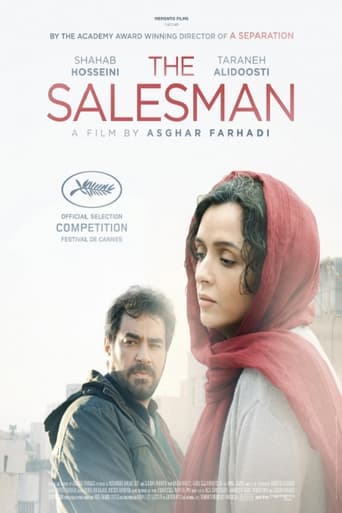
The Salesman (2016)
Farhadi's second Oscar winner keeps the focus on a couple, moral pressure and the question of justice, and shows how his style developed.
Follow the idea
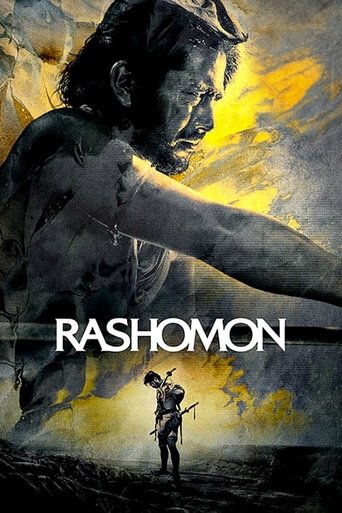
Rashomon (1950)
The classic about conflicting accounts of one event. Compare Kurosawa's open stylisation with Farhadi's realist uncertainty.

Compare another approach
Anatomy of a Fall (2023)
Another courtroom-inflected study of a marriage in which public testimony and private truth do not match.
Explore the era or movement
Close-Up (1990)
Kiarostami's film is a key root of Iranian cinema's interest in testimony and moral judgement.
Follow the idea
12 Angry Men (1957)
A study of how people weigh uncertain evidence and personal bias when they must reach a judgement.