Drama
Wavelength
Canadian
1967 · Directed by Michael Snow · 45 min

Drama
Canadian
1967 · Directed by Michael Snow · 45 min
Meaning, unpacked
Central idea
The film can be read as a study of how cinema creates space, time and meaning. A single move across a room becomes a lesson in looking: what we notice, what we forget, and how an image can contain both an illusion and a flat surface.
What it means
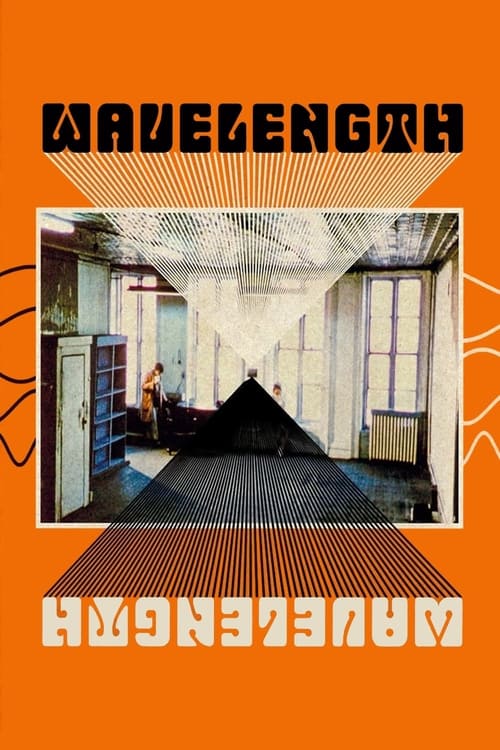
Wavelength begins in a bright loft in lower Manhattan and ends on a photograph of ocean waves. In between is one slow zoom, about forty-five minutes long. Michael Snow turns a single move across a room into a lesson in looking: what we notice, what we forget, and how one image can be both a window onto space and a flat surface.
The camera never travels through the room. It magnifies it, so the room slowly flattens toward the far wall. Light shifts from day to night, and a rising sine tone runs beneath it, sound and image as two forms of one wave. Brief human episodes come and go, including a man who falls to the floor. This is the one apparent crime, and it gets no suspense. The story sits inside the structure, not the other way round.
Why it mattered
In 1967, a feature-length work resting on one formal idea, rather than on a plot, was a bold thing to make. Snow came to film from painting, sculpture and music, including jazz piano, and he used the camera to explore a single perceptual idea. He planned the zoom from the start and cleared his Canal Street loft of distractions. The subject of the film is the form of the film itself.
It made a strong impact in the New York underground and on the international experimental circuit, and in 1968 it won the grand prize at the Knokke-le-Zoute experimental film festival in Belgium. In 1969 the critic P. Adams Sitney used it as a central example in his essay on structural film. Many general viewers, though, found it tedious or baffling, and that split has followed it ever since.
Before anyone tells you what to think: what did you make of it?
Log in to rate it and leave commentsIt takes one click with Google or an email link. You come straight back here.
Rate it, keep your notes, and find the next film.
Free, no ads. Your journal, your lists, a Cine Guide that remembers you.
Create your free spaceWavelength gave structural film its model: fix a rule in advance, then carry it out to the end. Chantal Akerman cited Snow as an influence, and you can trace the film's spirit through later slow, duration-based cinema and gallery film installations. It helps make that kind of cinema easier to read, because it trains you to look at time, space and the lens instead of following a plot.
Today it is taught in universities and shown in museums. People use it as shorthand for demanding avant-garde work, and in Canada it is treated as an art landmark. It remains a hard watch, but the early arguments about whether it was a provocation have given way to respect for its precision. After forty-five minutes of almost nothing, you notice how much you were looking at all along.
What happens
The zoom finally reaches the photograph of ocean waves that has hung on the wall all along. It fills the whole screen, the sine tone peaks, and the deep room you watched becomes a flat picture. The man's death is never resolved.
The last image
The photograph of ocean waves fills the entire frame while the sine tone climbs to its peak.
What it says
The ending shows that the room was always heading toward a picture. Space was an illusion, and the film's real subject is looking itself. The death goes unresolved because story matters less here than the structure carrying you toward that final image.
Or follow an idea from this film

Follow the idea
Meshes of the Afternoon (1943)
An earlier landmark of American avant-garde film. Seeing its dreamlike, personal approach shows how different Snow's analytic approach is.
Compare another approach
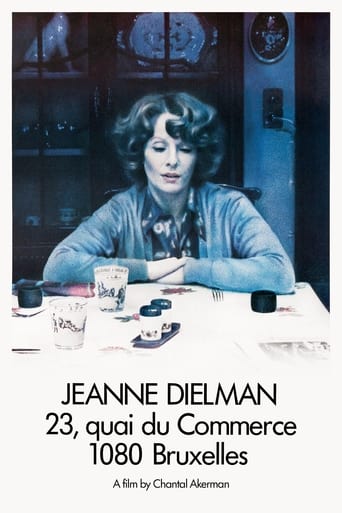
Jeanne Dielman, 23, quai du Commerce, 1080 Bruxelles (1975)
Another film that uses duration and fixed framing to reshape attention, here in a domestic space, with a stronger human story.
See what influenced it
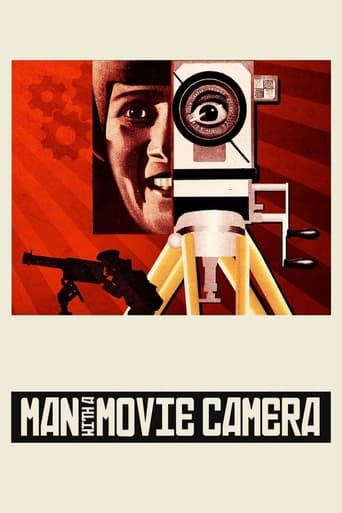
Man with a Movie Camera (1929)
A key earlier work in which cinema turns its own tools into the subject, a good partner piece with the opposite rhythm.

Explore the era or movement
Blow-Up (1967)
A release from the same year that also turns on looking at a photograph, with mainstream narrative cinema addressing similar questions about images.
Jump forward
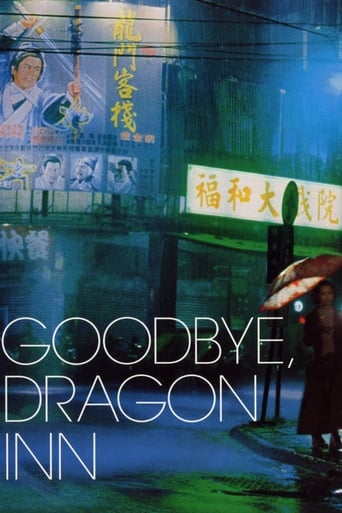
Goodbye, Dragon Inn (2003)
A later example of slow, long-take cinema in which small events inside a fixed space carry the film, showing a lineage from structural work.