Thriller · Drama · Mystery
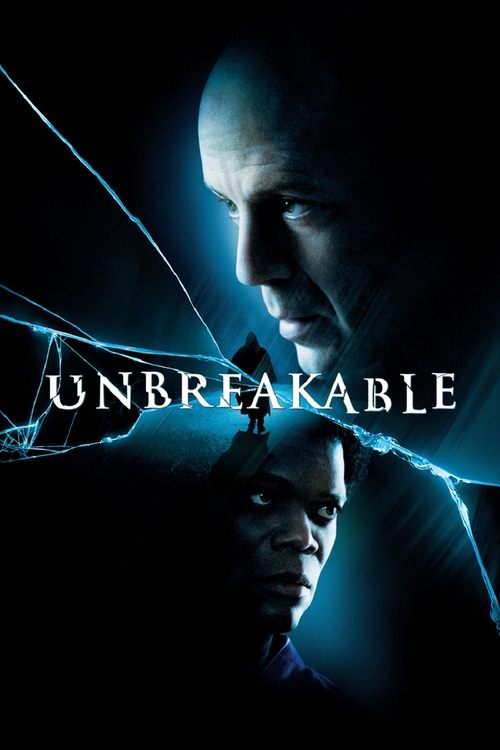
Unbreakable
American
2000 · Directed by M. Night Shyamalan · 106 min


Thriller · Drama · Mystery
American
2000 · Directed by M. Night Shyamalan · 106 min





Meaning, unpacked
Central idea
The film explores the idea that people need to know what they are for. It can be read as a story about purpose, identity and the fear of living a life that was never really chosen, told through comic-book myth.
What it means
On the surface, this is a thriller about a man who walks away from a train wreck without a scratch. David Dunn meets Elijah Price, a frail man who reads the world through comic books and suggests David may be something more than ordinary. By the end, you learn that Elijah has been shaping that discovery all along.
But the film is really about something else: people need to know what they are for. David drifts through a marriage and a job he does not believe in, and the fear underneath is of living a life that was never really chosen. Comic-book myth is just the language the film uses to tell that story. It treats comics as a folk art that keeps hold of truths about people. The two men are defined by opposite bodies, one seemingly unbreakable, one fragile, and the film shows how each shapes character and grief. The cost lands on those nearby: David's marriage is strained, and his son's hero worship pushes him toward a truth he is not ready for. Elijah's need for meaning leads him to terrible choices, a motive as human as it is monstrous. It ends on tension, not triumph.
Why it mattered
Shyamalan made this straight after The Sixth Sense, and that success gave him the freedom to try something quieter and riskier. He has described it as conceived as the first part of an origin story. It was an origin story told slowly, with the drama kept inside ordinary rooms and the genre payoff held back for the final act.
The method was restraint. In the hospital after the wreck, the disaster comes through consequence and reaction, not spectacle. Cinematographer Eduardo Serra and Shyamalan often put the camera at an angle or behind objects, and long takes hold the tension without cutting. Colour tells the structure too, with David tied to green and Elijah to purple. Bruce Willis, known for action, plays a man who barely raises his voice, and Samuel L. Jackson plays Elijah with frail physicality. It showed that comic-book material could carry grounded, adult drama.
Before anyone tells you what to think: what did you make of it?
Log in to rate it and leave commentsIt takes one click with Google or an email link. You come straight back here.
Rate it, keep your notes, and find the next film.
Free, no ads. Your journal, your lists, a Cine Guide that remembers you.
Create your free spaceAudiences arrived expecting another crowd-pleaser and found something slower and more sombre. Reviews were mixed to positive, with praise for the craft and performances and some frustration over the pace and the ending. There is a myth that it flopped, but it did not. It made money, just not the enormous sum The Sixth Sense had.
Its reputation has grown steadily, through home video and reappraisal. It is now widely seen as one of Shyamalan's best films and a forerunner of the serious superhero drama. Elijah's frizzy hair, purple coat and cane made him instantly recognisable, and the nickname Mr. Glass has stuck. Its colour coding is a frequent example in discussions of design. The final twist also feeds the idea of Shyamalan as a twist director, and this one is often held up as a twist that deepens the story. The story continued in Split, from 2017, and Glass, from 2019.
What happens
David shakes Elijah's hand and sees that Elijah engineered the disasters, including the train crash, searching for his opposite. Elijah calls himself Mr. Glass, David's archenemy. David finally has his purpose, but he has lost his only friend.
The last image
Elijah, now in the role of villain, is left alone with what he has done, while David goes on knowing what he is.
What it says
The film is about needing to know what you are for. Elijah's need turns monstrous, so the ending recasts everything as an origin story. It stops short of triumph because finding meaning costs David the man who gave it to him.
Or follow an idea from this film

Continue the director
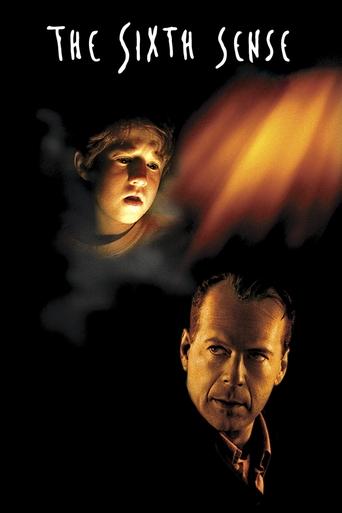
The Sixth Sense (1999)
The film that preceded it, with the same star and a similar mix of quiet family drama and the supernatural.

Continue the director
Split (2017)
Shyamalan's later thriller, which connects back to this film and shows how his style developed.
See what influenced it
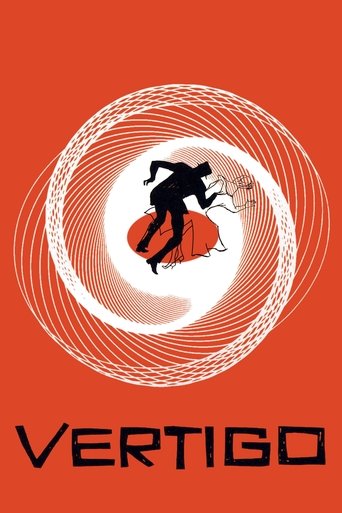
Vertigo (1958)
Hitchcock's study of obsession and perspective shows the tradition of patient, formal suspense behind Shyamalan's approach.
Jump forward
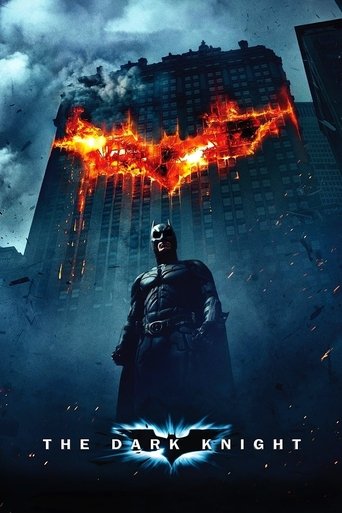
The Dark Knight (2008)
A later, bigger take on the serious, grounded superhero story, useful for seeing how far the idea travelled.