Comedy · Drama
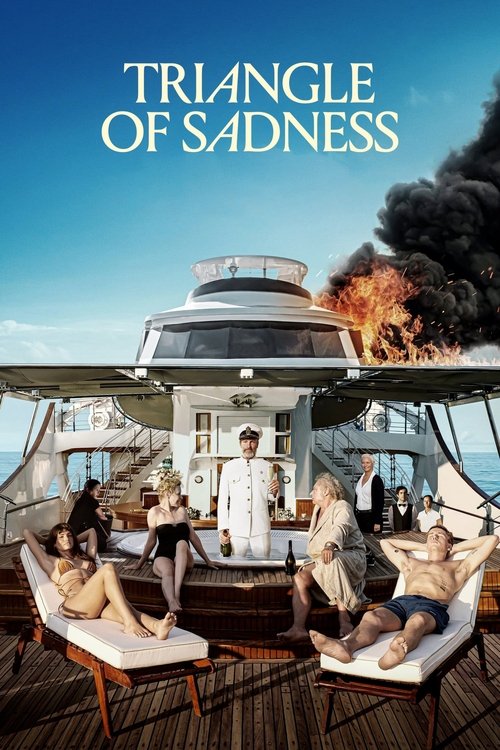
Triangle of Sadness
Swedish
2022 · Directed by Ruben Östlund · 147 min


Comedy · Drama
Swedish
2022 · Directed by Ruben Östlund · 147 min










Meaning, unpacked
Central idea
The film can be read as a test of what status is made of. It tries out beauty, money, charm and practical skill as competing currencies, and suggests that whichever one a situation rewards simply produces a new hierarchy, whoever sits on top.
What it means
Triangle of Sadness is less a story about a shipwreck than a question: what is status actually made of? The title is a fashion and cosmetic-surgery term for the frown lines between the eyebrows, heard in the opening casting scene. It sets the tone, an industry that treats faces as products to be fixed.
Ruben Östlund lets beauty, money, charm and practical skill each take a turn as currency. Whatever a situation rewards builds a new pecking order. That's why Abigail, played with calm authority by Dolly de Leon, ends up in charge on the island. The reversal is funny, but unsettling too, because it echoes the hierarchy it replaces.
So it isn't a simple attack on the rich. The staff are mocked for their self-image and their habit of saying yes to everything. The captain's slogans are mocked. The new order is hardly innocent. The film is sceptical of anyone, rich or not, who wears principles as decoration, and it ends on an open question rather than a verdict.
Why it mattered
Östlund works by staging social situations like experiments. Take the opening quarrel over who pays the bill. He holds the shot and the dialogue past the point where a normal film would cut, until both people look a little absurd. That resistance to the easy edit is the method: the discomfort becomes the joke, and the point.
The structure was fresh too. Three titled chapters work almost like separate short films, each with its own setting and balance of power, with the rules of status reset every time. The script avoids simple heroes, so your sympathy keeps moving. And the glossy yacht interiors and polished fashion imagery are there so the later mess and hardship hit harder. The look itself is part of the satire.
Before anyone tells you what to think: what did you make of it?
Log in to rate it and leave commentsIt takes one click with Google or an email link. You come straight back here.
Rate it, keep your notes, and find the next film.
Free, no ads. Your journal, your lists, a Cine Guide that remembers you.
Create your free spaceThe film won a long ovation at Cannes, then the Palme d'Or in May 2022, making Östlund one of the few directors to win it twice. It went on to three Oscar nominations, for Best Picture, Best Director and Best Original Screenplay, without a win. It helped make dark, class-conscious comedy a mainstream festival and awards-season genre, and showed that a long, awkward, dialogue-driven satire could cross over to a wide international audience.
Its afterlife is real. The bill argument is still cited in talk about dating, money and equality, and the seasick yacht dinner became a popular image of extreme wealth in the early 2020s "eat the rich" mood. Critics praised its comic nerve and its ensemble, though some found it too long, too broad, or too pleased with its own provocation. Debate continues over whether it says anything new or just makes a familiar point with more comic force.
What happens
On the island, Carl runs to the luxury resort while Abigail, holding a rock, follows Yaya. The film cuts away before you see what happens, revealing that Abigail's power now rests on the one thing she controls: survival.
The last image
Carl runs toward the resort while Abigail, rock in hand, follows Yaya, and the film stops there.
Three readings
What it says
Whatever a situation rewards builds a new pecking order, and the film won't let you rest in a comforting lesson. By cutting away, it leaves you to ask what you would do with power, or lose it.
Or follow an idea from this film

Continue the director
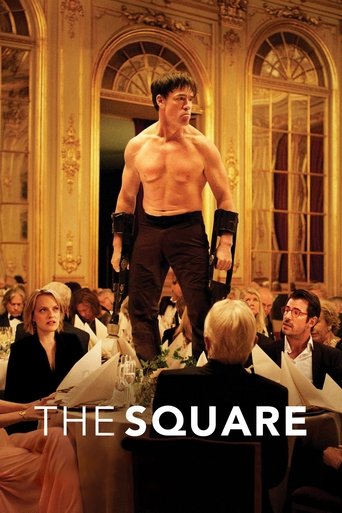
The Square (2017)
Östlund's previous Palme d'Or winner uses the same patient, excruciating comedy to pick apart the art world and its good intentions.

Compare another approach
Parasite (2019)
Also a Palme d'Or winner about class, but it works through tightly plotted thriller and tragedy, which makes a useful contrast with Östlund's looser, more episodic satire.
See what influenced it
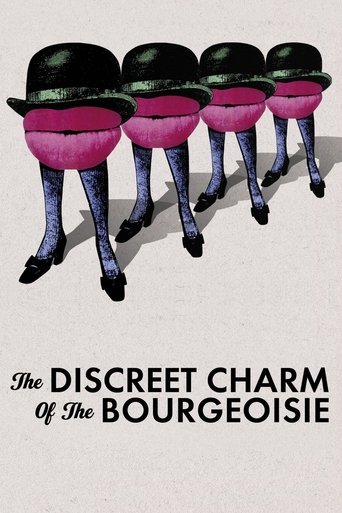
The Discreet Charm of the Bourgeoisie (1972)
Buñuel's earlier satire shows how upper-class rituals can be mocked without a conventional plot, and it makes Östlund's approach easier to place.
Follow the idea
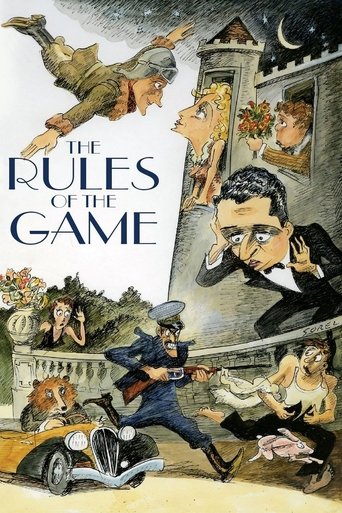
The Rules of the Game (1939)
Renoir's classic gathers masters and servants in one setting to expose the manners and hypocrisy of the privileged.

Explore the era or movement
Toni Erdmann (2016)
Another long, awkward European comedy of the 2010s, where discomfort and social performance drive the humour.