Drama
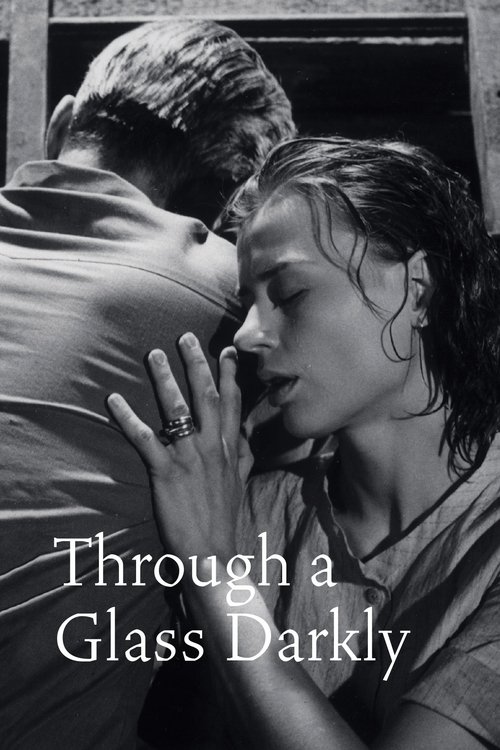
Through a Glass Darkly
Swedish (Såsom i en spegel)
1961 · Directed by Ingmar Bergman · 91 min


Drama
Swedish (Såsom i en spegel)
1961 · Directed by Ingmar Bergman · 91 min
Meaning, unpacked
Central idea
The film explores how people try to reach each other, and something beyond themselves, across silence and illness. It can be read as Bergman's argument that, if God exists, he may be found only in imperfect human love.
What it means
You have just spent a day and a night on a bare island with four people: a woman, her father, her husband and her younger brother. At heart, this is about how people try to reach each other, and something beyond themselves, across silence and illness. Bergman seems to argue that if God exists at all, he may be found only in imperfect human love.
Karin's visions carry that idea. The film never tells you whether she is ill or seeing something real, so you share her uncertainty, and madness and revelation sit very close together. When she waits in the wallpapered room for God, the horror comes from restraint, not spectacle, and what she sees is a spider, one of Bergman's best-known images of divine silence and terror. The men who love her fail in quiet ways. David, a writer, even turns her illness into material. The final talk between father and son offers only a small, fragile grace: that love is the closest thing we have to a saving presence.
Why it mattered
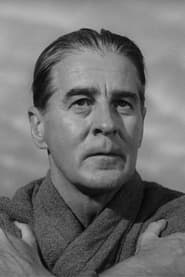
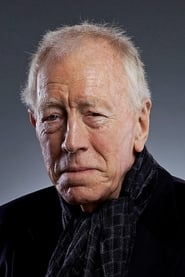
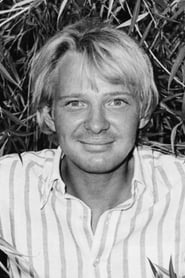
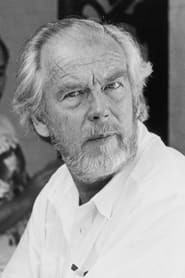
Bergman called it a play for four voices, and it feels like one. Four actors, a handful of locations, and the action squeezed into roughly a day and night. Performance, dialogue and faces become the entire drama. Harriet Andersson moves between warmth, withdrawal and terror without exaggeration, and Gunnar Björnstrand and Max von Sydow say a great deal through small gestures. It marks Bergman's turn toward austere, contemporary chamber drama, and a moment when European art cinema turned inward to psychology and spiritual doubt.
Sven Nykvist's black-and-white images, with hard Nordic light, open horizons and large close-ups, isolate the characters against sea and sky. This was among the earliest of his collaborations with Bergman, and his naturalistic light became central to Bergman's later look. The sound is just as spare: wind, water, silence, and Bach's cello suite as an austere, spiritual presence, not emotional cue. It was shot on Fårö, the Baltic island Bergman later made his home.
Before anyone tells you what to think: what did you make of it?
Log in to rate it and leave commentsIt takes one click with Google or an email link. You come straight back here.
Rate it, keep your notes, and find the next film.
Free, no ads. Your journal, your lists, a Cine Guide that remembers you.
Create your free spaceOn release the film was widely admired, especially for Andersson's performance and its concentrated intimacy. It succeeded abroad as well as in Sweden, helped build Bergman's international reputation, and won the Academy Award for Best Foreign Language Film. Bergman was also nominated for Best Original Screenplay. Some critics found its religious ideas severe and its final consolation uncertain, which is a fair reading, though the uncertainty is part of the design.
Its few-character structure and focus on faces shaped later psychological dramas, and Bergman's chamber approach fed directly into Persona. Woody Allen, Lars von Trier and Andrei Tarkovsky have all acknowledged his example. Today it is often seen as one of his most accessible and moving works, and a sharp way into his chamber films. The spider still disturbs, but many read the quiet note of tentative human love as its lasting message.
What happens
Karin is taken away by helicopter, ready to return to hospital. She says God appeared to her as a spider. Left behind, David speaks honestly to his son Minus for the first time and says love may be the nearest thing to God.
The last line
"Papa spoke to me!"
What it says
The film gives up on a God who answers. After the spider, all that remains is a father finally speaking plainly to his son. Bergman offers only that fragile closeness, not proof of anyone listening, as the nearest thing to grace.
Or follow an idea from this film


Continue the director
Persona (1966)
Bergman's further push into minimal casts and psychological intensity, where identity and silence take over the drama.

Compare another approach
Wild Strawberries (1957)
Another Bergman family study, more fluid and humane, with similar questions about emotional distance and reconciliation.
Follow the idea
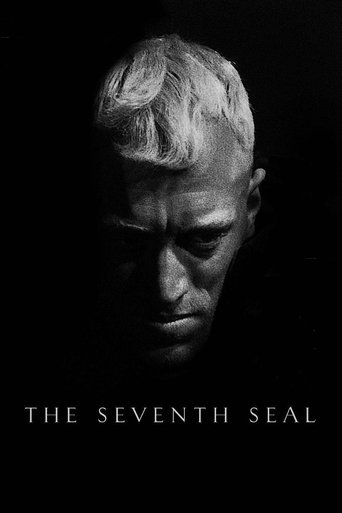
The Seventh Seal (1957)
The same question of a silent God, expressed through medieval allegory instead of modern chamber drama.
Follow the idea
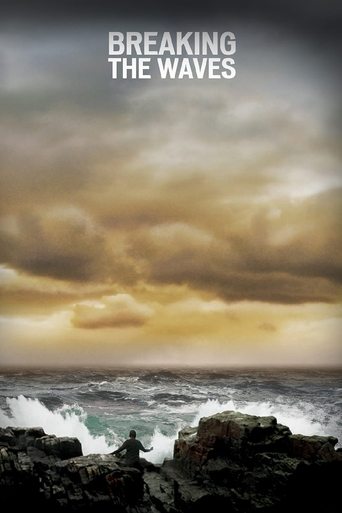
Breaking the Waves (1996)
A later film where faith, madness and love collide, showing how this tradition of spiritual drama continued.
Explore the era or movement
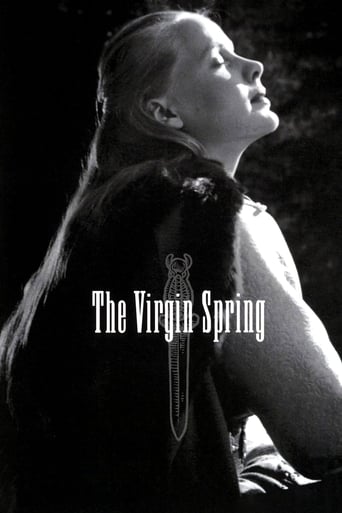
The Virgin Spring (1960)
Bergman's immediately preceding film, a stark, medieval moral drama, shows his concern with faith and suffering just before this chamber turn.