Drama
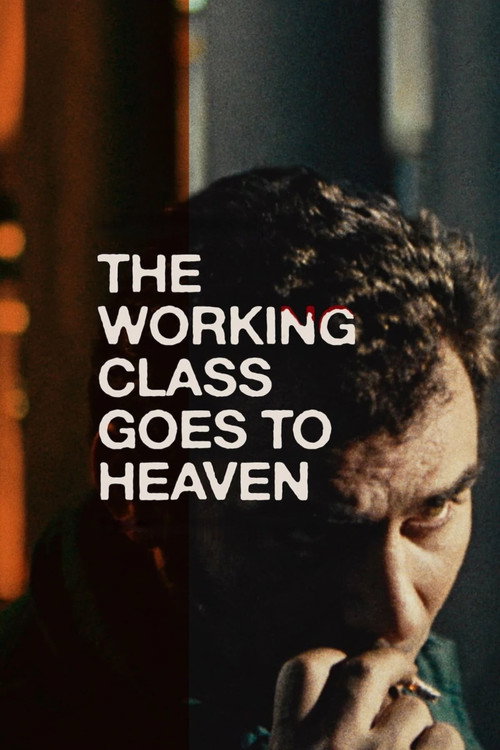
The Working Class Goes to Heaven
Italian (La classe operaia va in paradiso)
1972 · Directed by Elio Petri · 113 min


Drama
Italian (La classe operaia va in paradiso)
1972 · Directed by Elio Petri · 113 min






Meaning, unpacked
Central idea
The film can be read as a study of alienation. Lulù's identity is built on the pace of the line, so his sense of self rests on the very system that exploits him. Every ideology offered to him, productivist or revolutionary, also wants something from him.
What it means
Elio Petri's film follows Lulù Massa, a pieceworker who prides himself on speed. An accident at the machine shakes that pride, and he ends up back on the line, changed but not freed. At heart, it is a study of alienation. Lulù measures his worth in output and bonus pay, so his sense of self rests on the very system that exploits him. The factory shapes his nerves, his sleep and his sex life. Labour enters the body. Even the rewards, the cars, the appliances, the comfortable home, keep him tied to it.
The film also asks who speaks for the worker. Students, union officials and management each claim to know what workers need, and none asks Lulù. It satirises all three, and Lulù is no clean hero. The strangest scene is the visit to Militina, a former worker now in a psychiatric hospital, who talks of a wall and what lies behind it. Madness and reason blur. The ending stays bitter and open, and heaven never arrives.
Why it mattered
Released only a few years after Italy's factory unrest of 1969, the film became a reference point for debates on piecework, alienation and the split between students, unions and workers. It brought that political energy into fiction, and it was a topical, divisive success that drew heated debate in Italy. It also won the Palme d'Or at Cannes in 1972, shared with The Mattei Affair.
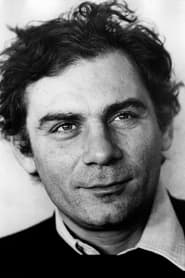
The making matches the message. Volonté plays Lulù at the edge of caricature, with tics, shouts and a body bent to the machine. Petri cuts abruptly between the line, home, street politics and hallucination, imitating the speed-up Lulù first embraces. Ugo Pirro's script gives every faction its own jargon and blind spots, so political argument becomes comedy.
Before anyone tells you what to think: what did you make of it?
Log in to rate it and leave commentsIt takes one click with Google or an email link. You come straight back here.
Rate it, keep your notes, and find the next film.
Free, no ads. Your journal, your lists, a Cine Guide that remembers you.
Create your free spaceThe film helped define the factory film as a political-drama form in European cinema, a line later visible in Polish and British work about labour and unions. Its mix of satire, psychological crisis and workplace realism is still a model for socially engaged cinema. Its ironic title has often been borrowed by Italian writers on factory work and deindustrialisation, and it is still screened in courses on Italian cinema and labour history.
It cost the film some friends at the time. Parts of the political left objected to its portrait of militants and unions, and the open ending made it hard for any side to claim. Today it stands as a key work of Italian political cinema. Newer viewers read it less as a snapshot of seventies militancy and more as a lasting study of work, identity and the limits of political representation. Lulù asks who he is without the line, and many of us still have to answer that.
What happens
The union gets Lulù his job back, so he returns to the line exactly where he began. He tells his workmates a dream of breaking through the wall into clouds and fog. They listen, and the work goes on.
The last image
Lulù stands among his workmates on the factory line, his dream of the wall and the fog told, as the work carries on around him.
Three readings
What it says
Every offer made to Lulù, from students, union and management, ends with him back at the machine. The film refuses a winner so that no side can claim him, and the title stays ironic: heaven never arrives.
Or follow an idea from this film
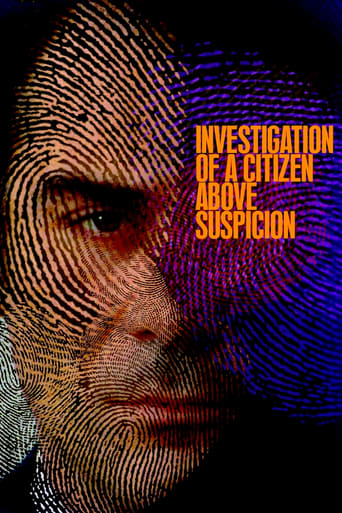

Continue the director
Investigation of a Citizen Above Suspicion (1970)
Petri's Oscar-winning study of a police chief, also starring Volonté, treats power with the same satirical intensity and a very different social setting.
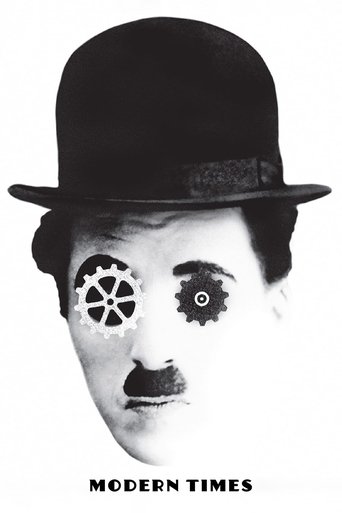
Follow the idea
Modern Times (1936)
Chaplin's assembly-line comedy is the classic earlier take on how industrial work wears down a person, and a useful contrast in tone.
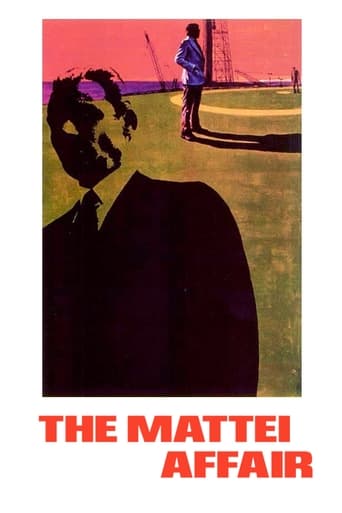
Compare another approach
The Mattei Affair (1972)
The other Palme d'Or winner of 1972, also with Volonté, shows political cinema from a very different angle, investigative rather than psychological.
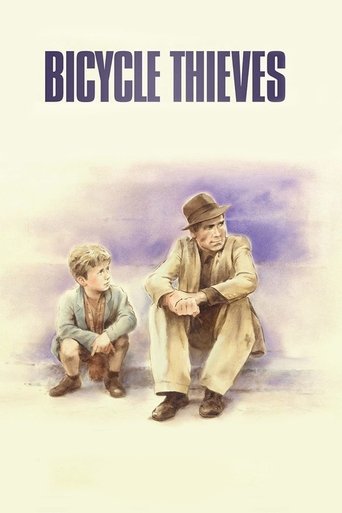
See what influenced it
Bicycle Thieves (1948)
The neorealist classic about a working man and his livelihood is the tradition Petri's film inherits and turns inside out.
Jump forward
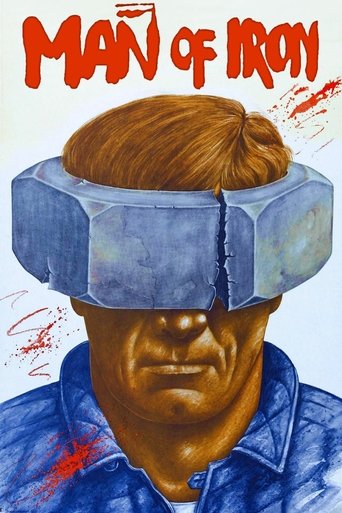
Man of Iron (1981)
Wajda's Polish film about workers, strikes and political loyalty shows the same questions asked under a different political system.