Comedy · Drama
The Truman Show
American
1998 · Directed by Peter Weir · 103 min


Comedy · Drama
American
1998 · Directed by Peter Weir · 103 min





Meaning, unpacked
Central idea
The film asks what freedom and reality mean when a person's world is designed for others to watch. It can be read as a modern version of the cave allegory, and as a critique of an audience that enjoys intimacy without responsibility.
What it means
Truman has spent his whole life as the star of a television show, in a town built for the cameras. In the end he sails to the edge of his world and walks out of it. The film asks what freedom and reality mean when your world has been designed for others to watch. You can read it as a modern version of Plato's cave, or as a charge against an audience that enjoys closeness to someone's life without any responsibility for it.
Truman is watched, marketed and shaped, and he never agreed to any of it, so privacy becomes the ground that selfhood stands on, not a luxury. Every choice he thinks is his own was arranged in advance, so his journey is a search for where his real choices begin. The satire turns toward us: viewers inside the film cry and cheer from bars and bathtubs. And Ed Harris plays Christof as gentle and persuasive, not villainous, which is the unsettling part. You see how benevolent control can justify itself, and when care turns into control.
Why it mattered
Released in 1998, the film imagined a life broadcast around the clock and sponsored by product placement. It did this before the global reality-TV boom. Reality formats already existed, such as An American Family in 1973 and MTV's The Real World in 1992, so it did not invent the idea. What it saw coming was total, constant, commercial broadcasting, which arrived later with formats like Big Brother.
It also turned an old philosophical idea into a mainstream parable. Peter Weir took Andrew Niccol's darker science-fiction script and moved it toward a sunlit setting and more comedy, so cheerfulness sits over unease. Peter Biziou frames many scenes as if hidden cameras caught them, in radios, mirrors and dashboards, so you never forget you are watching a broadcast. In 1998, critics praised the originality of the idea, Weir's control of tone and Jim Carrey's poised performance. Carrey won a Golden Globe, and the film earned three Oscar nominations.
Before anyone tells you what to think: what did you make of it?
Log in to rate it and leave commentsIt takes one click with Google or an email link. You come straight back here.
Rate it, keep your notes, and find the next film.
Free, no ads. Your journal, your lists, a Cine Guide that remembers you.
Create your free spaceThe film gave popular culture a shorthand, the Truman Show, for a life lived under observation. It influenced later stories of constructed realities and performed existence, from reality-TV satire to simulation films and series. Psychiatrists Joel and Ian Gold borrowed its name around 2008 for patients who believe they are being filmed for others' entertainment. It is not an official diagnosis. Teachers use the film to introduce Plato's cave and free will, and Truman's sign-off is widely quoted. Seaside, Florida, where Seahaven was filmed, became a tourist destination.
Its reputation has only grown as its subject became ordinary life. Reality television, livestreaming, influencer culture and data tracking made the story feel prophetic rather than fantastical. Some viewers found the final act too sentimental, but it is now regularly taught and cited in discussions of media, philosophy and privacy. It is seen as one of the finest works of both Carrey and Weir. The lasting question is a quiet one. Truman got out. The rest of us are still deciding how much of ourselves we are willing to put on show.
What happens
Truman sails across the sea, survives Christof's storm, and finds a door in the painted sky. Christof begs him to stay, but Truman bows and leaves. It confirms his whole life was a show.
The last line
"Good morning, and in case I don't see ya, good afternoon, good evening, and good night."
What it says
The ending says freedom means choosing for yourself, even into the unknown. Truman's polite goodbye makes it dignified, not just an escape. The audience switching channels afterward turns the question on you: what are you still watching?
Or follow an idea from this film

Continue the director
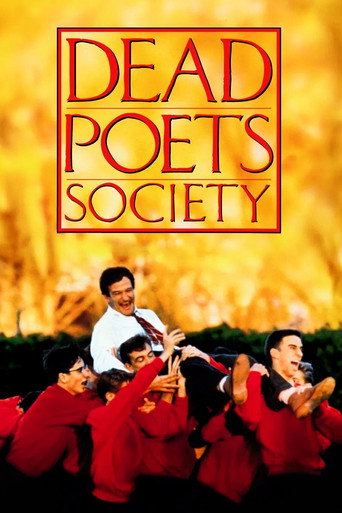
Dead Poets Society (1989)
Peter Weir's earlier American film also follows people shaped by rigid systems, and it shows his gift for combining warmth with quiet critique.
See what influenced it
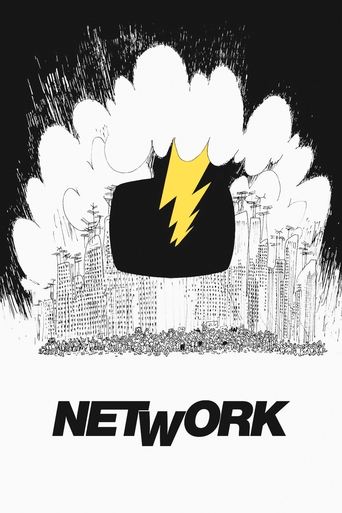
Network (1976)
A sharper, angrier satire of television as spectacle that helps place the film in a longer tradition of media critique.
Compare another approach
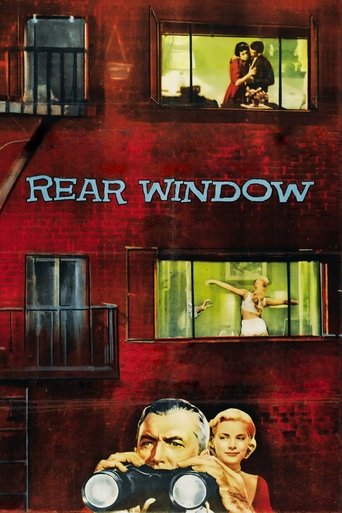
Rear Window (1954)
Hitchcock's thriller makes the viewer a watcher of other lives. Compare how each film makes you question your own looking.
Follow the idea
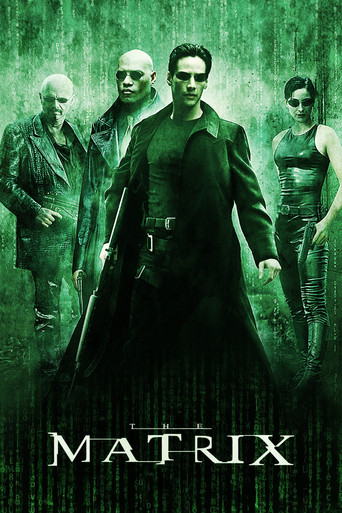
The Matrix (1999)
Pairs naturally with the film as another late-1990s story about a constructed reality, with a very different, action-driven style.
Jump forward
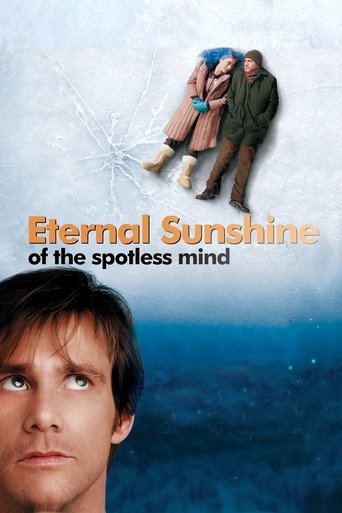
Eternal Sunshine of the Spotless Mind (2004)
A later film that uses an inventive premise to ask what is real in a life and what an identity is made of, with a more intimate tone.