Fantasy · Family · Romance
The Stone Flower
Soviet (Каменный цветок)
1946 · Directed by Aleksandr Ptushko · 78 min


Fantasy · Family · Romance
Soviet (Каменный цветок)
1946 · Directed by Aleksandr Ptushko · 78 min

Meaning, unpacked
Central idea
The film can be read as a parable about the difference between technical perfection and living beauty: art that dazzles from a distance against art that stays tied to people, work and love.
What it means
Danila is a gifted stone-carver who is never satisfied. He goes into the mountain to find the stone flower, and the Mistress of the Copper Mountain holds him there, until Katya searches for him and brings him home. Under that fairy-tale plot sits a parable about two kinds of beauty. One is technical perfection, which dazzles from a distance. The other is living beauty, which stays tied to people, to work and to love.
Danila's restless wish to make something alive drives his talent, yet the pursuit of an ideal can pull an artist away from the life that feeds his art. The stone flower's chilly flawlessness is exactly what the story questions. Katya's loyalty is set against the Mistress's seductive realm, and human devotion proves stronger than enchantment. There is a harder edge too: the film quietly criticises a social order that treats skilled serfs as property. Perhaps that is its quiet gift. The most beautiful things we make are the ones that still belong to someone.
Why it mattered
In 1946 this was a showpiece of the new Soviet colour cinema. It is often called the first Soviet colour film, but that is a myth, since earlier experiments existed in short films and sequences. It is better described as among the first full-length Soviet colour features, and a major early showcase of Agfacolor, made possible because German Agfacolor equipment and stock came into Soviet hands after the war. The rich, slightly unreal tones suit a fairy tale, and gems and costumes glow.
Before anyone tells you what to think: what did you make of it?
Log in to rate it and leave commentsIt takes one click with Google or an email link. You come straight back here.
Rate it, keep your notes, and find the next film.
Free, no ads. Your journal, your lists, a Cine Guide that remembers you.
Create your free spaceIt also showed that folklore and handmade trick work could carry a state-backed cinema into fantasy. Director Aleksandr Ptushko began in puppet animation, and you can feel it in the transformations and the miniature-scaled spaces, done in-camera or with early compositing. In the Stalinist film industry, fantasy was acceptable when it drew on national folklore and honoured working skill, and this film fits that frame while still delivering real wonder.
The film set a model for Soviet colour fairy tales. Ptushko developed it in Sadko and Ilya Muromets, and later filmmakers such as Aleksandr Rou carried it on. It was warmly received in the Soviet Union and won official honours there. Abroad, it drew attention at festivals, mainly for its colour and visual invention.
Today it is treasured as a classic of Soviet family cinema. Its stylisation, once seen as naive, is now often admired for the sheer craft of its handmade effects. In Russia it is still shown on television, and for generations the Mistress in her malachite-green dress has been the face of Pavel Bazhov's Ural tales.
What happens
The Mistress of the Copper Mountain releases Danila after Katya's search proves her love is real. He returns to the village, to Katya and to carving, having learned that beauty belongs in the living world, not in the flawless flower below.
The last image
Danila and Katya are reunited in the village above ground, back among the people and work he nearly forgot.
What it says
The ending sides with living beauty over perfection. The flower is flawless but cold, while Danila's art needs people, work and love to feel alive. Katya's devotion beating the Mistress's enchantment makes that argument plain.
Or follow an idea from this film

Continue the director
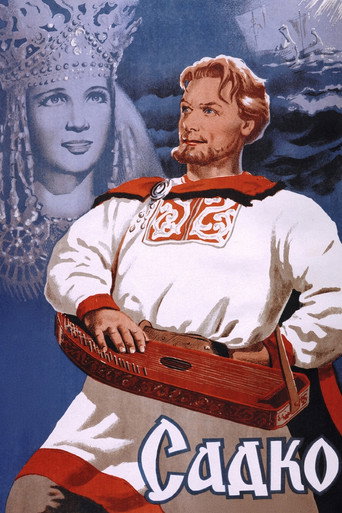
Sadko (1953)
Ptushko's next great folk fantasy, with an undersea kingdom and wider spectacle. It shows how his colour and effects style developed.
Compare another approach
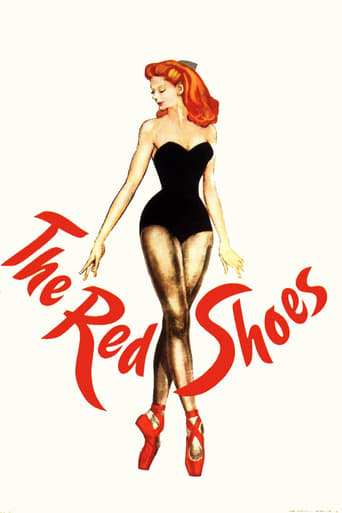
The Red Shoes (1948)
Another Technicolor fantasy about the price of artistic perfection, with a very different tone. The comparison is revealing on art as obsession.
Compare another approach
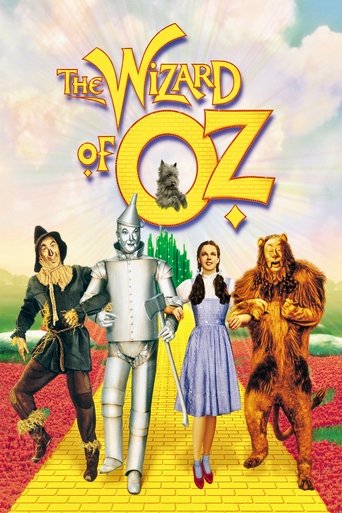
The Wizard of Oz (1939)
The best-known earlier colour fantasy, using stylised sets and saturated hues to build a magical other world, much as Ptushko does.
Explore the era or movement
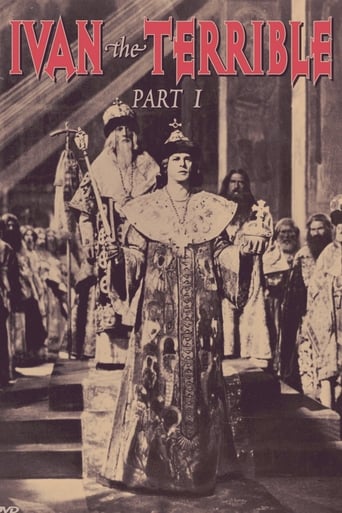
Ivan the Terrible, Part I (1944)
Eisenstein's Soviet film from the war years shows how stylised, theatrical visuals served Soviet cinema, a useful contrast with the fairy-tale route.