Crime · Drama
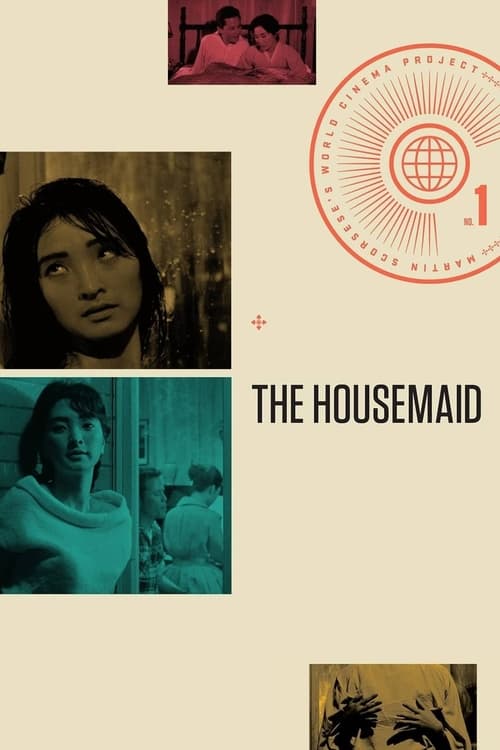
The Housemaid
South Korean (하녀)
1960 · Directed by Kim Ki-young · 112 min


Crime · Drama
South Korean (하녀)
1960 · Directed by Kim Ki-young · 112 min



Meaning, unpacked
Central idea
The film can be read as a study of a middle-class family destroyed by its own ambition and repression, with the housemaid as the force that exposes what the household tries to keep hidden.
What it means
The Housemaid is about a middle-class family destroyed by its own ambition and repression. A composer's family moves into a fine new home and hires a maid. She becomes the force that exposes what the household is trying to hide.
The house signals status, but that status is fragile, because it depends on other people's labour. The husband's respectability covers appetites he cannot admit, and once they are let into the home, the result is catastrophe. Wife and maid become rivals inside a system built around him. Then the film turns to face you. Was it real, imagined, or a moral tale told with a straight face? Kim never lets you settle.
Why it mattered
Kim Ki-young makes ordinary things frightening. The maid's first days are calm, even almost comic, yet small concessions pile up until they become a crisis. The house was built as a stage-like set, with the stairs at its centre, so he could control sightlines, secrecy and the geometry of power. Shadows, tight framing and doorways give it a claustrophobic, expressionist look, far beyond a typical family drama. It is a kitchen thriller with rat poison, and a kitchen has rarely felt so dangerous.
It also arrived at a charged moment, in the months after the April 1960 uprising, when South Korea was trying to reinvent itself. That mood feeds its anxiety about modernisation and social mobility. Many read it as a nightmare of the new urban middle class. It was a commercial success in Seoul, but critics largely treated it as a popular melodrama, and Kim's stylisation was not widely valued then.
Before anyone tells you what to think: what did you make of it?
Log in to rate it and leave commentsIt takes one click with Google or an email link. You come straight back here.
Rate it, keep your notes, and find the next film.
Free, no ads. Your journal, your lists, a Cine Guide that remembers you.
Create your free spaceThe film then fell out of view, and for decades it was thought to survive only in poor-quality copies. In 2008 the Korean Film Archive restored it, with Martin Scorsese's World Cinema Foundation, and it was shown at Cannes Classics. That brought Kim international attention and made him a cult figure among cinephiles. Kim himself kept returning to the story, in Woman of Fire in 1971 and again in a version in 1982. Im Sang-soo's loose remake from 2010 moved it to an upper-class household and competed at Cannes.
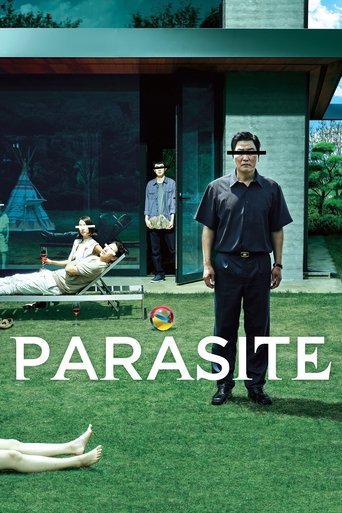
Its house-as-trap, class-conflict structure runs through later Korean cinema, most visibly in Bong Joon-ho's work. The staircases and class-divided household of Parasite echo Kim's film. Today it is widely seen as one of the key Korean films, and Kim is celebrated as a singular auteur. So consider that last look at the camera. Kim did not want you to leave comfortable. He wanted you to look at your own house, and at who keeps it standing.
What happens
The maid kills the family's son and forces Dong-sik into a suicide pact. They die of rat poison as his wife watches. Then Dong-sik turns to the camera and tells you it was only a warning that this could happen to any husband.
The last image
Dong-sik, alive again in the family's everyday life, speaks straight to the audience, turning the whole story into a cautionary tale.
Three readings
What it says
The maid exposes what the family hides: fragile status and a husband's repressed desire. By ending with a direct address, Kim stops you from watching safely and asks you to look at your own home, and at who holds it up.
Or follow an idea from this film

See its influence
Parasite (2019)
Bong Joon-ho's household-invasion thriller extends Kim's themes of class and architecture, and shows how the Korean tradition developed.
Compare another approach
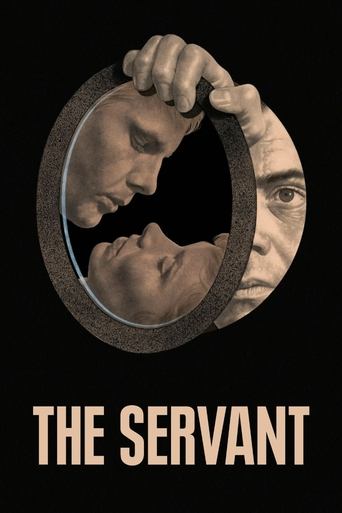
The Servant (1963)
Joseph Losey's British film also shows a servant gradually taking over a household, a useful comparison of class and power.

Explore the era or movement
Psycho (1960)
Released the same year, it also takes a domestic setting and turns it toward psychological horror.

Follow the idea
Memories of Murder (2003)
Another landmark of Korean cinema that shows how the country's filmmakers mix genre, social critique and unease.

Follow the idea
Burning (2018)
Lee Chang-dong's slow-burn Korean thriller about class and desire shows another path for the tradition.