Comedy · Drama
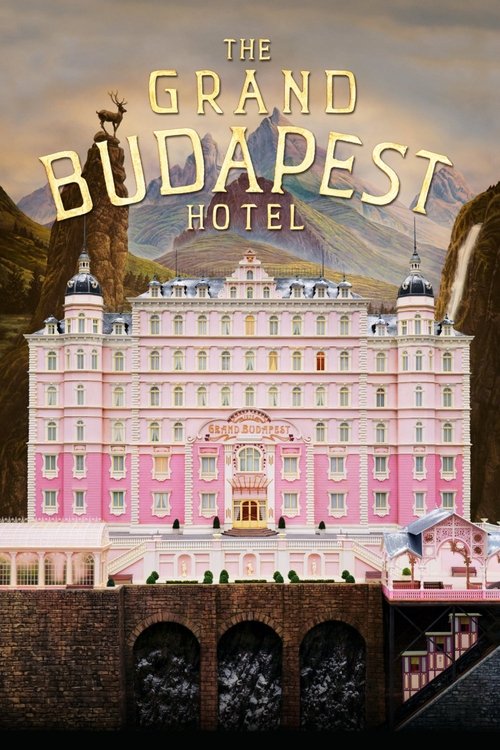
The Grand Budapest Hotel
American
2014 · Directed by Wes Anderson · 100 min


Comedy · Drama
American
2014 · Directed by Wes Anderson · 100 min












Meaning, unpacked
Central idea
The film can be read as an elegy for a civilisation that may never have existed as remembered: a world of grace and manners that, in the telling, is both a real loss and a fond invention, held up against the violence waiting outside the hotel.
What it means
On the surface you get a concierge, a lobby boy, a stolen painting and a disputed will. But the film is really about how stories get told. It is a caper wrapped inside a memory, wrapped inside another memory. The story passes through several narrators, so the glamorous past is always filtered. The film honours the feeling of loss, but it also quietly shows how memory polishes things.
You can read it as an elegy for a civilisation that may never have existed the way it is remembered: a world of grace and manners that is both a real loss and a fond invention. Gustave treats courtesy as a moral discipline, and the film asks whether manners are mere decoration or a fragile defence as fascism closes in. At the train checkpoint the comic tone breaks, and you see what the charm has been guarding. At its heart is the friendship between Gustave and Zero, which crosses class and origin and outlasts the hotel.
Why it mattered
Its look is structural, not just pretty. Cinematographer Robert Yeoman shoots the 1930s in a narrow 1.37:1 frame, the 1960s in widescreen 2.35:1 and the 1980s in 1.85:1. These ratios were planned from the start, so when a widescreen scene arrives, you feel a sudden change of mood and time.
The film also keeps everything visibly handmade. Frontal compositions, lateral tracking shots and abrupt whip-pans make scenes read like stage tableaux, while miniatures and painted backdrops carry the spectacle. The mountain chase shows how Anderson makes artifice thrilling without turning it into parody. It was a defining work of 2010s auteur cinema, where one director's personal visual language met mainstream success.
Before anyone tells you what to think: what did you make of it?
Log in to rate it and leave commentsIt takes one click with Google or an email link. You come straight back here.
Rate it, keep your notes, and find the next film.
Free, no ads. Your journal, your lists, a Cine Guide that remembers you.
Create your free spaceThe pink hotel, the boxed pastries and the purple-uniformed concierge became shorthand for a dollhouse-like, nostalgic style. Imitations followed in advertising, photography and online homage, and fans bake the pastries and sew the costumes. Film and design classes use it to show how symmetry, colour and shifting frames can shape a story. It is often credited with sending new readers to Stefan Zweig, and Görlitz has drawn film-minded visitors. Anderson's later films kept mixing design with elegy.
Critics largely praised it as Anderson's richest and funniest work, especially Ralph Fiennes's comic performance and the balance of farce and sadness. A few found the style precious. It won the Silver Bear Grand Jury Prize at Berlin, was his biggest commercial success to that point, and earned nine Oscar nominations and four wins. Today it is widely seen as the peak of his style and his most accessible film, and its melancholy undercurrent is noticed as much as its visual wit.
What happens
Gustave is shot at a checkpoint defending Zero's papers, and Zero inherits the hotel but loses his wife and child. In 1968 he explains he kept the place only for Gustave's memory, believing that world vanished before he arrived.
The last image
The young writer, in the present day, sits by the memorial to the author and closes his book.
Two readings
What it says
Gustave's courtesy fails to stop the violence, yet it is what Zero keeps. The ending suggests that the world the film mourns may be partly a story, but the telling is how it survives.
Or follow an idea from this film


Compare another approach
Grand Hotel (1932)
The classic hotel ensemble picture. Compare how each film uses one building to hold many lives, and how glamour and fate are staged.
Explore the era or movement
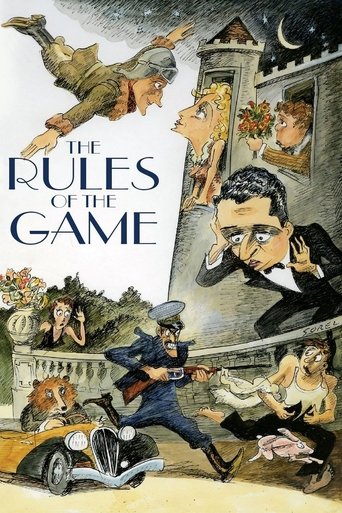
The Rules of the Game (1939)
A comedy of manners among the privileged, made on the eve of war. It shows the real tension between elegant surfaces and approaching catastrophe.
Follow the idea
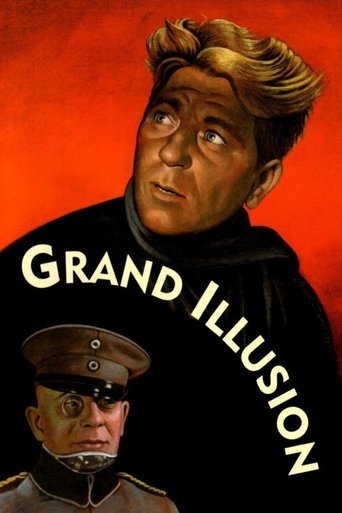
Grand Illusion (1937)
Renoir's film about a dying European order of honour and class, a serious cousin to Anderson's elegy for civility.
Continue the director
The Royal Tenenbaums (2001)
The film where Anderson's dollhouse style, deadpan family comedy and sadness first combined at full strength.
Coming soon
See what influenced it
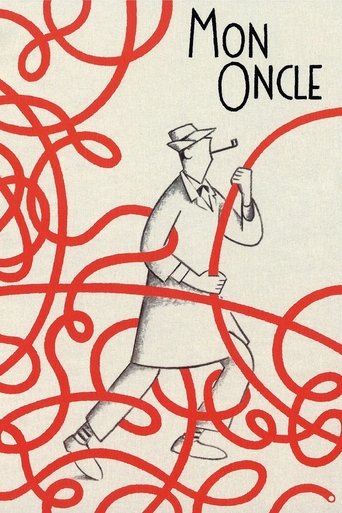
Mon Oncle (1958)
Jacques Tati's precisely designed comedy shows how architecture, colour and staging can carry both jokes and social comment.