Drama
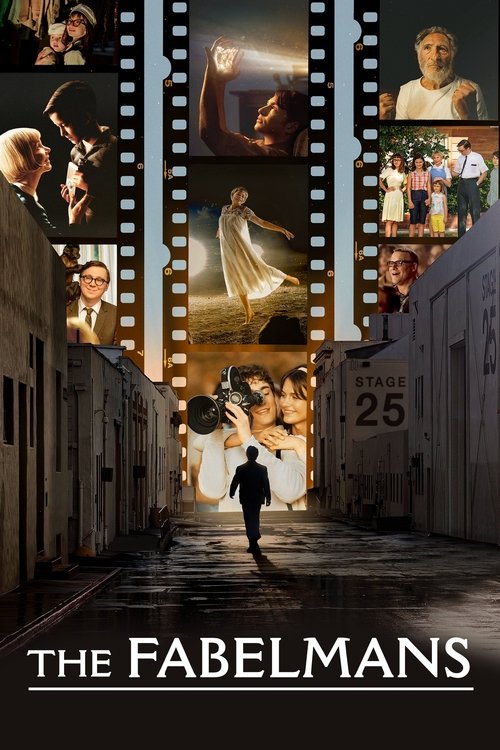
The Fabelmans
American
2022 · Directed by Steven Spielberg · 151 min


Drama
American
2022 · Directed by Steven Spielberg · 151 min










Meaning, unpacked
Central idea
The film explores how making images both reveals and shields us from the truth. It can be read as Spielberg's reflection on the double nature of art: a way to understand the people we love and a way to keep distance from them.
What it means
A boy sees a train crash on a cinema screen and spends his childhood trying to recreate it. Along the way, his own footage shows him something his family never meant him to see. That is all the plot you need, because the real subject is what pictures do to the people who make them.
Making images does two things at once. It lets us understand the people we love, and it lets us keep them at arm's length. Sammy's camera is a way in and a way out. The turning point comes when he edits the camping footage frame by frame and sees what had been hidden. Cutting becomes investigation. Then Uncle Boris gives a fierce, funny speech about what art demands, a bargain with real casualties, which the film neither condemns nor fully endorses. Sammy also uses cinema to control fear and to answer prejudice as a Jewish boy in schools where few others are. Mitzi and Burt are drawn as real adults, with needs and flaws.
Why it mattered
This is a late-career autobiography from one of the defining directors of modern Hollywood, made after five decades of fame. It belongs to a run of early-2020s films in which veteran filmmakers revisit their formative years. Spielberg waited until both his parents had died to tell it directly, and wrote it with Tony Kushner.
It is not a literal record. Names are changed, and events are altered, merged or invented, though the roots are real: his mother's piano playing, his father's engineering career, his boyhood films. It also did something rare, making the editing bench a dramatic setting and showing how selecting and sequencing images can reveal meaning. It gave a rare mainstream portrait of mid-century American Jewish life too.
Before anyone tells you what to think: what did you make of it?
Log in to rate it and leave commentsIt takes one click with Google or an email link. You come straight back here.
Rate it, keep your notes, and find the next film.
Free, no ads. Your journal, your lists, a Cine Guide that remembers you.
Create your free spaceCritics praised it as tender, accomplished and surprisingly candid, singling out Michelle Williams and the final scene. It won the audience award at the Toronto International Film Festival and earned seven Oscar nominations, including Best Picture and Best Director, but no wins. Box office was modest for a Spielberg picture, reflecting a hard market for adult dramas.
Its influence is still growing. It helped set the pattern for a wave of personal, memory-driven films by established directors in the 2020s. Uncle Boris's warning is often quoted by artists talking about creative obsession. Today it is seen as a key to reading Spielberg's career, with its absent fathers, suburban loneliness and the power of the image, and many viewers return to E.T. and see it differently.
What happens
Sammy meets John Ford, who gives him one blunt lesson: a horizon at the top or bottom of the frame is interesting, a horizon in the middle is not. Sammy leaves, and the camera quietly adjusts the shot to follow the advice.
The last image
As Sammy walks away from Ford's office, the camera tilts to shift the horizon off the middle of the frame, just as Ford taught him.
What it says
After a film about what pictures reveal and hide, it ends on a joke about composition. Sammy's gift is now his craft, learned humbly from a master, and Spielberg shows himself still learning, with a smile, to frame what he sees.
Or follow an idea from this film

Continue the director
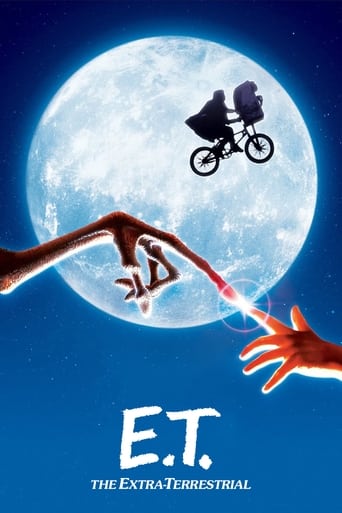
E.T. the Extra-Terrestrial (1982)
Spielberg's fantasy of a lonely suburban child. Seen after The Fabelmans, its emotional sources become clearer.

See what influenced it
The Greatest Show on Earth (1952)
The spectacle that launches Sammy's obsession. Watching it shows what a child might have found irresistible, and how effects felt then.
Compare another approach
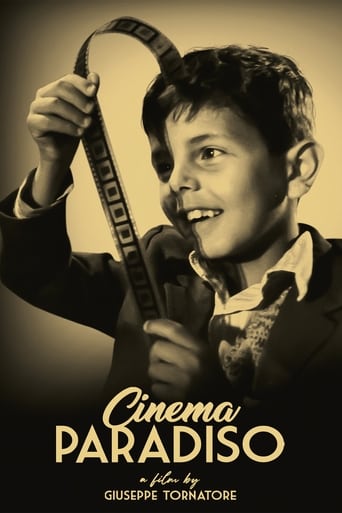
Cinema Paradiso (1988)
Another story of childhood devotion to movies. Compare its nostalgic glow with Spielberg's more complicated family portrait.
Follow the idea
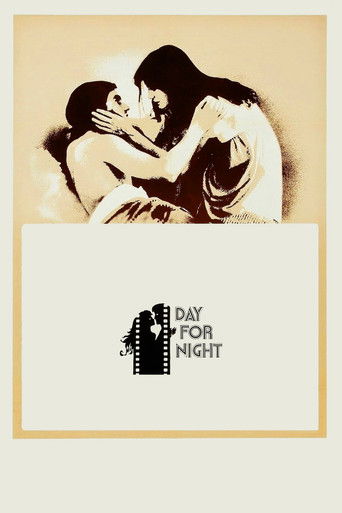
Day for Night (1973)
Truffaut's film about the making of a film shows the craft, collaboration and obsession that The Fabelmans treats at a personal scale.
Explore the era or movement
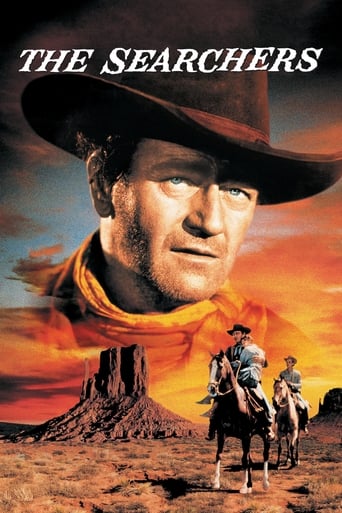
The Searchers (1956)
A John Ford western in which the horizon and landscape composition matter. It is a good way into the lesson Sammy receives at the end.