

Western
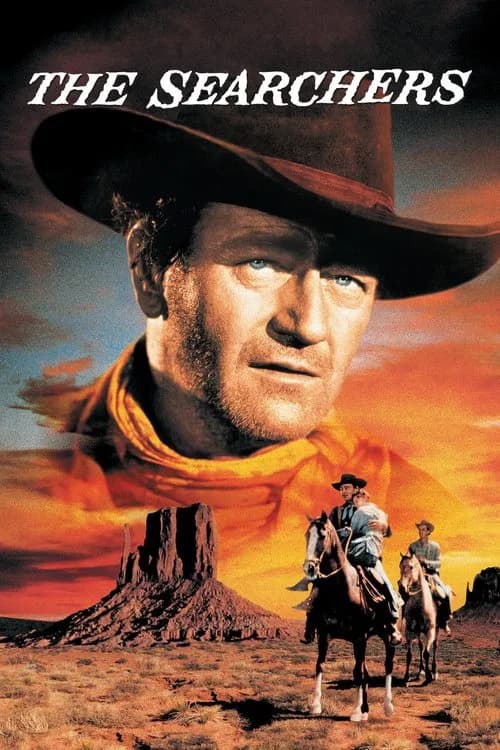
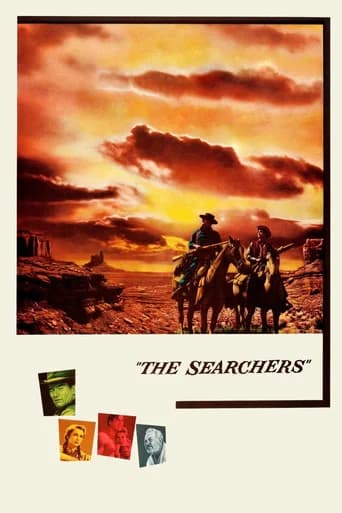
The Searchers
Avg rating 8.4 / My rating TBC
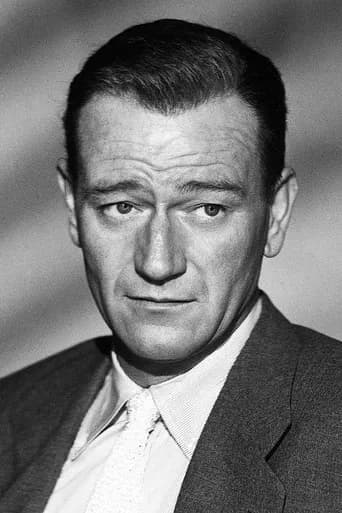
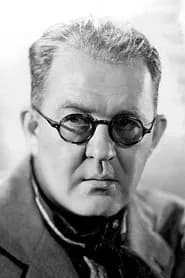
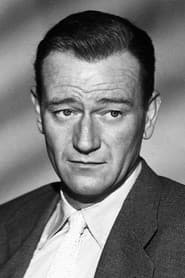
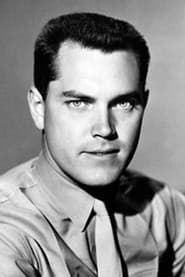
1956 · Directed by John Ford · With John Wayne, Jeffrey Hunter, Vera Miles
- Classical Western
- Classical Hollywood
- Auteur Cinema
Texas, a few years after the Civil War. A hard, secretive veteran rides out with a small party to find family members taken in a raid, and the search stretches across seasons and landscapes. A Western of great beauty and unsettling moral weight.
Film info
- Runtime
- 1h 59m · 119 min
- Format
- Colour, widescreen, English language, about 119 minutes.
- IMDb
- 7.8 / 10 (101,104 votes)
- Rotten Tomatoes
- 87% (critics)
- Metacritic
- 94 / 100
- TMDB
- 7.7 / 10 (audience, 1,635 votes)
- Trailer
- ▶ Watch the trailer
Before watching
Spoiler-free · about 2 minutes
Why watch this?
The Western at its most visually grand and morally uneasy
John Ford's best-known late work puts John Wayne in his richest role, filmed in Technicolor VistaVision against Monument Valley. It stretches the genre's heroic conventions until they begin to ask hard questions.
A landmark that later directors keep returning to
Its reputation grew steadily after release. Scorsese, Spielberg, Lucas and Paul Schrader all drew on it, and it is often named as the most influential Western of the 1950s.
Wayne gives a performance that rewrites his image
Audiences knew Wayne as a reliable hero. Here he uses that familiarity against them, playing a figure whose strength and menace are hard to separate.
Why it matters in cinema history
The summit of the classical Western and the film that most clearly opened it to doubt, pointing toward the revisionist Westerns of the 1960s and 70s.
Watch with intention
Your lens
Watch how Ford composes each frame, placing the central figure in relation to the land and to the people around him.
Three things to notice
- How Wayne's body language and silences set him apart from the other characters, and how they react to him.
- The very wide shots of Monument Valley, where riders become small figures against rock and sky, and how Ford uses colour in them.
- Sudden shifts between broad comedy and harsh violence, and what the abruptness does to your sense of the characters.
One question to carry with you
What does a search this long ask of the people who undertake it?
- Technology
- Warner Bros. shot in Technicolor and VistaVision, a high-resolution widescreen process. Studios were using spectacle and colour to hold audiences against television.
- Dominant styles
- The 1950s Western was turning psychological. Directors such as Anthony Mann were making heroes more troubled, but most films still kept a clear moral order.
- Director's moment
- Ford had filmed Monument Valley since Stagecoach in 1939 and was a four-time Oscar-winning director. Wayne had been his leading man for years, so their partnership carried expectations the film could use.
- Audience
- Westerns were mass entertainment and reliably popular. Viewers expected clear heroes and villains, which made a more ambivalent story unusual in this setting.
Where it came from
Film
Stagecoach (1939)On Cinespective
Ford's first Monument Valley film and Wayne's breakthrough. It set the visual language of the classical Western that The Searchers later questions.
Film
Red River (1948)
Howard Hawks's Western casts Wayne as a domineering, obsessive leader on a long journey, a forerunner of Ethan's harder edge.
Movement
Classical Western
The genre's heroic code of landscape, honour and frontier order is the tradition that this film tests from within.
This film
The Searchers (1956)
New at the timeA mainstream, glossy studio Western that questioned its own hero and the settler mythology while looking as grand as any in the genre.
- Country and moment
- 1950s America was prosperous and anxious: Cold War tensions, suburban growth and television's rise. The Western was hugely popular, offering a national myth of frontier settlement to audiences who largely shared its assumptions.
- Race and the frontier
- The story is set just after the Civil War, among Texas settlers and Comanches. Fears about racial mixing and violent conflict over land were real in that history, and the film was made as the civil rights struggle was gaining national attention.
- Source and production
- It adapts Alan Le May's 1954 novel, which drew on actual Texas captivity stories. Warner Bros. backed it, and Ford shot it in Monument Valley, using local Navajo people as extras and in speaking roles.
- The filmmaker's situation
- Ford was a celebrated, Oscar-winning director and a US Navy reserve officer who had served in the Second World War. By 1956 he was making Westerns with star John Wayne on a large scale, working from a position of great industry authority.
- Pace
- Unhurried and episodic. The story covers years, moving between short journeys, comic interludes and sharp bursts of action.
- Style
- Classical Hollywood Western craft with composed, mostly static wide shots, rich Technicolor, and a lush orchestral Max Steiner score.
- Tone
- Shifts between warm, sometimes broad humour and bleak intensity. The mix can feel jarring but is deliberate.
- Performance
- Wayne's central role is restrained and brooding, set against a lively supporting cast including Ward Bond and Vera Miles.
- Content
- Reflects 1950s attitudes in places, including stereotyped portrayals of Native Americans and period racial language. Some performances now seem dated.
- Format
- Colour, widescreen, English language, about 119 minutes.
12+
Suggested age
Teens
Ratings range from GB U to DE 12 (US unrated); the film's racist hatred, violence and dark themes suit about 12 and up, ideally with a parent talking it through.
Official ratings
- USNR
- UKU
- Germany12
- FranceTP
Good for
Older children and teens curious about classic cinema may enjoy the sweeping Monument Valley landscapes, strong central performances, moments of humour, and a story that rewards discussion about character and prejudice.
May unsettle
- Racist attitudes: Native Americans are depicted through stereotypes, and a main character voices intense racial hatred. Racist language and dated casting, including non-Native actors in Native roles, appear.
- Violence: Gunfights, raids and their aftermath are mostly shown without graphic detail, but the threat and implied brutality can still disturb younger viewers.
- Mature themes: Family loss, captivity and obsessive hatred are central. Some implications about the fate of captives are suggested rather than shown.
- Dated attitudes: Some comic scenes treat women and Native characters in ways that now feel crude or demeaning.
Explain first
- It is set in 1860s Texas, when settlers and Comanche people were in violent conflict over land. The film reflects a one-sided, dated view of that history.
- The film is a classic, but its portrayal of Native Americans is stereotyped, and the main character's racism is meant to be troubling rather than admired.
Talk about it after
>How does the film want you to feel about its main character, and what do you think it is saying about prejudice and obsession?
Cinespective's own guidance, a draft: check it against the official ratings and your own judgement. Second opinions: Common Sense Media, IMDb (see its Parents Guide). Ratings from TMDB.