Drama · Romance · War
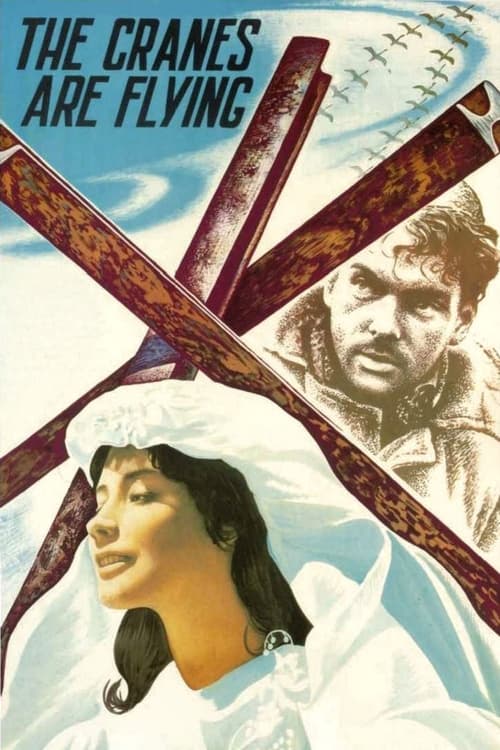
The Cranes Are Flying
Soviet (Летят журавли)
1958 · Directed by Mikhail Kalatozov · 97 min


Drama · Romance · War
Soviet (Летят журавли)
1958 · Directed by Mikhail Kalatozov · 97 min





Meaning, unpacked
Central idea
The film explores what war does to a private life: the waiting, the lost certainty and the pressure to turn personal grief into public meaning. It can be read as a quiet challenge to heroic war myths, asking what remains once the speeches end.
What it means
Veronika waits for Boris, who goes to war and does not come back. A bombing takes her family, and a moment of weakness leaves her with a guilt she carries to the end. The film's central idea is simple and hard: what does war do to a private life? It looks at the waiting, the lost certainty, and the pressure to turn personal grief into public meaning. It quietly challenges heroic war myths, and asks what remains once the speeches end.
That is why it keeps coming back to one woman's feelings while enormous events unfold around her. History here is made of individual losses as much as national victories. Her long wait, her letters and her hope turn faithfulness into a test of endurance. The cranes of the title suggest return and renewal, but they also remind you of those who never come back. And the film refuses to make Veronika a saint: her failure has lasting consequences, and it stays with her anyway.
Why it mattered
For a Soviet film, that refusal was unusual. This was the Thaw, when artists could explore personal feeling and ambiguity, and a few years earlier, sympathy for a woman who makes a serious moral error would have been hard to imagine. It put a woman's inner life at the centre of a war story usually told through battles and heroism. It was not a rebel film, though. It was made within the system and ends by affirming collective sacrifice. Its novelty was emotional honesty and a flawed heroine.
Before anyone tells you what to think: what did you make of it?
Log in to rate it and leave commentsIt takes one click with Google or an email link. You come straight back here.
Rate it, keep your notes, and find the next film.
Free, no ads. Your journal, your lists, a Cine Guide that remembers you.
Create your free spaceIt was just as bold in how it looks. Sergei Urusevsky used lightweight handheld cameras, long tracking shots and extreme angles to keep you inside the characters' perceptions. When Boris leaves, the camera spirals up a stairwell and races after the characters, turning love and anxiety into physical motion. His death is not battlefield realism but a spinning vision of birch trees and an imagined wedding. Inner life comes before combat.
Soviet audiences responded strongly, and it was widely seen at home. Some officials were uneasy about Veronika's failing, but the film's success made that hard to sustain. Abroad, it won the Palme d'Or at Cannes in 1958, and critics praised the cinematography and Tatyana Samoylova, who became one of the best-known Soviet faces in the world. It also opened international doors for Thaw films such as Ballad of a Soldier.
Its fluid, subjective camerawork influenced filmmakers who wanted to express interior states through movement, and Kalatozov and Urusevsky pushed the same style further in I Am Cuba. Today it is seen as the key film of the Thaw. Its last scene, a woman giving her flowers to returning soldiers and strangers, is still cited in discussions of how Russians remember the war.
What happens
At the war's end, Veronika waits at the station with flowers, searching the returning soldiers' faces. Boris's friend Stepan finally tells her Boris is dead. She is shattered, yet she hands her flowers to the soldiers and families around her.
The last image
Veronika, her arms emptied of flowers, looks up as cranes fly across the sky.
What it says
The ending turns private grief into a public gesture without erasing it. Veronika's loss is real, but she shares what she has left. The cranes, which also open the film, suggest life continuing, held in tension with the dead.
Or follow an idea from this film
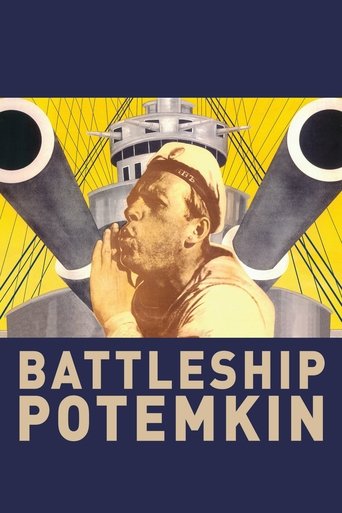

See what influenced it
Battleship Potemkin (1925)
Eisenstein's film shows the Soviet montage tradition that Kalatozov and Urusevsky drew on, with emotion generated by rhythm and image.
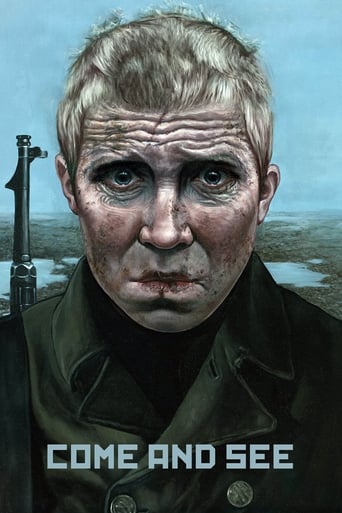
Compare another approach
Come and See (1985)
Another Soviet war film that uses subjective cinematography to put the viewer inside experience, though with far harsher results.
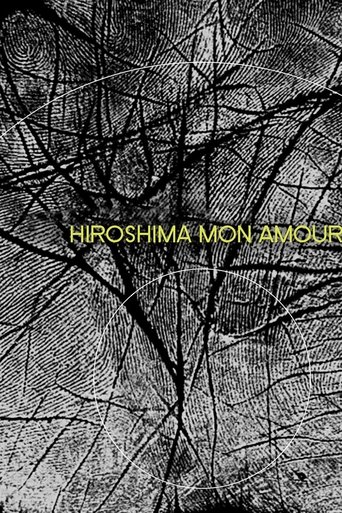
Explore the era or movement
Hiroshima Mon Amour (1959)
A contemporary film that approaches war through private memory and a woman's inner life, using a very different European modernist style.

Follow the idea
Grave of the Fireflies (1988)
It also tells a war story through the quiet suffering of ordinary people instead of battlefield heroics.

Jump forward
Moscow Does Not Believe in Tears (1980)
A later Soviet melodrama about women's lives and endurance, showing how personal storytelling developed in Soviet cinema.